
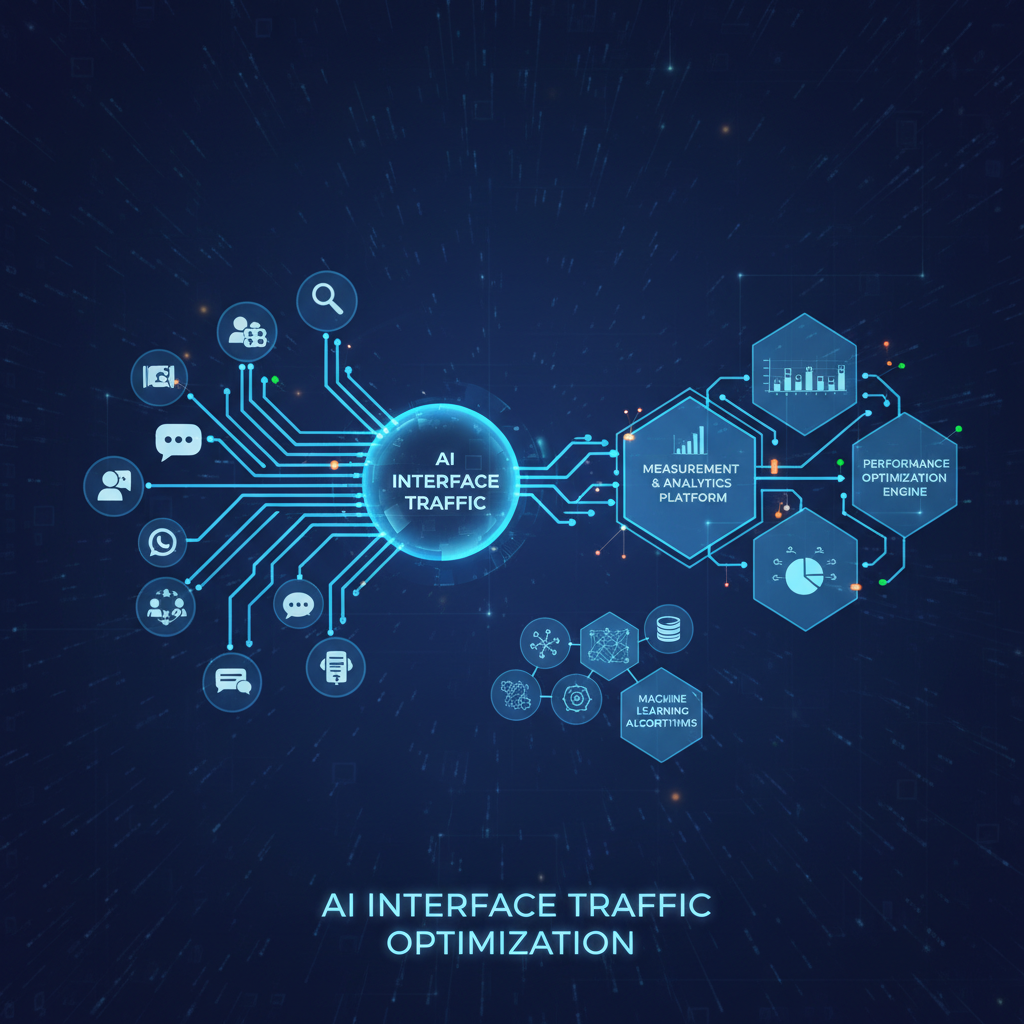
The digital landscape shifts. AI isn’t just generating content, it’s generating traffic. This new traffic source demands attention. It requires precision in measurement and aggressive optimization. Ignore it, and you cede ground. Understand it, and you command a new channel for revenue.
Understanding the AI Traffic Imperative
AI interfaces, from conversational assistants to integrated search experiences, are now gatekeepers of information. Users query AI, not just traditional search engines. Your business needs to be visible where those queries resolve. This isn’t theoretical; it’s a measurable revenue opportunity.
Identifying AI-Driven Interfaces
- Generative Search Experiences: AI-powered summaries and answers within search engines.
- Conversational AI Platforms: ChatGPT, Bard, and other large language models that directly answer user questions.
- Integrated AI Tools: AI features embedded in productivity software, browsers, or specialized applications.
Each interface represents a unique touchpoint. Each needs a strategy. Each presents an attribution challenge.
Tracking and Attributing AI Traffic
Measuring AI traffic is complex, but not impossible. Standard analytics often fall short. New methods are mandatory. Your goal: connect AI visibility to business outcomes.
Methodologies for AI Attribution
- Dedicated Landing Pages/Content Segments: Create specific content tailored for AI consumption, directing users to unique URLs. Track these URLs.
- Custom Parameters and Tracking Codes: Implement specific parameters in links shared or referenced by AI, where possible. This requires AI interface cooperation.
- Enhanced Server Log Analysis: Analyze user agent strings and referral data for patterns indicating AI interaction. This is forensic work.
- API Integration: Leverage APIs from AI platforms to understand interaction volumes and content references. This is the gold standard, but often limited.
The key is a multi-pronged approach. No single solution captures everything. Precision matters.
Challenges in Attribution Accuracy
AI traffic doesn’t always behave like traditional organic search. Direct referrals are rare. AI often summarizes, synthesizes, and then presents information. This obscures the original source. Ghost traffic, where AI consumes content without direct user clicks, is a real issue. Your analytics must account for this data gap.
Integrating AI Data with Existing Analytics
AI traffic data cannot live in a silo. It must integrate with your broader analytics platforms. Use custom dashboards. Develop specific reports. Your AI insights need to inform your entire digital strategy, from content creation to paid media decisions. This provides a holistic view of your marketing ROI.
Optimizing for AI Visibility and Content Comprehension
Visibility in AI isn’t about keywords. It’s about content authority, clarity, and structure. AI wants answers. Give it answers. Directly.
Content Structuring for AI Assimilation
- Direct Answers: Provide clear, concise answers to common questions immediately.
- Structured Data: Implement schema markup meticulously. This is how AI understands your content’s context.
- Semantic Relevance: Focus on topic clusters, not just keywords. Build topical authority.
- Authoritative Sourcing: Back claims with data, studies, and expert opinions. AI prioritizes credibility.
Short paragraphs, definitive statements. Cut the fluff. AI systems digest facts, not prose.
Technical SEO for AI Domination
Technical foundations are critical. Fast load times, mobile responsiveness, and clean code remain paramount. But AI adds layers:
- Crawlability and Indexability: Ensure AI bots can access and understand all relevant content. Use robots.txt and sitemaps strategically.
- API Accessibility: Explore opportunities to feed your structured data directly into AI models via APIs, where available.
- Content Freshness: Regularly update content to reflect current information and maintain relevance. AI favors the most accurate, up-to-date sources.
These aren’t suggestions. They are requirements for competitive advantage.
Measuring Impact and Proving ROI
AI traffic isn’t a vanity metric. It’s a performance channel. Measure its impact. Prove its value.
Key Performance Indicators for AI-Driven Content
- AI Referral Volume: Direct traffic from AI interfaces, if attributable.
- Content Consumption Metrics: Time on page, scroll depth for AI-optimized content.
- Brand Mentions and Citations: How often your brand or content is referenced by AI.
- Conversion Rates: Track conversions originating from AI-driven pathways.
- Opportunity Cost Savings: Reduced customer support inquiries due to AI-provided answers.
Focus on measurable outcomes. Revenue. Leads. Efficiency. That’s the only language that matters.
| Feature | AI Traffic Tracking (Basic) | AI Traffic Tracking (Advanced) |
|---|---|---|
| Attribution Accuracy | Limited, often inferred from context. | High, with custom parameters and API integrations. |
| Content Optimization Insights | General SEO best practices. | Specific guidance for AI comprehension, semantic structuring. |
| Integration with Analytics | Manual data import, custom reports. | Seamless API connection, automated dashboards. |
| Cost-Benefit Analysis | Qualitative assessment, initial testing. | Quantitative ROI based on attributed conversions. |
| Strategic Value | Visibility in emerging channels. | Competitive advantage, new revenue streams, fractional CMO insights. |
Bottom Line
AI is here. It changes traffic patterns. It changes how users consume information. Your content strategy must adapt. Measure meticulously. Optimize aggressively. Integrate AI visibility into your core business strategy. This isn’t about being “future-proof.” It’s about securing revenue today. The firms that master AI traffic attribution and optimization will dominate the next decade. The rest will be left discussing “emerging trends.” Act now.
Frequently Asked Questions
What is AI traffic and why is it important for businesses?
AI traffic refers to users accessing information through AI interfaces like generative search, conversational AI platforms, and integrated AI tools. It’s important because AI is becoming a primary information gateway, representing a measurable revenue opportunity for businesses that optimize for it.
How can businesses track and attribute AI-driven traffic?
Tracking AI traffic involves using dedicated landing pages, custom parameters in links, enhanced server log analysis, and leveraging API integrations with AI platforms where available. A multi-pronged approach is recommended due to the complexity of attribution.
What are the key strategies for optimizing content for AI visibility?
Content optimization for AI includes providing direct and concise answers, implementing meticulous structured data (schema markup), focusing on semantic relevance and topical authority, and backing claims with authoritative sources. Technical SEO, crawlability, and content freshness are also crucial.
What are the main challenges in accurately attributing AI traffic?
Major challenges in AI traffic attribution include ‘ghost traffic’ where AI consumes content without direct user clicks, the rare occurrence of direct referrals, and the limitations of standard analytics platforms in capturing AI-specific interaction patterns.
What types of AI interfaces generate traffic for businesses?
Traffic is generated from generative search experiences (AI-powered summaries in search engines), conversational AI platforms (e.g., ChatGPT, Bard), and integrated AI tools embedded in various software and applications.