
The search landscape is shifting. Traditional keyword optimization, while still relevant, no longer dominates. AI-driven generative engines are reshaping how users find information. For senior leaders, this is not merely a technical shift. It is a fundamental change in how your brand secures visibility and drives measurable return on investment.
You must adapt. Your agency partners must adapt. This guide outlines how to strategically brief your performance marketing agency to capitalize on Generative Engine Optimization, or GEO. We focus on hard ROI, not vanity metrics.
What is Generative Engine Optimization (GEO)?
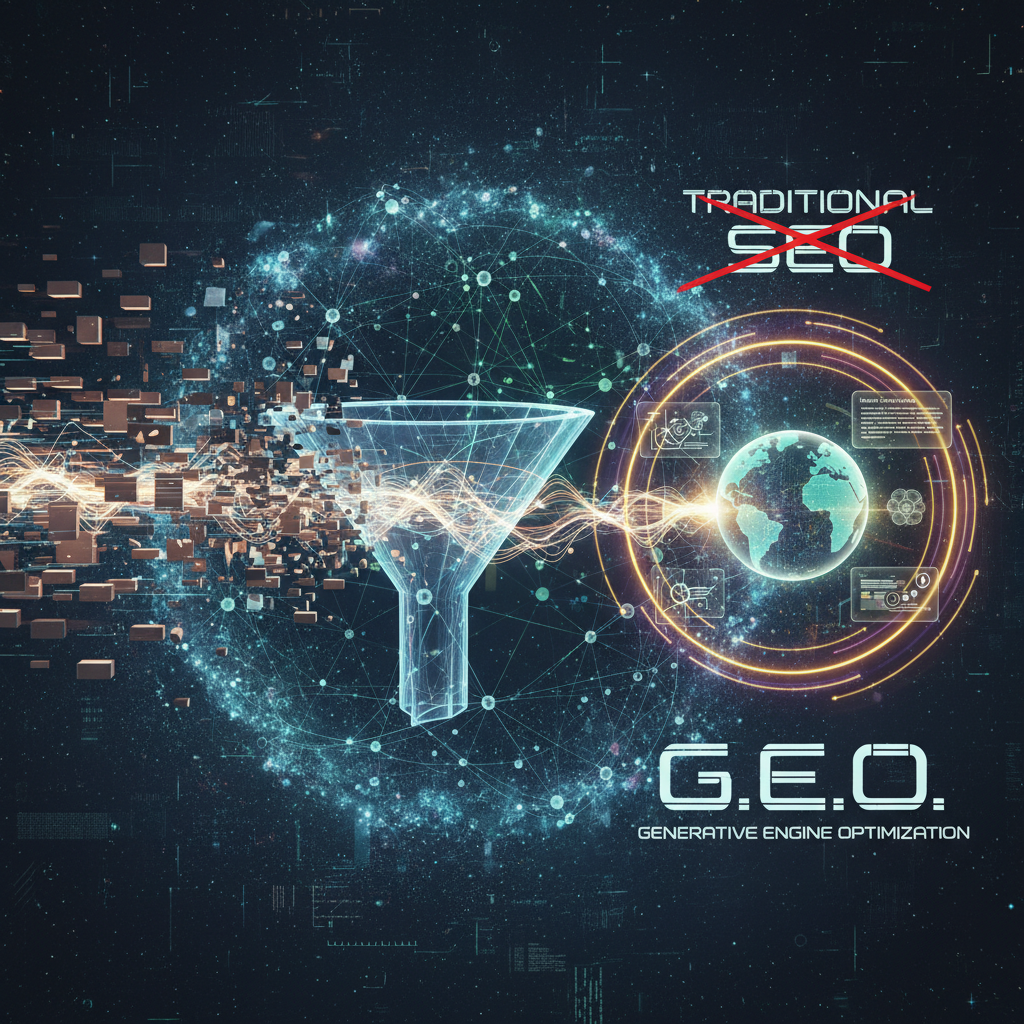
GEO is about optimizing your content to be the recognized, authoritative source in AI-generated answers. It moves beyond ranking for keywords. It focuses on being cited, summarized, and integrated directly into responses from Large Language Models and AI search interfaces. This is about becoming the answer, not just a link.
Think beyond search result pages. Think about direct answers, conversational AI, and synthesized information. Your content needs to be precise, factual, and deeply authoritative. It must satisfy user intent comprehensively, allowing AI systems to confidently source your data.
Why GEO Matters Now: The ROI Imperative
AI search is not a future concept. It is here. Users increasingly interact with AI directly. When an AI answers a query, your brand has a choice: be the source, or be invisible. For CMOs and CEOs, invisibility means lost market share, reduced lead generation, and diminished brand equity.
The ROI from effective GEO is clear:
- Increased Brand Authority: Being cited by AI builds unparalleled trust.
- Direct User Engagement: AI-generated answers can drive users directly to your site for deeper dives.
- Reduced Customer Service Load: Proactive, AI-delivered answers can resolve common queries before they reach your support team.
- Competitive Advantage: Early adopters dominate mindshare. Lagging means playing catch-up, at a higher cost.
This is about future-proofing your digital presence. It is about measurable impact on your bottom line.
Briefing Your Agency for GEO: A Strategic Playbook
Engaging your agency for GEO requires a clear, precise brief. Do not expect them to guess your objectives. Provide direction. Demand results.
-
Define Clear, Measurable ROI Objectives
Before any work begins, specify what success looks like. Generic goals are useless. Focus on tangible outcomes:
- AI Citation Volume: Track how often your brand or content is explicitly referenced in AI-generated responses.
- Direct Traffic from AI Referrals: Implement tracking to attribute traffic originating from AI answer boxes or conversational interfaces.
- Brand Sentiment in AI Summaries: Monitor the tone and accuracy of AI summaries about your company or products.
- Reduced Inquiry Volume: Measure any decrease in common inbound customer service queries, indicating AI is providing answers.
Insist on baseline metrics. Demand regular reporting against these KPIs.
-
Provide Comprehensive Data Sourcing & Attribution
AI models require robust, verifiable data. Your agency needs access to your internal knowledge bases, product documentation, white papers, and historical data. This is not optional. It is fundamental.
Instruct your agency to establish clear attribution models. They must demonstrate where AI is sourcing your content. This ensures proper credit and identifies content gaps.
-
Emphasize Authority & Trust Signals
AI prioritizes authoritative sources. Your agency must focus on amplifying your E-E-A-T (Experience, Expertise, Authoritativeness, Trustworthiness) signals. This involves:
- Highlighting expert authors and their credentials.
- Securing high-quality backlinks from reputable industry sites.
- Ensuring content is fact-checked, updated, and accurate.
- Leveraging customer testimonials and case studies as verifiable proof points.
Your brand’s credibility is paramount. AI will not promote unreliable information.
-
Demand a Multi-Modal Content Strategy
AI processes more than just text. It integrates images, videos, audio, and structured data. Your agency must develop a multi-modal content strategy. This means:
- Optimizing images with descriptive alt text and captions.
- Transcribing and summarizing video and audio content.
- Implementing structured data (Schema markup) to explicitly define entities and relationships.
- Creating infographics and data visualizations that are easily parsable.
Do not limit content to blog posts. Diversify your information assets.
-
Focus on Entity-Based Optimization
AI understands entities: people, places, organizations, concepts. Your content needs to clearly define and interlink these entities. This goes beyond keyword stuffing.
Instruct your agency to:
- Map key entities related to your business.
- Ensure consistent naming conventions across all content.
- Create dedicated entity pages or knowledge hubs.
- Utilize internal linking to build semantic networks.
This builds a robust knowledge graph around your brand, making you an undeniable authority.
-
Integrate Predictive Analytics
Effective GEO is proactive, not reactive. Your agency should leverage predictive analytics to anticipate emerging AI search trends and user queries. This involves:
- Analyzing query patterns and AI answer evolution.
- Identifying content gaps before they become critical.
- Forecasting changes in AI model behavior.
This allows your agency to optimize content ahead of the curve, maintaining your leadership position. Demand foresight, not just hindsight.
GEO, SEO, AEO: Understanding the Landscape
Generative Engine Optimization does not replace traditional SEO or Answer Engine Optimization. It complements and expands them. Here is a breakdown:
| Optimization Paradigm | Primary Goal | Key Focus | Measurement | Content Approach |
|---|---|---|---|---|
| SEO (Search Engine Optimization) | Rank high in traditional search engine results pages (SERPs). | Keywords, backlinks, technical SEO, content relevance. | Organic traffic, keyword rankings, impressions, clicks. | Web pages, blog posts, articles, landing pages. |
| AEO (Answer Engine Optimization) | Appear in featured snippets, knowledge panels, direct answers. | Direct answers to specific questions, structured data, clear formatting. | Featured snippet impressions, direct answer visibility. | FAQ sections, concise answers, lists, tables. |
| GEO (Generative Engine Optimization) | Be the authoritative source cited in AI-generated responses and summaries. | Entity authority, multi-modal content, trust signals, comprehensive information. | AI citation volume, direct AI referral traffic, brand sentiment in AI summaries. | Knowledge bases, robust entity pages, factual content, structured data across all formats. |
A cohesive strategy integrates all three. Neglecting one compromises the others.
Measuring GEO Success: Beyond the Click
Traditional SEO metrics, while important, are insufficient for GEO. You must look deeper. Success in GEO means your brand is actively shaping AI-generated knowledge. This translates into hard business outcomes:
- Enhanced Brand Equity: Consistent AI citation builds an undeniable reputation.
- Accelerated Customer Journey: AI-powered answers can guide users faster through consideration to conversion.
- Reduced Marketing Spend: Becoming a default AI source means less reliance on paid channels for basic awareness.
Demand that your agency provides methodologies for tracking these advanced metrics. They must move beyond basic organic traffic reports.
Operationalizing GEO: What to Expect from Your Agency
Implementing GEO is complex. It requires specialized skills in AI comprehension, data architecture, and content strategy. Your agency should be transparent about their process:
- Audit & Gap Analysis: A thorough review of your existing content for GEO readiness.
- Content Refactoring: Re-structuring and enhancing current content for AI parsability.
- New Content Development: Creation of entity-rich, multi-modal content assets.
- Technical Implementation: Schema markup, internal linking, site architecture for AI crawlers.
- Continuous Monitoring & Adaptation: AI models evolve rapidly. Optimization is an ongoing process.
Expect a partnership focused on continuous improvement, driven by data and AI insights. This is not a set-it-and-forget-it initiative.
Bottom Line
Generative Engine Optimization is not a trend. It is the new frontier of digital dominance. Your ability to capture ROI in the AI search era hinges on a precise, data-driven approach. Brief your agency with clarity. Demand measurable outcomes. Focus on becoming the undeniable source of truth for AI. Anything less is a concession of future market share.
Frequently Asked Questions
What is Generative Engine Optimization (GEO)?
GEO optimizes content to be recognized as an authoritative source in AI-generated answers. It focuses on content being cited, summarized, and integrated directly into responses from Large Language Models and AI search interfaces, aiming to become the answer itself rather than just a link.
Why is Generative Engine Optimization (GEO) important for businesses?
GEO is critical because it enhances brand authority through AI citation, drives direct user engagement, can reduce customer service loads, and provides a significant competitive advantage by future-proofing a brand’s digital presence in the evolving AI search landscape.
How does Generative Engine Optimization (GEO) differ from traditional SEO and AEO?
SEO focuses on ranking high in traditional search engine results pages. AEO aims to appear in featured snippets and direct answers. GEO, however, prioritizes being the authoritative source cited directly within AI-generated responses and summaries, emphasizing entity authority and multi-modal content.
What should businesses include when briefing an agency for Generative Engine Optimization (GEO)?
Businesses should define clear, measurable ROI objectives (e.g., AI citation volume, direct AI traffic), provide comprehensive internal data, emphasize E-E-A-T signals, demand a multi-modal content strategy, focus on entity-based optimization, and integrate predictive analytics.
How is success measured in Generative Engine Optimization (GEO)?
Success in GEO is measured by metrics such as AI citation volume, direct traffic attributed to AI referrals, positive brand sentiment reflected in AI summaries, and a reduction in common inbound customer service queries due to AI-provided answers.