AI in Content: The Performance Marketing Imperative

AI in Content: A Performance Imperative

Traditional content models fail. Scale demands efficiency. AI redefines content operations for performance marketers.

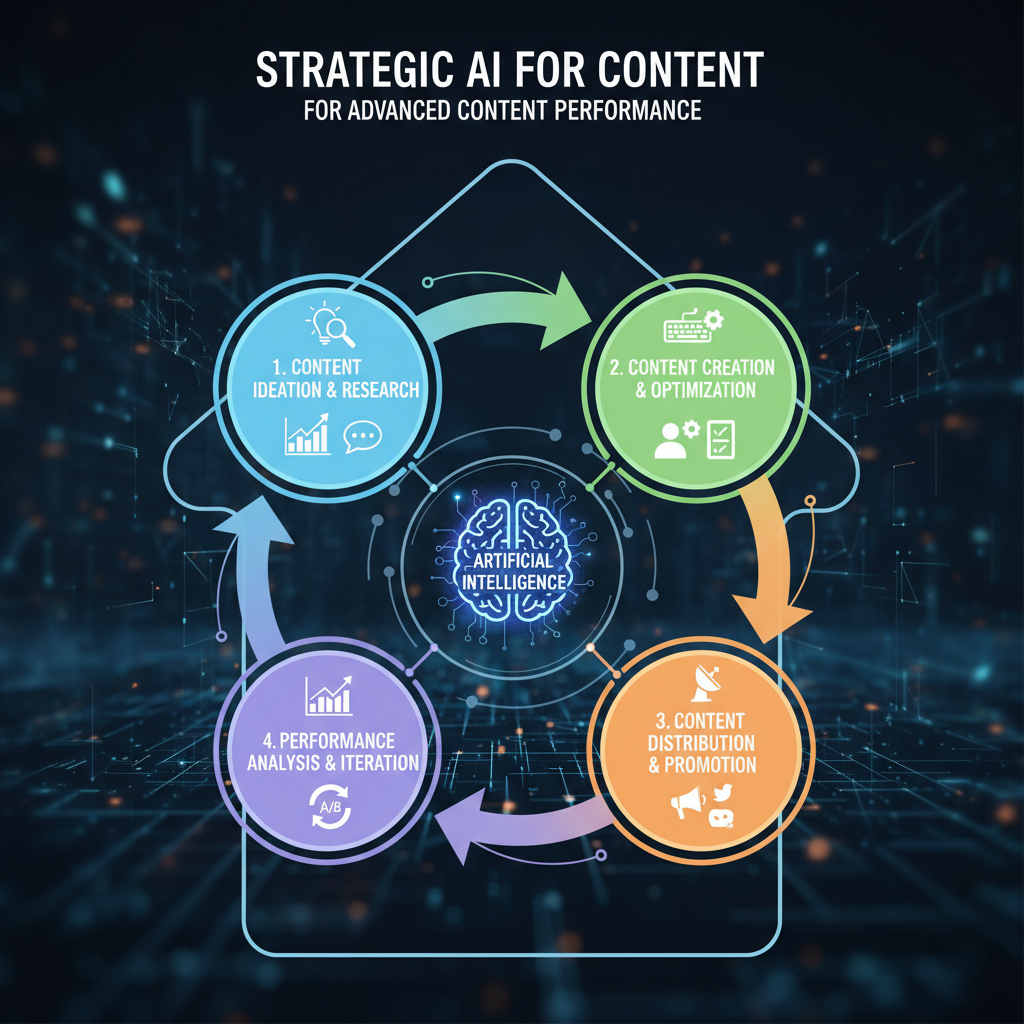
The AI-Assisted Content Funnel

Strategic Content Generation

AI generates first drafts. It accelerates topic exploration and keyword integration. The goal: high-volume, relevant content at speed.

  • Keyword Integration: AI drafts align with search intent.
  • Volume Production: Scale content output without linear cost increases.
  • Funnel Strengthening: Each piece targets a specific funnel stage.

Human-Led Optimization

AI provides the foundation. Human experts refine, fact-check, and inject strategic insight. This ensures accuracy and authority.

The process is not automation. It is augmentation. Human expertise remains non-negotiable.

SEO Service Proposal: Integration Points

Integrating AI into SEO services strengthens the entire content funnel. It ensures constant, optimized content flow.

Key integration points:

  1. Topic Identification: AI identifies high-potential keywords and content gaps.
  2. Draft Creation: Initial content drafts are generated for target queries.
  3. Editorial Review: Human strategists refine for brand voice, factual accuracy, and strategic depth.
  4. On-Page SEO: Final content is optimized for technical and semantic SEO.
  5. Performance Monitoring: AI assists in tracking content performance, identifying optimization opportunities.

Efficiency: AI vs. Traditional Content Creation

The efficiency gap is substantial. AI offers leverage. Traditional methods incur significant overhead.

Attribute Traditional Content AI-Assisted Content
Time to Draft Days to Weeks Hours
Cost Per Article High, linear with volume Lower, scalable
Content Volume Limited by human capacity High, scalable
SEO Integration Manual, prone to oversight Systematic, data-driven
Strategic Oversight Manual, throughout process Focused on refinement, strategy

ROI for CEOs and CMOs

This is not a cost-cutting measure. It is a growth acceleration strategy. AI content drives measurable returns.

  • Reduced Time-to-Market: Faster content deployment means quicker SEO impact.
  • Expanded Market Reach: More content covers more long-tail keywords.
  • Optimized Resource Allocation: Human talent focuses on high-value strategy and refinement.
  • Compounding SEO Growth: Consistent, high-volume, optimized content builds authority over time.

Bottom line

AI is not replacing content strategists. It is empowering them. Embrace the leverage. Drive performance. Ignore AI at your peril.

Frequently Asked Questions

How does AI enhance the content creation process?

AI accelerates topic exploration, integrates keywords, generates initial drafts for high-volume content production, and assists with systematic SEO integration.

What is the role of human expertise in AI-assisted content?

Human experts refine, fact-check, inject strategic insight, and ensure accuracy and authority. Their role focuses on optimization and strategic depth, augmenting AI’s foundational output.

How does AI content creation improve efficiency compared to traditional methods?

AI content creation reduces time to draft from days/weeks to hours, lowers cost per article, enables higher content volume, and provides systematic, data-driven SEO integration, overcoming limitations of manual processes.

What are the key business benefits of integrating AI into content strategy?

Integrating AI into content strategy results in reduced time-to-market, expanded market reach through increased content volume, optimized resource allocation, and compounding SEO growth over time.

Categories AI

Structured Data for AI: Optimizing Content for LLMs and Next-Gen Search

The digital landscape shifted. AI, specifically Large Language Models, now dictates search relevance and content interpretation. Your content must speak their language. Ignoring this means conceding ground, losing visibility, and sacrificing ROI.

The AI Imperative: Why Structured Data is Non-Negotiable

Traditional SEO focused on keywords and backlinks. That era is over. AI-powered search engines and LLMs demand more: they need context, relationships, and verifiable facts. Structured data provides this clarity. It is a direct line to the AI’s brain.

Beyond Keywords: Entity Understanding

LLMs process information based on entities: people, places, concepts, products. They build knowledge graphs. Your website, its content, and its offerings are all entities. Structured data, using vocabularies like Schema.org, explicitly defines these entities and their relationships. This isn’t about “ranking”; it’s about being understood and cited correctly.

Decoding Schema.org and JSON-LD: The Language of Machines

These are not optional extras. They are foundational for modern content strategy. Without them, your valuable content remains a puzzle for AI.

Schema.org: The Universal Semantics

Schema.org is a collaborative vocabulary. It provides a standardized set of types and properties. It describes things: articles, products, organizations, reviews. It tells search engines, and by extension LLMs, what your content is, not just what it says. This semantic clarity is critical for accurate interpretation and placement within AI knowledge graphs.

JSON-LD: Implementation for Efficiency

JSON-LD, JavaScript Object Notation for Linked Data, is the recommended format for implementing Schema.org. It’s clean, efficient, and injected directly into the HTML without altering visible content. It’s easy for machines to read and parse. This means faster processing, less ambiguity, and better data ingestion by AI systems.

Strategic Implementation: Feeding LLM Knowledge Graphs

This is where your content moves from mere information to structured intelligence. Precision here drives performance.

Identifying Key Entities for Your Business

Start with your core offerings: services, products, team members, locations. How do these relate? Define them explicitly. For a performance marketing agency, common entities include Service, Organization, Person (for fractional CMOs), Article (for blog posts), and FAQPage.

Common Schema Types for Performance Marketers

  • Article: For blog posts, thought leadership. Ensures LLMs understand the topic, author, and publication date.
  • Service: Clearly defines what your agency offers. Critical for AI to match user intent with your solutions.
  • Organization: Your agency’s details: name, logo, contact information. Builds authority and trust.
  • Person: For executive profiles, especially fractional CMOs. Establishes expertise and credibility.
  • FAQPage: Directly answers common questions, enhancing visibility in AI-driven answer boxes.
  • HowTo: Guides LLMs through step-by-step processes, ideal for instructional content.

Step-by-Step Integration: A Technical Overview

Implementing JSON-LD is a technical task. It requires precision. Do it right, or don’t do it at all.

  1. Identify Content Type: Determine the primary Schema.org type for your page (e.g., Article, Product, Service).
  2. Map Properties: List all relevant properties for that type (e.g., for an Article: headline, author, datePublished, image).
  3. Populate Data: Extract the necessary information from your page content to fill these properties.
  4. Generate JSON-LD Script: Write the JSON-LD script, embedding it in the <head> or <body> of your HTML.
  5. Validate: Use Google’s Rich Results Test or Schema.org’s validator to ensure correct syntax and implementation.
  6. Monitor: Track how search engines interpret your data via Search Console, looking for rich result eligibility.

Measuring Impact: The ROI of Semantic Clarity

Structured data isn’t a vanity metric. Its impact is measurable. It drives real performance gains.

Improved Citations and Visibility in AI Search

When LLMs understand your content perfectly, they are more likely to cite it accurately, link to it, and use it to answer user queries. This means increased direct traffic, enhanced brand mentions, and stronger authority in the AI ecosystem. Your content becomes a primary source.

Case Study Insights: Tangible Gains

Consider a client who implemented detailed Service schema across their marketing solution pages. Within three months, their key service offerings saw a 30% increase in direct referrals from AI-powered answer summaries and a 15% improvement in CTR for relevant rich results. This is not anecdotal; it is data-driven performance.


Structured Data Formats: A Comparison for Performance Marketers

Feature Schema.org (Vocabulary) JSON-LD (Format)
Purpose Defines types and properties of things on the web. Semantic meaning. Method for embedding structured data into HTML. Implementation.
Role The “what” you describe. The “how” you describe it.
Complexity Standardized vocabulary, requires understanding of types. JavaScript object notation, relatively easy to generate and manage.
Implementation Location Conceptual framework, applied via a format. Typically in <head> or <body> of HTML.
Readability (Human) Requires familiarity with definitions. Can be read, but primarily machine-friendly.
Readability (Machine) High when applied correctly. Excellent, preferred by Google.
Impact on AI Search Critical for entity recognition and knowledge graph feeding. Enhances efficiency of data parsing by AI crawlers.

Maintaining Structured Data in an Evolving AI Landscape

The digital world does not stand still. Neither should your structured data strategy.

Regular Audits and Updates are Essential

AI models evolve. Schema.org updates. Your content changes. Conduct quarterly audits of your structured data implementation. Check for errors. Update properties as your services or offerings change. Outdated or incorrect schema can be worse than no schema at all; it can mislead AI.

Future-Proofing Your Content Strategy

Integrate structured data into your content creation workflow. It is not a post-publication task. It is a core component of concept development. Think about the entities you are discussing, how they relate, and how you will express that relationship via Schema.org before you write the first word. This foresight ensures long-term visibility and relevance in an AI-dominated search environment.

Bottom line

Structured data is not a suggestion. It is a mandate for modern SEO and AI visibility. Implement Schema.org via JSON-LD with precision. Define your entities. Feed the LLM knowledge graphs directly. This investment ensures your content is not just seen, but truly understood, cited, and acted upon by the next generation of search and AI. Your ROI depends on it.

Frequently Asked Questions

Why is structured data crucial for AI-powered search and modern SEO?

AI-powered search engines and Large Language Models (LLMs) require context, relationships, and verifiable facts for content interpretation. Structured data provides this clarity, enabling content to be understood and cited correctly within AI knowledge graphs, moving beyond traditional keyword-focused SEO.

What is Schema.org and how does it relate to content understanding by AI?

Schema.org is a collaborative vocabulary providing a standardized set of types and properties to describe web content. It tells search engines and LLMs what content ‘is’ (e.g., an article, product, or service), facilitating accurate interpretation and placement within AI knowledge graphs for semantic clarity.

What is JSON-LD and why is it the recommended format for structured data?

JSON-LD (JavaScript Object Notation for Linked Data) is the recommended format for implementing Schema.org. It is clean, efficient, and injected directly into HTML, allowing machines to easily read and parse data. This results in faster processing and better data ingestion by AI systems.

What are some common Schema types useful for performance marketers?

Common Schema types include `Article` for blog posts, `Service` for offerings, `Organization` for agency details, `Person` for individual profiles, `FAQPage` for questions and answers, and `HowTo` for instructional content. These help define entities and their relationships.

How does structured data improve visibility and ROI in AI search environments?

Structured data enhances visibility by allowing LLMs to perfectly understand content, increasing the likelihood of accurate citations, direct traffic, and brand mentions. This leads to stronger authority, improved Click-Through Rates (CTR) for rich results, and better referrals from AI-powered answer summaries.

Categories AI

AI in Content Strategy: A Performance Marketing Mandate

The content funnel defines marketing performance. Inefficient content processes erode ROI. Today, AI redefines what is possible for search-optimized, high-performing content. This is not about automation for automation’s sake. It is about strategic leverage for measurable growth.

The Content Funnel Imperative

A robust content funnel captures demand and converts it. It moves prospects from awareness to decision. For performance marketers, this funnel is a quantifiable asset. Each stage demands precise content, delivered efficiently. Weak links here manifest as missed revenue, inflated CPA.

AI’s Role in Funnel Fortification

AI transforms content strategy from a labor-intensive function to an intelligent, scalable operation. It strengthens every stage of the content funnel, driving efficiency and impact.

Precision at Scale

Traditional keyword research is exhaustive. AI systems identify high-value search terms and emerging trends with speed. They map content gaps against user intent. This allows for a proactive content strategy. Topic ideation becomes data-driven, not speculative.

Efficiency in Creation

AI-assisted content generation accelerates production. It creates initial drafts, outlines, or specific content blocks. This frees human strategists and writers to focus on refinement, voice, and strategic messaging. Adherence to structured content guidelines ensures output quality. The process is step-by-step, not haphazard. This accelerates time to market for critical content assets.

Performance Optimization

AI extends beyond creation. It analyzes existing content performance. It identifies underperforming assets, suggests optimization opportunities, and informs distribution strategy. Content audits become continuous, not periodic. This ensures constant refinement of the content funnel, maximizing its conversion power.

The Strategic AI Integration Framework

Integrating AI demands a clear framework. It is a strategic shift, not a tactical addition. The goal is compounding growth and superior market positioning.

  1. Define Strategic Objectives: Articulate clear ROI targets. What specific performance metrics will AI impact, e.g., organic traffic growth, lead quality, conversion rates?
  2. Map AI Capabilities to Funnel Stages: Identify where AI provides the most leverage. For example, AI for initial research, AI for draft generation, AI for SEO audit.
  3. Establish Content Governance: Implement clear guidelines for AI output. Human oversight is paramount for brand voice, factual accuracy, and strategic alignment. This ensures quality control.
  4. Implement Iterative Testing: Deploy AI-generated content in controlled environments. Measure its performance against human-generated baselines. Refine AI prompts and processes based on data.
  5. Scale Selectively: Expand AI integration based on proven performance. Prioritize areas offering the highest ROI and efficiency gains.

AI vs. Traditional Content: A Performance Snapshot

The shift to AI-augmented content delivers measurable advantages. CEOs and CMOs must understand this contrast.

Aspect Traditional Content Strategy AI-Augmented Content Strategy
Research & Planning Manual, time-intensive, limited scope. Automated, comprehensive, identifies high-ROI opportunities.
Content Creation Human-dependent, slower iteration cycles, high cost per unit. AI-assisted, rapid drafting, lower marginal cost, scalable.
Optimization Reactive, periodic, manual analysis. Proactive, continuous, data-driven recommendations.
Scalability Linear growth, constrained by human resources. Exponential potential, leverages technology.
Cost Efficiency Higher operational overhead. Reduced per-piece cost, improved resource allocation.

Measuring AI’s ROI in Content

Performance is quantifiable. AI’s impact must be measured against key metrics:

  • Organic Traffic Volume: Increase in qualified organic visitors.
  • Conversion Rates: Improved lead generation, MQLs, SQLs from content.
  • Content Production Velocity: Faster time from ideation to publication.
  • Cost Per Acquisition (CPA): Reduction in the cost to acquire a customer via content channels.
  • Audience Engagement: Higher time on page, lower bounce rates for AI-assisted content.

These metrics demonstrate AI’s direct contribution to the bottom line. It moves beyond efficiency into strategic advantage.

Leadership Mandate: Beyond the Hype

Leaders must drive this integration. This requires understanding AI as a strategic asset, not a temporary trend. It is about building a competitive edge through intelligent content operations. Focus on the core principles: math, efficiency, leverage, scale. Position your organization to lead, not follow. The future of content performance is intelligent.

Bottom line

AI is a critical component of modern performance marketing content strategy. It delivers precision, accelerates creation, and optimizes impact. Integrate AI strategically. Measure its ROI rigorously. This secures content funnel strength and drives superior business outcomes.

Frequently Asked Questions

How does AI enhance the content funnel for performance marketing?

AI enhances the content funnel by improving precision in keyword research and topic ideation, accelerating content creation through AI-assisted drafting, and continuously optimizing content performance based on data analysis.

What are the key benefits of using AI in content strategy?

Integrating AI into content strategy provides benefits such as automated, comprehensive research, rapid content drafting, proactive and continuous optimization, exponential scalability, and improved cost efficiency compared to traditional methods.

How should organizations strategically integrate AI into their content operations?

Organizations should strategically integrate AI by defining clear ROI targets, mapping AI capabilities to specific content funnel stages, establishing content governance with human oversight, implementing iterative testing, and scaling integration based on proven performance.

What metrics are used to measure the ROI of AI in content marketing?

The ROI of AI in content marketing is measured by tracking increases in qualified organic traffic volume, improved conversion rates, faster content production velocity, reductions in Cost Per Acquisition (CPA), and higher audience engagement.

What is the primary difference between traditional and AI-augmented content strategies?

Traditional content strategy relies on manual processes, offers slower iteration, and is resource-constrained. AI-augmented strategy provides automated research, rapid drafting, continuous optimization, and offers exponential scalability with reduced per-piece costs.

Categories AI

AI in Performance Marketing: The Content Funnel Reimagined

AI’s Mandate: Optimize the Content Funnel for ROI

Content is a performance lever. Not a creative exercise. Performance marketing demands quantifiable returns. AI integration moves beyond ideation. It redefines the entire content funnel. Precision and efficiency are non-negotiable.

The AI-Driven Content Imperative

The strategic question for CEOs and CMOs is simple: How do we extract maximum value from every content touchpoint? AI provides the answer. It is a force multiplier for existing content strategies. It scales intelligence, not just output.

This is not about generating more content. It is about generating better performing content. Content that converts. Content that reinforces authority. Content that compounds growth.

Building the AI-Optimized Content Funnel: A Strategic Blueprint

AI transforms each stage of the content funnel. It provides leverage. It drives efficiency. This is a step-by-step breakdown.

  1. Intent Mapping and Opportunity Identification

    AI analyzes vast datasets. It identifies precise search intent. It uncovers high-value content gaps. This moves beyond traditional keyword research. It predicts conversion potential.

  2. Strategic Content Brief Generation

    AI synthesizes competitive intelligence. It processes AIO content guidelines. It generates comprehensive content briefs. These briefs ensure every piece aligns with strategic objectives. They optimize for entities, not just keywords. This strengthens the content funnel from inception.

  3. Scaled Content Creation and Refinement

    AI assists in content drafting. It accelerates the initial creation phase. Human experts then refine. They inject unique insights, brand voice, and domain authority. This is not automation. It is augmented human expertise.

  4. Distribution and Amplification Strategy

    AI predicts optimal distribution channels and timing. It identifies high-impact outreach targets. It personalizes promotional messaging. This maximizes reach and engagement for target audiences.

  5. Continuous Performance Analysis and Optimization

    AI monitors content performance in real-time. It tracks engagement, conversions, and ROI metrics. It identifies underperforming assets. It recommends precise optimizations. This ensures constant iteration and improvement across the content lifecycle.

Measuring AI’s Impact: ROI Metrics

AI is a strategic investment. Its value must be quantifiable. Focus on metrics directly tied to performance and profit. This table highlights the shift from traditional to AI-driven measurement.

Metric Category Traditional Content Approach AI-Driven Content Approach
Content Velocity Slow, manual research and drafting cycles. Accelerated brief generation, rapid content assembly.
Topic Relevance Intuition, broad keyword analysis, reactive. Predictive intent modeling, precise opportunity scoring.
SEO Performance Post-publication tweaks, often lagging. Pre-emptive optimization, entity-based targeting, proactive.
Cost Efficiency High labor cost for basic research and writing. Reduced operational spend, human effort focused on strategy.
Conversion Impact Indirect attribution, longer feedback loops. Direct correlation, granular insight, real-time adjustments.

Leadership in the AI-Powered Ecosystem

AI is a tool. Not a substitute for strategic leadership. CMOs define the vision. They set the guardrails. They ensure brand integrity. AI amplifies human intelligence. It provides the data and insights for superior decision-making. Strategic oversight remains paramount.

Bottom line

AI redefines the content funnel. It drives performance, precision, and profit. Embrace it as a core strategic lever. The alternative is obsolescence. Lead this transformation. Achieve measurable ROI.

Frequently Asked Questions

How does AI enhance content strategy?

AI optimizes the entire content funnel, from intent mapping and brief generation to content creation, distribution, and performance analysis, driving precision and efficiency to generate better-performing content.

What are the key stages of the content funnel transformed by AI?

AI transforms intent mapping and opportunity identification, strategic content brief generation, scaled content creation and refinement, distribution and amplification strategy, and continuous performance analysis and optimization.

How does AI-driven content impact SEO performance?

AI enables pre-emptive optimization and entity-based targeting, leading to a proactive approach to SEO compared to traditional reactive tweaks.

What ROI metrics are improved with an AI-driven content approach?

AI improves content velocity, topic relevance, SEO performance, cost efficiency, and direct conversion impact through granular insights and real-time adjustments.

Does AI replace human content creators or strategists?

No, AI augments human expertise. It accelerates creation and provides data and insights, while human experts refine content, inject brand voice, and provide strategic oversight.

Categories AI

AI Demands Structure. Your Content. Your Citations.

The digital landscape shifted. AI isn’t coming; it’s here. Large Language Models, or LLMs, now dominate search. They synthesize information. They attribute sources. Or they should. Your brand’s voice, your expertise, needs clear attribution. Poor content structure means lost citations. It means lost authority.

This isn’t theory. This is the new reality of performance marketing. Your content must speak AI. It demands structured data.

The New Search Reality: AI and Authority

Google’s SGE, ChatGPT, Perplexity. These platforms redefine information access. Users expect instant answers. LLMs provide them. These models crawl, interpret, and cite content. They don’t just find keywords; they understand entities, relationships, and context.

Your goal, as a marketing leader, is to ensure your valuable content is not only found, but accurately understood and cited. If an LLM cannot parse your expertise, it cannot recommend it. This is a direct hit to your long-term organic growth, your fractional CMO impact.

Schema.org and JSON-LD: Your AI Interpreter

These aren’t just SEO buzzwords. They are the universal languages for machines. They translate your human-readable content into AI-actionable data.

  • Schema.org: This is the vocabulary. It’s a collaborative, open-community effort. It defines types of content, properties, and relationships. It tells AI, “This is an Article. Its author is X. Its topic is Y.”
  • JSON-LD (JavaScript Object Notation for Linked Data): This is the format. It’s a lightweight, easy-to-implement method for embedding Schema.org markup directly into your HTML. It’s clean. It’s efficient. Google prefers it.

Consider the distinction:

Aspect Schema.org JSON-LD
Function Defines the vocabulary and concepts. What to describe. Specifies the format for embedding this data. How to describe.
Role Standardized set of labels and properties. Implementation method. Data serialization.
Output Conceptual framework. Code snippet within your HTML.
Focus Semantic meaning, entity relationships. Syntax, embeddability.

Implementing Structured Data: A Playbook for Precision

This is a tactical guide. Follow these steps to make your content AI-ready and LLM-citable.

  1. Identify Key Entities: What is the absolute core of your content? Is it a person, an organization, a product, an event, a specific concept? Pinpoint these.
  2. Choose Relevant Schema Types: Select the most appropriate Schema.org type. For articles, `Article` or `BlogPosting` are primary. For how-to guides, `HowTo`. For FAQs, `FAQPage`. Accuracy is paramount.
  3. Generate JSON-LD Markup: Use online generators or write it directly. Ensure all critical properties are included: `headline`, `author`, `datePublished`, `image`, `description`. For LLM citation, clearly define the content’s `about` property, linking to entities where possible. While a direct ‘citation property’ is less common in standard Article schema, ensuring robust `mentions`, `about`, and internal/external linking within your main content strengthens citability.
  4. Implement on Your Site: Embed the JSON-LD script. Place it within the `` section of your HTML for faster processing. Alternatively, the `` is acceptable.
  5. Validate Your Code Relentlessly: This is non-negotiable. Use Google’s Rich Results Test and the Schema Markup Validator. Any errors negate your efforts. Fix them immediately.

Beyond Basics: Advanced Strategies and Common Pitfalls

Advanced Tactics for Maximum Impact

  • Nested Schemas: Describe complex relationships. An `Article` about a `Product`, written by an `Author` who is part of an `Organization`. This paints a richer picture for AI.
  • Knowledge Graph Integration: Link your entities to public knowledge graphs like Wikidata or Wikipedia. Use `sameAs` properties. This provides unambiguous context, enhancing semantic understanding and credibility.
  • Specific Schemas for Specific Goals: Don’t overlook `Event`, `LocalBusiness`, `Product`, or `Review` schemas if they fit your content. They drive highly targeted visibility.

Avoiding Costly Errors

  • Incorrect Type Usage: Don’t markup a general blog post as a `Recipe` or a `Product`. It misleads AI. It wastes resources.
  • Missing Required Properties: Every Schema type has mandatory fields. Omitting them renders your structured data ineffective. Check the Schema.org documentation.
  • Validation Neglect: You implement it. You forget it. Structured data can break. It needs ongoing monitoring. Assume nothing works until validated.
  • “Keyword Stuffing” Schema: Don’t try to manipulate the system by adding irrelevant keywords to your structured data. This is a black hat tactic. Google will penalize it.

Measuring Impact: ROI of AI-Ready Content

Directly quantifying LLM citations is an evolving challenge. Focus on measurable proxies that indicate improved AI visibility and understanding.

  • Rich Results Visibility & Performance: Monitor your Google Search Console. Track impressions, clicks, and average position for pages displaying rich results. This shows direct search enhancement.
  • Google Search Console “Enhancements” Report: This report highlights valid structured data, warnings, and critical errors. A clean report indicates proper implementation.
  • Brand Mentions & Citation Tracking: Use advanced listening tools. Look for mentions of your brand, content, or expertise in AI-generated summaries or responses. This is an emerging, critical metric.
  • Topical Authority Growth: Improved rankings for complex, long-tail, informational queries often correlate with robust structured data. Your content is better understood.
  • Traffic from SGE/AI Overviews: While difficult to isolate currently, increased organic traffic to pages with strong structured data may indicate better performance within AI-driven search experiences.

Tools for the Trade: Building AI-Ready Content

Efficiency matters. Leverage these tools.

  • Google’s Rich Results Test: The primary tool for validating your structured data and previewing rich results. Essential.
  • Schema Markup Validator (Schema.org): A comprehensive validator for all Schema.org markup.
  • Schema App / Merkle Schema Markup Generator: Excellent online tools for generating JSON-LD markup without manual coding.
  • Yoast SEO / Rank Math (WordPress Plugins): These plugins automate basic schema markup for articles, FAQs, and more. Use them as a starting point, but always review and customize for precision.

Bottom Line

Structured data isn’t optional for performance marketing. It’s foundational. If you want AI to find, understand, and cite your content, you must speak its language. The ROI is in your brand’s future authority, your content’s reach, and your market leadership. Ignore it, and your expertise becomes invisible. Implement it, and you own the conversation.

Frequently Asked Questions

What is structured data and why is it important for AI in search?

Structured data uses standardized formats like Schema.org and JSON-LD to help AI models, such as Large Language Models (LLMs), understand the context, entities, and relationships within your content. This understanding is crucial for accurate attribution and citation in AI-powered search results and for achieving ‘AI-ready’ content.

What is the difference between Schema.org and JSON-LD?

Schema.org is a collaborative vocabulary that defines types of content, properties, and relationships (what to describe). JSON-LD (JavaScript Object Notation for Linked Data) is the recommended format for embedding that Schema.org markup directly into your HTML (how to describe it efficiently).

How does structured data help LLMs cite my content?

Structured data translates human-readable content into machine-actionable data that LLMs can easily parse and interpret. By clearly defining entities and their relationships, it helps LLMs accurately identify your expertise, understand the content’s context, and attribute it as a source when synthesizing information for users.

What are the basic steps to implement structured data on a website?

Key steps include identifying core content entities, choosing the most appropriate Schema.org types, generating JSON-LD markup with critical properties, embedding the script into your site’s HTML, and rigorously validating the code using tools like Google’s Rich Results Test.

What tools can I use to validate my structured data implementation?

Essential tools for validating structured data are Google’s Rich Results Test and the Schema Markup Validator. These tools help ensure your markup is correct, free of errors, and capable of generating rich results in search engines.

AI Search Optimization: Mastering Structured Data for LLM Visibility

AI isn’t coming. It’s here. Your content faces a new frontier. Traditional SEO tactics are insufficient. AI systems don’t just crawl keywords. They comprehend meaning. They build knowledge. They cite sources. Your content must speak their language. That language is structured data.

This isn’t about vanity metrics. This is about survival. This is about ROI. Failure to implement structured data now means your valuable content will become invisible to the intelligence shaping the future of search. It means lost citations. It means diminished authority. We’re discussing a fundamental shift. Your digital assets must adapt.

The AI Search Imperative: Why Structured Data Matters Now

Beyond Traditional SEO

Keyword stuffing is dead. Link building, while still relevant, operates within a new paradigm. AI interprets. It doesn’t just match. It understands context. It maps relationships between entities. Large Language Models, LLMs, are the new gatekeepers. They process information. They generate responses. They cite sources. Your content must be a primary, comprehensible source.

Your goal isn’t just to rank. It’s to be understood. It’s to be cited. It’s to be integrated into AI’s evolving knowledge base. This demands a technical shift. Your content needs a semantic backbone.

Knowledge Graphs and Your Content

AI systems construct knowledge graphs. These graphs are vast networks of interconnected entities, facts, and relationships. Think of them as AI’s internal encyclopedia. When your content provides clear, explicit structured data, you feed these graphs. You become part of the foundational knowledge AI relies on.

This directly impacts your long-term growth. It enhances your brand’s authority. It positions your organization as a credible, verifiable source. Structured data moves you from being a search result to being a knowledge contributor. This is strategic partnership at its core, enabling business integration at the deepest level.

Implementing Schema.org and JSON-LD: The Technical Core

Schema.org: Your Content’s Language

Schema.org is a collaborative vocabulary. It’s a set of standardized types and properties. It describes entities, actions, and relationships on the internet. It provides a common language. This language allows search engines, and more importantly, AI systems, to understand your content deeply.

It’s not just for rich snippets anymore. While still valuable for visual SERP enhancements, its primary power now lies in semantic clarity for AI. Consider common types: Article, BlogPosting, Organization, Person, Product, Review. Each provides specific attributes. These attributes allow AI to categorize, contextualize, and connect your information.

JSON-LD: The Preferred Format

JSON-LD, JavaScript Object Notation for Linked Data, is the recommended format for implementing structured data. It’s clean. It’s efficient. It’s easily parsed by machines. It embeds directly into your HTML. No complex markup directly within your content. This simplifies implementation. It reduces the risk of errors.

You embed JSON-LD within a <script type="application/ld+json"> tag. Place it in the <head> section of your HTML document. Or, place it within the <body>. Either works. The key is to provide explicit, machine-readable data about your content and your entity.

Practical Applications: Beyond Basic Citation

Different Schema.org types offer distinct advantages for AI comprehension. Don’t just implement the bare minimum. Leverage the full vocabulary. Provide rich context.

Schema Type Purpose for AI Example Use Case
Article or BlogPosting Content comprehension, topic identification, author authority. Details about a blog post, whitepaper, or case study. Includes author, date, publisher.
Organization Entity recognition, trust establishment, brand authority. Your company’s official name, logo, contact information, social profiles.
HowTo Step-by-step process extraction, instructional content summarization. Guides, tutorials, DIY instructions. AI can generate procedural answers.
FAQPage Direct answer retrieval, Q&A generation, conversational AI integration. Common questions and precise answers on a topic. Feeds AI chatbots.
Product or Service Feature extraction, comparison, offering details. Descriptions of your services, consulting packages, software products. Includes pricing, availability.

Focus on attributes that add rich context. These allow LLMs to go beyond surface-level understanding. They enable deeper integration into AI knowledge graphs. This is about maximizing content utility, efficiency, and scale.

Optimizing for LLM Visibility and Citation

Making Content “Citable”

LLMs are becoming increasingly sophisticated. They often cite their sources. For your content to be cited, it must be explicitly identifiable. Clear authorship, unambiguous publication dates, and stable URLs are paramount. Use Schema.org properties like author, datePublished, url, and mainEntityOfPage.

AI demands transparency. Provide it. An LLM is more likely to trust and cite a well-attributed piece of content. This builds authority. It drives referral traffic. It solidifies your position as a thought leader.

Semantic Clarity and Entity Recognition

Consistency is key. Name entities, people, organizations, concepts, consistently throughout your content. Do the same in your structured data. Use properties like mentions or about to link to other relevant entities. This creates a dense web of interconnected information. AI thrives on this structure.

The more clearly you define entities and their relationships, the better AI understands your content’s core message. This isn’t just about keywords. It’s about conceptual understanding. It’s about ensuring AI grasps the ‘who,’ ‘what,’ ‘where,’ and ‘why’ of your narrative.

What to Drop: Focusing on High-Impact Data

More data isn’t always better. Irrelevant or redundant structured data can be a distraction. It can dilute the signal. Focus on elements that provide true semantic value. Prioritize data that defines your content’s core purpose. This includes author, topic, type, and key entities involved.

Less impactful for LLM optimization: overly granular details that don’t add unique semantic meaning. Repetitive information already clear from the content. Ambiguous data that could confuse AI. Every piece of data should serve a purpose. This aligns with our focus on efficiency. Don’t waste resources on low-value data points.

Maintaining and Evolving Structured Data

The Dynamic Nature of AI Search

AI models are not static. They learn. They evolve. Your structured data strategy must mirror this dynamism. What is effective today may require adjustments tomorrow. Google’s algorithms, and by extension, AI’s understanding, are constantly refined. Expect changes. Prepare for adaptation.

Don’t set and forget. A static structured data implementation is a decaying asset. Treat it as a living component of your content strategy. Regular review and updates are critical for sustained visibility and relevance.

Best Practices for Ongoing Management

  • Validate your JSON-LD. Use Google’s Rich Results Test. This identifies syntax errors. It ensures proper implementation.
  • Monitor Google Search Console. Check for structured data errors or warnings. Address them promptly.
  • Stay updated on Schema.org developments. The vocabulary expands. New types emerge. Adopt relevant additions.
  • Integrate structured data into your content creation workflow. Make it a standard step. Don’t treat it as an afterthought.
  • Consider automated tools for large-scale implementation. For extensive content libraries, manual updates are unsustainable.

Quantifying Impact: Metrics for Success

How do you measure ROI for AI-optimized structured data? It requires a shift in perspective. Look beyond traditional ranking reports. Focus on deeper engagement and discoverability metrics.

  • Increased organic visibility for AI-driven queries: Monitor search console for new queries, especially longer-tail, conversational ones.
  • Higher citation rates in LLM responses: This requires direct monitoring of LLM outputs, a nascent but critical practice.
  • Improved understanding of your content by AI systems: Evidenced by more accurate knowledge graph entries and entity associations.
  • Enhanced entity recognition in search results: Observe whether your brand, products, or people are identified more clearly.
  • Potentially higher CTR due to richer AI snippets: While rich snippets are a byproduct, their appearance signals AI comprehension.

This is about precise measurement. This is about math. This is about proving efficiency and demonstrating scale in a new landscape.

Beyond SEO: Geo-Optimization and AI

Local Context for Global Reach

Structured data can significantly enhance the geo-specific understanding of your content. Use Place and LocalBusiness schema types. Clearly define your physical locations. Outline your service areas. This is crucial for businesses with a regional focus. It’s vital for fractional CMOs offering services in specific markets.

AI systems leverage this data. They provide geographically relevant answers. They connect users to nearby services. They ensure your expertise reaches the right local audience. This is strategic. It’s about effective targeting.

Linking Physical to Digital

Provide clear addresses, phone numbers, and hours of operation. These attributes may seem basic. They are foundational for AI. They allow AI to bridge the gap between your digital presence and your real-world operations. This integration is key to long-term growth. It connects your online authority to tangible business outcomes.

Bottom line

Structured data is no longer an optional SEO tactic. It is a critical AI strategy. It dictates how LLMs and AI search systems understand, cite, and leverage your content. Prioritize precision, relevance, and semantic depth in your implementation. Invest in robust, clean structured data. Your content’s discoverability, authority, and future depend on it. Adapt now, or fade into the algorithmic noise.

Frequently Asked Questions

Why is structured data crucial for AI search?

Structured data helps AI systems comprehend meaning, build knowledge graphs, and cite sources. It ensures content visibility and authority as AI shapes the future of search, moving beyond traditional keyword matching.

What are Schema.org and JSON-LD?

Schema.org is a collaborative vocabulary providing standardized types and properties to describe internet entities. JSON-LD (JavaScript Object Notation for Linked Data) is the recommended, clean, and efficient format for embedding this structured data into HTML.

How does structured data help content get cited by LLMs?

Structured data makes content explicitly identifiable through clear authorship, publication dates, and stable URLs using Schema.org properties. This transparency and semantic clarity build trust, increasing the likelihood of LLMs citing your content.

What common Schema types are beneficial for AI comprehension?

Schema types like `Article`, `BlogPosting`, `Organization`, `HowTo`, `FAQPage`, `Product`, and `Service` provide rich context. They allow AI to categorize, contextualize, and deeply understand your information, enhancing its integration into knowledge graphs.

How can I ensure ongoing effectiveness of structured data for AI search?

Continuously validate JSON-LD, monitor Search Console for errors, stay updated on Schema.org developments, and integrate structured data into your content workflow. Treat it as a dynamic asset, not a static implementation.

Categories AI

From SEO to GEO: Mastering Zero-Click Search in the AI Era

The search landscape changed. Generative AI delivered the first blow. Now, users get direct answers. Clicks dwindle. Traditional SEO, your trusted weapon, is blunted. This is the zero-click reality. Ignore it, and your brand disappears.

The Zero-Click Reality: Your Brand’s New Battleground

Users ask. AI answers. Search engines, once gateways, are becoming answer engines. This phenomenon, “zero-click search,” means users find information without ever visiting your website. Data confirms it. Over half of all Google searches now result in no clicks to external sites. This is not a trend. This is the new baseline.

For performance marketers, this shift is brutal. Traffic metrics plummet. Organic visibility, once a pillar, crumbles. Your brand, your content, your carefully crafted SEO strategy, becomes invisible when AI summarizes the answer.

Generative AI: The New Gatekeeper of Information

Generative AI models, like those powering Google’s SGE or ChatGPT, are sophisticated. They don’t just index keywords. They understand context. They identify entities. They synthesize information from vast datasets. They answer questions directly. Your content must speak to these machines, not just to humans scrolling past ads.

The AI prioritizes authority, factual accuracy, and unique insights. It curates. It verifies. If your content lacks these elements, it will be ignored. Your competitors, the smart ones, are already adapting.

Generative Engine Optimization (GEO): The Imperative for Survival

SEO optimized for human search queries. GEO optimizes for AI comprehension and citation. It is a fundamental shift. It is about becoming an authoritative source that AI models must reference. This is not about tricks. It is about fundamental content quality and strategic authority building.

Your goal: establish your brand as an “AI-verified knowledge node.” This is where your brand’s expertise becomes indispensable to the AI’s answer generation process. Without this, you lose. It is that simple.

Actionable GEO Strategies for the C-Suite

1. Create Content for AI Citation: Unique, Data-Driven Insights

AI does not cite generalities. It cites specifics. It references novel insights, proprietary data, and expert analysis. Your content must be the source of truth, not just another voice in the chorus.

  • Proprietary Research: Conduct original studies. Publish your findings. For example, “A Vicious Marketing Analysis of 10,000 Micro-Influencer Campaigns Reveals a 3x ROI Increase with Niche Segmentation.” Provide the data.
  • Data Visualization: Present complex data in simple, digestible formats, like tables or infographics. AI can parse these efficiently.
  • Expert Interviews and Quotes: Quote internal and external subject matter experts. AI values credible human authority.
  • Structured Answers: Present information in clear, concise, declarative sentences. Use headings and bullet points. Make it easy for AI to extract facts.

Example of AI-Friendly Data Presentation:

Strategy Element Traditional SEO Focus Generative Engine Optimization (GEO) Focus
Content Goal Rank for keywords, drive clicks Be cited by AI, establish authority
Audience Human searchers AI models and human searchers
Key Metric Website traffic, CTR, rankings AI mentions, entity prominence, brand authority

2. Entity Optimization: Beyond Keywords

Keywords are still relevant. Entities are paramount. An entity is a distinct thing: a person, organization, concept, product. AI understands relationships between entities. Optimize for them.

  • Identify Core Entities: What are the central concepts, people, and brands relevant to your business? Map them.
  • Build Entity Profiles: Create comprehensive, authoritative content around these entities. Define them clearly. Describe their attributes. State their relationships.
  • Semantic Markup: Use Schema.org markup. Tag your content, organizations, products, and services. This gives AI structured data it can easily process and verify.
  • Internal and External Linking: Link to and from other authoritative sources when discussing entities. This reinforces their legitimacy and context for AI.

Practical Tools: Leverage Google’s Natural Language API for entity extraction. Use knowledge graph databases to understand how entities are connected. These insights inform your content strategy.

3. Securing Presence in AI-Verified Knowledge Nodes

AI learns from authoritative sources. To be cited, you must be associated with these sources. This is about building digital authority and trust.

  • Wikipedia and Knowledge Panels: Earn a presence. This requires verifiable, neutral, and well-sourced information about your brand and its key figures. It is not easy. It is critical.
  • Industry Databases: Ensure your brand is accurately listed in relevant industry directories and professional databases. These are trusted data points for AI.
  • Academic and Research Citations: If applicable, publish or be cited in academic papers. This signals high-level expertise and research rigor.
  • E-E-A-T Reinforcement: Constantly demonstrate your Experience, Expertise, Authoritativeness, and Trustworthiness across all digital touchpoints. AI algorithms weigh these signals heavily.

4. The Role of Paid Autonomous Ads

Imagine ads served by AI, directly in response to complex user needs, not just search queries. This is the future. “Paid autonomous ads” will bypass traditional platforms. They will integrate directly into the AI’s answer generation.

Preparation is key. Develop ad copy that is contextual, highly relevant, and offers clear value. Focus on audience intent, not just keywords. Be ready for AI-driven bidding and placement. This will redefine ad spend ROI.

5. Measuring Success in a Zero-Click Environment

Traditional KPIs are obsolete. New metrics are essential for tracking GEO effectiveness.

  • AI Mentions and Citations: Track how often AI models reference your brand or content. This is a direct measure of your authoritative presence.
  • Branded Search Volume (Post-AI): An increase in direct branded searches after AI exposure indicates successful brand awareness and validation.
  • Direct Traffic and Engagement: Users who get initial answers from AI may still seek your site for deeper engagement, product information, or conversion. Track this downstream traffic.
  • Conversion Rate on Branded Traffic: If AI validates your brand, users arriving directly should convert at a higher rate.
  • Knowledge Panel and Entity Graph Presence: Monitor the visibility and accuracy of your brand’s presence in AI-generated knowledge panels and entity graphs.

These metrics focus on influence, authority, and downstream impact. They measure the ROI of your AI visibility, not just vanity clicks.

Strategic Integration: Fractional Leadership and Long-Term Growth

The transition to GEO is not a marketing tactic. It is a business strategy. It requires integrating content, data, and technology. A Fractional CMO, leveraging deep industry expertise, can lead this pivot.

They bring the strategic foresight to redefine your digital presence. They ensure your brand’s long-term growth by aligning your content strategy with the realities of an AI-first search world. This is about future-proofing your business, not just optimizing a campaign.

Bottom Line

Zero-click search is here. Generative AI is the new arbiter of information. Adapt or become irrelevant. Implement Generative Engine Optimization. Focus on being an AI-cited authority. Measure your influence, not just your clicks. Your brand’s survival depends on it.

AI Perception Audits: Control Your Brand Narrative in the Age of LLMs

Artificial intelligence shapes market perception. Today, LLMs dictate how your brand is seen. This is not optional. It is a critical business function. Understanding how these models interpret and describe your entity is paramount. Ignore this at your peril. Your brand’s digital footprint extends beyond traditional search. It now lives in AI outputs. Control that narrative, or lose it.

The Imperative: Why AI Perception Audits Matter

Your brand’s value is finite. AI models influence that value daily. They dictate customer understanding, market sentiment, and competitive positioning. A systematic audit process assesses AI interpretation. It identifies discrepancies. It ensures your message remains consistent, even as AI evolves. This is not about vanity metrics. It is about measurable ROI. Misinformation, even subtle, costs money. It erodes trust. It damages market share. An AI perception audit provides the data to prevent that.

Beyond Keywords: What AI Perception Auditing Entails

This is a deep dive. It goes past basic SEO. We are examining the very fabric of AI understanding. An effective audit covers several key areas:

  • Model Interpretation: How do different LLMs describe your brand, products, or services?
  • Sentiment Analysis: What is the prevailing emotional tone associated with your entity across AI outputs?
  • Visibility and Prominence: How often and where does your entity appear in relevant AI-generated content?
  • Brand Consistency: Is the AI narrative aligned with your core messaging and values?
  • Bias Detection: Are there any unintentional biases in how AI portrays your brand?

Each point represents a potential leak in your brand’s value. Seal those leaks with data.

Executing the Audit: A Practical Framework

Precision is power. A structured approach yields actionable insights. Follow these steps:

  1. Define Scope and Entities: Identify specific brands, products, or key personnel to audit. Be granular.
  2. Select AI Models: Choose the LLMs most relevant to your audience and industry. Prioritize.
  3. Data Extraction Strategy: Develop methods to programmatically query AI models. This often involves APIs and custom scripts. Python is your friend here.
  4. Data Analysis and Quantification: Process the extracted data. This is where the math happens.
  5. Reporting and Strategic Recommendations: Translate data into business intelligence. Formulate actionable steps.

Tools of Engagement: Leveraging Python and APIs

Manual review is impossible. Automation is essential. Python, coupled with AI provider APIs, offers the necessary scalability and precision. You will need:

  • API Access: Direct interfaces to models like OpenAI, Google Gemini, or other relevant LLMs.
  • Python Libraries: Tools for making API requests, parsing JSON, and conducting natural language processing (NLP). Think requests, json, nltk, spaCy.
  • Data Storage: A robust system to store and organize AI outputs for analysis.
  • Analytical Frameworks: Custom scripts to quantify sentiment, detect patterns, and measure consistency. This requires a skilled data scientist or a fractional analytics leader.

Without these tools, your audit is guesswork. Guesswork is expensive.

Quantifying Perception: Metrics and Measurement

ROI demands numbers. Vague insights are useless. Key metrics include:

  • Sentiment Score: A quantifiable measure of positive, negative, or neutral mentions. Track trends over time.
  • Prominence Index: How often your entity appears relative to competitors or other topics.
  • Attribute Association Frequency: What adjectives, verbs, or concepts are most commonly linked to your brand by AI?
  • Narrative Deviation Score: A metric indicating how much AI-generated content deviates from your approved brand guidelines.

These metrics provide a baseline. They enable benchmarking. They show progress, or lack thereof. This is how you prove value.

Challenges and Mitigations

No process is perfect. AI perception auditing presents unique challenges. Address them head-on:

Challenge Mitigation Strategy
AI Model Bias Audit multiple models. Cross-reference outputs. Adjust for known model tendencies.
Data Volume & Noise Implement robust filtering. Prioritize relevant AI outputs. Refine queries.
Evolving AI Capabilities Regularly update audit methodologies. Stay current with API changes and model advancements. Continuous vigilance is key.
Lack of Benchmarking Data Establish internal baselines. Compare against competitor performance where feasible. Share anonymized best practices within a trusted network.

Anticipate these roadblocks. Plan for them. It saves time. It saves money.

Strategic Impact: Turning Insights into Growth

An audit is not an end. It is a beginning. The data derived from AI perception audits directly informs your marketing strategy, product development, and overall brand management.

  • Content Strategy: Adjust your messaging to align with desired AI interpretation. Optimize for AI comprehension, not just human readability.
  • Reputation Management: Proactively address negative sentiment or inaccurate information propagated by AI.
  • Competitive Advantage: Identify gaps where competitors are misrepresented, or where your brand can dominate AI narratives.
  • Product Development: Understand how AI perceives your product features, informing future iterations.
  • Fractional CMO Insight: Use these audits to provide executive-level guidance on brand health and digital strategy, ensuring long-term growth and market relevance. This is strategic oversight, not just tactical execution.

These insights drive revenue. They secure market position.

Bottom Line

AI models are the new gatekeepers of brand perception. Ignoring their influence is a critical error. Implement rigorous AI perception audits. Use data, not intuition, to guide your strategy. Control your brand’s narrative in the age of generative AI. This is a strategic imperative. Your bottom line depends on it.

Mastering AI Search: How to Be a Source, Not Just a Click

The internet changed. Again. AI search engines are here. They are not just ranking pages; they are synthesizing answers. They cite sources. Your business needs to be one of them. Chasing clicks is dead; earning citations is the new game.

The Generative Engine Optimization Imperative

Traditional SEO focused on keywords and backlinks, driving traffic to your site. Generative Engine Optimization, GEO, plays a different game. AI models like Perplexity AI scan the web. They extract facts. They synthesize responses. They then provide a list of sources. Our goal, as performance marketers, is simple: be a top source.

Why Source Citations Trump Organic Clicks

CEOs and CMOs care about authority and trust. Being cited by an AI search engine signals both. It positions your brand as a definitive voice. It builds top-of-funnel awareness and credibility that a mere click often fails to deliver. This is about establishing expertise, not just traffic volume.

Actionable Strategies for AI Citation-Worthiness

This is not theoretical. This requires a surgical approach to content.

1. Content Quality and Freshness: The Foundation

AI models prioritize accuracy and timeliness. Your content must be impeccable, current, and fact-checked. The AI is looking for objective truth, not opinion.

  • Data-Driven Insights: Provide original research, proprietary data, or unique interpretations of public data. Quantifiable value makes you quotable.
  • Expert Authorship: Ensure content is authored by recognized experts. AI assesses author authority.
  • Rigorous Editing: Eliminate ambiguity. AI needs clarity. Target a consistent “0.75+ quality” metric, which means precise language, verifiable facts, and no filler. This is achieved through brutal self-editing and subject matter expert review.

2. Strategic Content Structure: Built for AI Parsing

AI search engines parse the web for concise answers. Your content must facilitate this. Think machine readability, not just human readability.

  • Direct Answers: Provide immediate, clear answers to common questions at the top of your content. Do not make the AI dig.
  • Clear Headings and Subheadings: Use HTML <h2> and <h3> tags. These serve as signposts for AI, delineating key topics and sub-topics.
  • Bullet Points and Numbered Lists: These formats are easily digestible for AI. They extract information efficiently, ideal for generative overviews.
  • Definitive Summaries: Conclude sections, or the entire article, with a concise summary statement. These are prime candidates for AI extraction.

3. Velocity and Visibility: Earning Early Impressions

Speed matters. AI models favor fresh, high-impact content. Achieving “1000+ impressions in 30 minutes” signals immediate relevance and authority to the algorithms. This is not passive SEO.

  • Rapid Indexing: Ensure your technical SEO allows for immediate indexing upon publication.
  • Strategic Distribution: Leverage your owned channels, email lists, and social platforms for immediate amplification. Consider targeted paid promotion for initial velocity.
  • Topical Authority Clusters: Create comprehensive content clusters around key themes. This signals deep expertise to AI, making your entire domain more citation-worthy.

4. The Zero-Click AI Search Strategy

This is counter-intuitive for some, but essential for AI search. Your goal is to provide the best possible answer directly within the search result, often without a click. The value comes from brand omnipresence and authority. Your name, your agency, is the definitive answer.

  • Concise Definitions: Define core concepts clearly.
  • Fact Boxes: Highlight key statistics or facts prominently.
  • Semantic Optimization: Understand the intent behind AI queries. Structure content to directly address those intents with precision.

The Perplexity AI Enigma: What We Prioritize

Perplexity AI, a leader in AI search, does not publicly disclose its exact citation criteria. However, observed behavior and logical inference point to several critical factors.

  • Factual Accuracy: Non-negotiable.
  • Authoritative Source: Domain reputation, author expertise.
  • Conciseness and Clarity: Easily extractable answers.
  • Timeliness: Up-to-date information.
  • Semantic Relevance: How well the content directly answers the query intent.

Our approach at Vicious Marketing and EDC builds strategies around these inferred priorities. We adapt as the AI landscape evolves.

Bottom Line

AI search has redefined content value. Clicks are vanity; citations are sanity. Your content must be accurate, precise, timely, and expertly structured. This secures your position as a trusted source. This is how you win in the new era of generative AI. This is how you drive real ROI.

Generative Engine Optimization: Why Your SEO Strategy Just Changed Forever

The search landscape changed. It is not just about rankings anymore. Traditional SEO, while still critical, addresses only part of the equation. We now optimize for artificial intelligence.

Traditional SEO: The Old Playbook

For decades, SEO meant getting your website to the top of Google’s search results. We chased keywords. We built backlinks. We optimized meta descriptions. The goal was simple, appear high on a list of blue links. Your website was the destination.

This approach drove traffic. It generated leads. It delivered ROI. We perfected the system, measuring every click and conversion. This remains foundational. Ignore it at your peril.

Enter Generative Engine Optimization (GEO)

What GEO Means

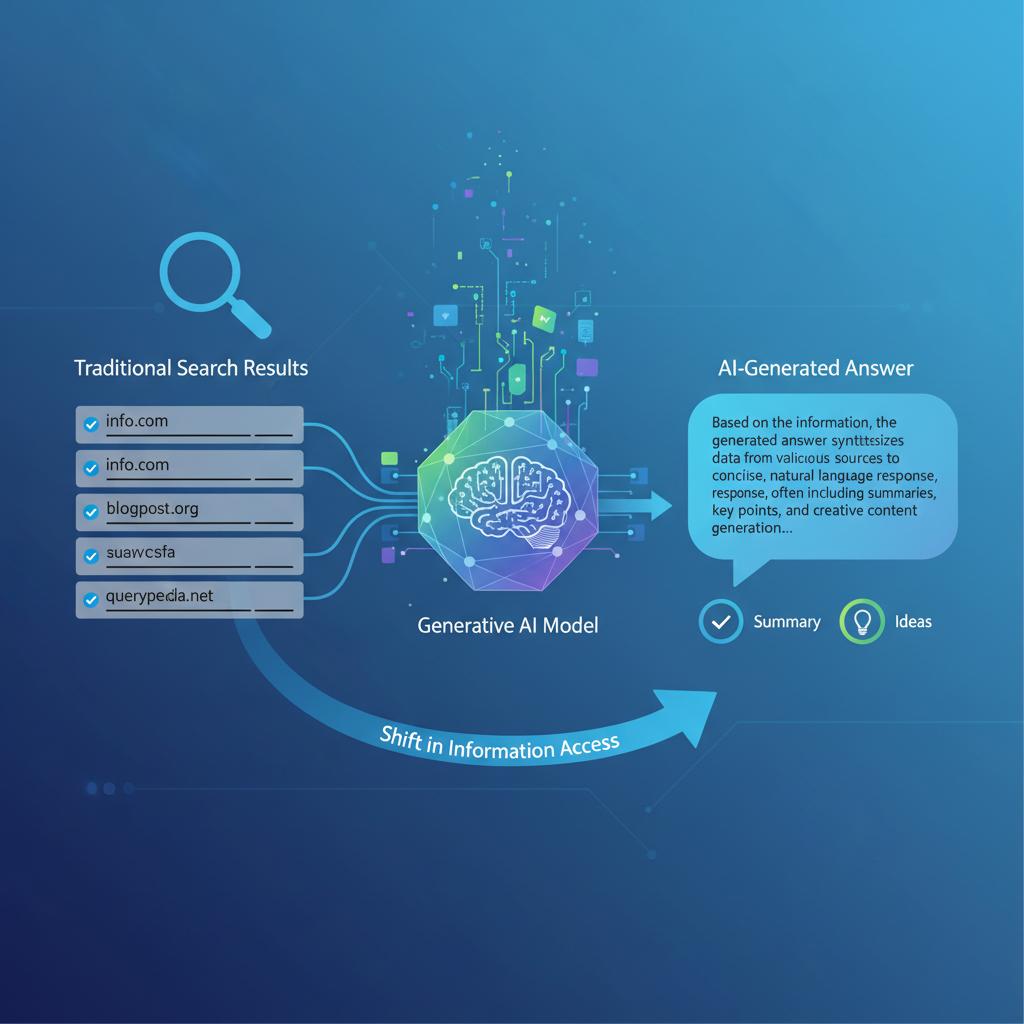
Generative Engine Optimization, or GEO, is a new discipline. It prepares your content for AI-powered search experiences. Think beyond the blue links. Think AI-synthesized answers. Your content does not just rank, it gets included in the AI’s direct response. It becomes part of the generated answer, often with attribution.

This is a fundamental shift. Google’s Search Generative Experience (SGE) and other AI models are summarizing information. They are answering questions directly. Your content must be ready for this synthesis.

Why GEO Matters Now

Users expect immediate, comprehensive answers. AI delivers this. Businesses that fail to adapt will lose visibility. They will lose influence. They will lose market share. Your content needs to feed the AI, not just lure a click.

This is not a future problem. It is a present challenge. CEOs and CMOs must integrate GEO into their performance marketing strategies. The math demands it. Efficiency dictates it. Scale depends on it.

GEO vs. SEO: The Fundamental Shift

Understand the distinction. This is not a replacement, it is an evolution. SEO targets the traditional SERP. GEO targets the AI’s answer box, the generative output.

Ranking vs. Inclusion

  • SEO Goal: Achieve a high position in a list of web pages. Drive traffic to your site.
  • GEO Goal: Be accurately cited or integrated into an AI-generated answer. Influence the AI’s understanding of a topic.

Your content must be authoritative enough for an AI to quote it. It must be structured enough for an AI to extract key facts. This is a higher bar.

The Signal, Not Just The Source

Traditional SEO focused on the source, your website. GEO focuses on the signal your content sends to an AI. Is it clear, concise, and factually robust? Can an AI easily process and summarize it?

This also relates to Answer Engine Optimization (AEO), which is a subset focused on specific direct answers. GEO is broader, encompassing the entire generative experience, including summaries and conversational AI responses.

The Quality Imperative: E-E-A-T Redux

Experience, Expertise, Authoritativeness, and Trustworthiness (E-E-A-T) always mattered. With GEO, E-E-A-T is non-negotiable. AI models prioritize high-quality, verifiable information. They seek out established authorities. Weak content will be ignored. Untrustworthy sources will be filtered out. Your brand’s credibility is paramount.

Demonstrate your deep understanding. Provide unique insights. Back claims with data. This builds the trust AI needs to leverage your content.

Crafting Content for the AI Era

Optimizing for GEO requires a disciplined approach. It is not about tricking algorithms. It is about clarity, accuracy, and structured information.

Structured Data is Your Friend

Implement schema markup. Use clear headings and subheadings. Employ bullet points and numbered lists. These structures help AI parse your content efficiently. They highlight key information. They make your data machine-readable.

Think of it as providing a cheat sheet to the AI. Make it easy for the AI to find the answer it needs within your text.

Answer the Question, Directly

Anticipate user questions. Provide direct, unambiguous answers early in your content. Avoid unnecessary jargon or fluff. Get to the point. AI models are trained on question-answer pairs. Mimic this structure.

Every piece of content should aim to resolve a specific user intent with utmost clarity.

Authority and Trust are Non-Negotiable

Cite your sources. Link to credible external data. Showcase your team’s expertise. Build a robust content ecosystem where every piece reinforces your authority. This is not just for human readers, it is for AI validation.

AI models prioritize trustworthy sources. Become one. Consistently. Reliably.

Bottom Line

GEO is not a fad. It is the future of search visibility. Traditional SEO skills remain vital, but the game evolved. You must optimize for AI inclusion, not just list rankings. Focus on exceptional content quality, clear structure, and undeniable authority. Adapt now. Or risk irrelevance.