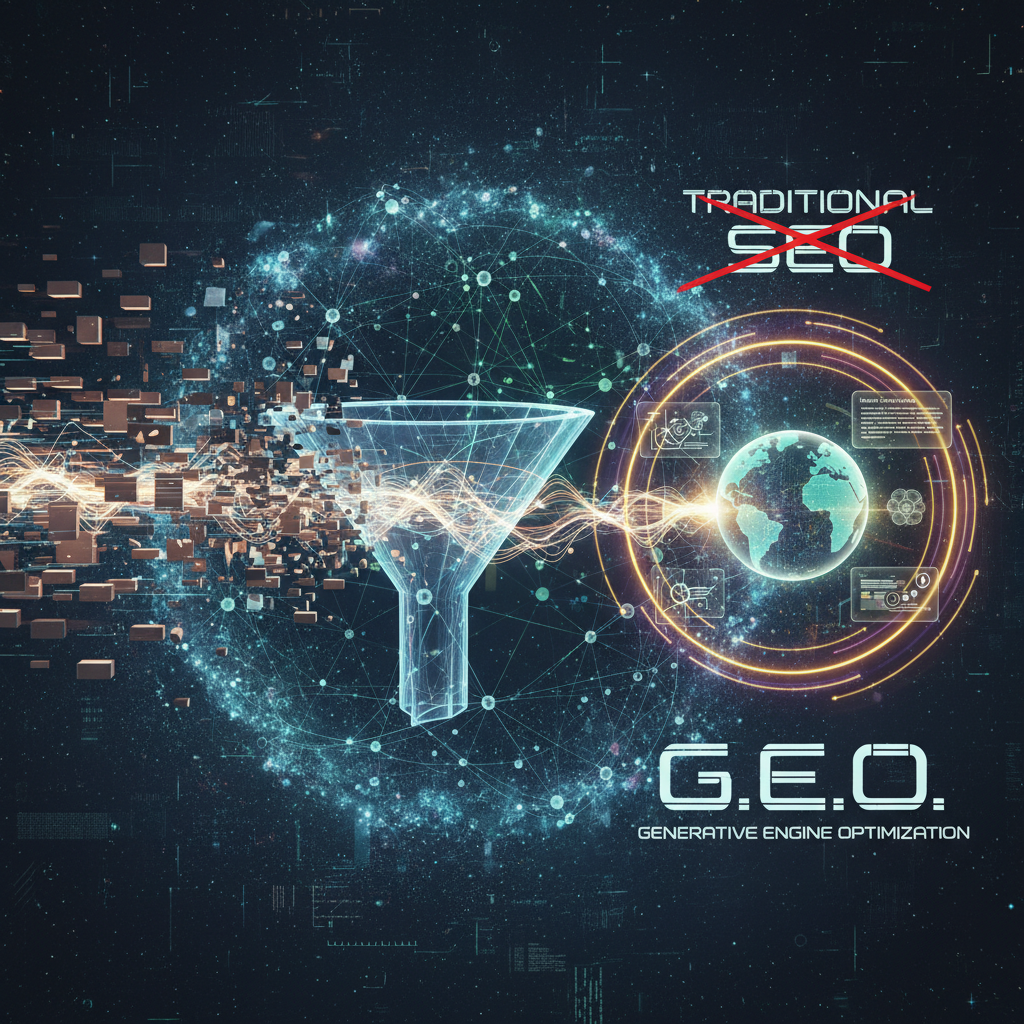
Briefing Your Agency for Generative Engine Optimization: How to Capture ROI in AI Search

The search landscape is shifting. Traditional keyword optimization, while still relevant, no longer dominates. AI-driven generative engines are reshaping how users find information. For senior leaders, this is not merely a technical shift. It is a fundamental change in how your brand secures visibility and drives measurable return on investment.

You must adapt. Your agency partners must adapt. This guide outlines how to strategically brief your performance marketing agency to capitalize on Generative Engine Optimization, or GEO. We focus on hard ROI, not vanity metrics.

What is Generative Engine Optimization (GEO)?

GEO is about optimizing your content to be the recognized, authoritative source in AI-generated answers. It moves beyond ranking for keywords. It focuses on being cited, summarized, and integrated directly into responses from Large Language Models and AI search interfaces. This is about becoming the answer, not just a link.

Think beyond search result pages. Think about direct answers, conversational AI, and synthesized information. Your content needs to be precise, factual, and deeply authoritative. It must satisfy user intent comprehensively, allowing AI systems to confidently source your data.

Why GEO Matters Now: The ROI Imperative

AI search is not a future concept. It is here. Users increasingly interact with AI directly. When an AI answers a query, your brand has a choice: be the source, or be invisible. For CMOs and CEOs, invisibility means lost market share, reduced lead generation, and diminished brand equity.

The ROI from effective GEO is clear:

  • Increased Brand Authority: Being cited by AI builds unparalleled trust.
  • Direct User Engagement: AI-generated answers can drive users directly to your site for deeper dives.
  • Reduced Customer Service Load: Proactive, AI-delivered answers can resolve common queries before they reach your support team.
  • Competitive Advantage: Early adopters dominate mindshare. Lagging means playing catch-up, at a higher cost.

This is about future-proofing your digital presence. It is about measurable impact on your bottom line.


Briefing Your Agency for GEO: A Strategic Playbook

Engaging your agency for GEO requires a clear, precise brief. Do not expect them to guess your objectives. Provide direction. Demand results.

  1. Define Clear, Measurable ROI Objectives

    Before any work begins, specify what success looks like. Generic goals are useless. Focus on tangible outcomes:

    • AI Citation Volume: Track how often your brand or content is explicitly referenced in AI-generated responses.
    • Direct Traffic from AI Referrals: Implement tracking to attribute traffic originating from AI answer boxes or conversational interfaces.
    • Brand Sentiment in AI Summaries: Monitor the tone and accuracy of AI summaries about your company or products.
    • Reduced Inquiry Volume: Measure any decrease in common inbound customer service queries, indicating AI is providing answers.

    Insist on baseline metrics. Demand regular reporting against these KPIs.

  2. Provide Comprehensive Data Sourcing & Attribution

    AI models require robust, verifiable data. Your agency needs access to your internal knowledge bases, product documentation, white papers, and historical data. This is not optional. It is fundamental.

    Instruct your agency to establish clear attribution models. They must demonstrate where AI is sourcing your content. This ensures proper credit and identifies content gaps.

  3. Emphasize Authority & Trust Signals

    AI prioritizes authoritative sources. Your agency must focus on amplifying your E-E-A-T (Experience, Expertise, Authoritativeness, Trustworthiness) signals. This involves:

    • Highlighting expert authors and their credentials.
    • Securing high-quality backlinks from reputable industry sites.
    • Ensuring content is fact-checked, updated, and accurate.
    • Leveraging customer testimonials and case studies as verifiable proof points.

    Your brand’s credibility is paramount. AI will not promote unreliable information.

  4. Demand a Multi-Modal Content Strategy

    AI processes more than just text. It integrates images, videos, audio, and structured data. Your agency must develop a multi-modal content strategy. This means:

    • Optimizing images with descriptive alt text and captions.
    • Transcribing and summarizing video and audio content.
    • Implementing structured data (Schema markup) to explicitly define entities and relationships.
    • Creating infographics and data visualizations that are easily parsable.

    Do not limit content to blog posts. Diversify your information assets.

  5. Focus on Entity-Based Optimization

    AI understands entities: people, places, organizations, concepts. Your content needs to clearly define and interlink these entities. This goes beyond keyword stuffing.

    Instruct your agency to:

    • Map key entities related to your business.
    • Ensure consistent naming conventions across all content.
    • Create dedicated entity pages or knowledge hubs.
    • Utilize internal linking to build semantic networks.

    This builds a robust knowledge graph around your brand, making you an undeniable authority.

  6. Integrate Predictive Analytics

    Effective GEO is proactive, not reactive. Your agency should leverage predictive analytics to anticipate emerging AI search trends and user queries. This involves:

    • Analyzing query patterns and AI answer evolution.
    • Identifying content gaps before they become critical.
    • Forecasting changes in AI model behavior.

    This allows your agency to optimize content ahead of the curve, maintaining your leadership position. Demand foresight, not just hindsight.


GEO, SEO, AEO: Understanding the Landscape

Generative Engine Optimization does not replace traditional SEO or Answer Engine Optimization. It complements and expands them. Here is a breakdown:

Optimization Paradigm Primary Goal Key Focus Measurement Content Approach
SEO (Search Engine Optimization) Rank high in traditional search engine results pages (SERPs). Keywords, backlinks, technical SEO, content relevance. Organic traffic, keyword rankings, impressions, clicks. Web pages, blog posts, articles, landing pages.
AEO (Answer Engine Optimization) Appear in featured snippets, knowledge panels, direct answers. Direct answers to specific questions, structured data, clear formatting. Featured snippet impressions, direct answer visibility. FAQ sections, concise answers, lists, tables.
GEO (Generative Engine Optimization) Be the authoritative source cited in AI-generated responses and summaries. Entity authority, multi-modal content, trust signals, comprehensive information. AI citation volume, direct AI referral traffic, brand sentiment in AI summaries. Knowledge bases, robust entity pages, factual content, structured data across all formats.

A cohesive strategy integrates all three. Neglecting one compromises the others.

Measuring GEO Success: Beyond the Click

Traditional SEO metrics, while important, are insufficient for GEO. You must look deeper. Success in GEO means your brand is actively shaping AI-generated knowledge. This translates into hard business outcomes:

  • Enhanced Brand Equity: Consistent AI citation builds an undeniable reputation.
  • Accelerated Customer Journey: AI-powered answers can guide users faster through consideration to conversion.
  • Reduced Marketing Spend: Becoming a default AI source means less reliance on paid channels for basic awareness.

Demand that your agency provides methodologies for tracking these advanced metrics. They must move beyond basic organic traffic reports.

Operationalizing GEO: What to Expect from Your Agency

Implementing GEO is complex. It requires specialized skills in AI comprehension, data architecture, and content strategy. Your agency should be transparent about their process:

  • Audit & Gap Analysis: A thorough review of your existing content for GEO readiness.
  • Content Refactoring: Re-structuring and enhancing current content for AI parsability.
  • New Content Development: Creation of entity-rich, multi-modal content assets.
  • Technical Implementation: Schema markup, internal linking, site architecture for AI crawlers.
  • Continuous Monitoring & Adaptation: AI models evolve rapidly. Optimization is an ongoing process.

Expect a partnership focused on continuous improvement, driven by data and AI insights. This is not a set-it-and-forget-it initiative.


Bottom Line

Generative Engine Optimization is not a trend. It is the new frontier of digital dominance. Your ability to capture ROI in the AI search era hinges on a precise, data-driven approach. Brief your agency with clarity. Demand measurable outcomes. Focus on becoming the undeniable source of truth for AI. Anything less is a concession of future market share.

Frequently Asked Questions

What is Generative Engine Optimization (GEO)?

GEO optimizes content to be recognized as an authoritative source in AI-generated answers. It focuses on content being cited, summarized, and integrated directly into responses from Large Language Models and AI search interfaces, aiming to become the answer itself rather than just a link.

Why is Generative Engine Optimization (GEO) important for businesses?

GEO is critical because it enhances brand authority through AI citation, drives direct user engagement, can reduce customer service loads, and provides a significant competitive advantage by future-proofing a brand’s digital presence in the evolving AI search landscape.

How does Generative Engine Optimization (GEO) differ from traditional SEO and AEO?

SEO focuses on ranking high in traditional search engine results pages. AEO aims to appear in featured snippets and direct answers. GEO, however, prioritizes being the authoritative source cited directly within AI-generated responses and summaries, emphasizing entity authority and multi-modal content.

What should businesses include when briefing an agency for Generative Engine Optimization (GEO)?

Businesses should define clear, measurable ROI objectives (e.g., AI citation volume, direct AI traffic), provide comprehensive internal data, emphasize E-E-A-T signals, demand a multi-modal content strategy, focus on entity-based optimization, and integrate predictive analytics.

How is success measured in Generative Engine Optimization (GEO)?

Success in GEO is measured by metrics such as AI citation volume, direct traffic attributed to AI referrals, positive brand sentiment reflected in AI summaries, and a reduction in common inbound customer service queries due to AI-provided answers.

AI Search Demands Entities: Your New Content Strategy for Authority and ROI

The rules of search changed. Google’s algorithms, powered by Large Language Models, no longer just match keywords. They understand meaning. They recognize expertise. Your content must adapt. Ignoring this shift costs you reach, authority, and revenue.

This isn’t about minor tweaks. It’s a fundamental re-evaluation of how you build content and establish digital presence. It’s about securing your brand’s relevance in an AI-dominated ecosystem.


The AI Content Reckoning: Entities Over Keywords

Traditional SEO Fails Here

For years, marketers chased keywords. High search volume, low competition. We optimized titles, meta descriptions, and body copy. This worked. It delivered traffic. But AI systems think differently. They don’t just see words; they see concepts. They see entities.

Keyword stuffing is dead. Keyword density is a relic. AI needs substance, not repetition. It needs verifiable authority.

The Rise of Entity-First Thinking

An entity is a distinct concept, person, place, or thing. Think of it as a node in a vast knowledge graph. AI connects these nodes. It builds relationships. When your content consistently addresses a specific set of related entities, it builds topical authority.

This approach moves beyond mere query matching. It focuses on comprehensive understanding. It positions your brand as an expert, a go-to source for complex subjects. This is critical for both human users and AI systems.


Building Topical Authority: The Smart Way

Semantic Depth: Beyond the Surface

AI seeks complete answers. Shallow content, even if keyword-rich, gets ignored. Semantic depth means covering a topic comprehensively. It means exploring related sub-topics, answering implicit questions, and connecting concepts logically.

  • Cover the spectrum: Address all facets of a core topic.
  • Answer user intent: Anticipate user questions, both explicit and implicit.
  • Connect the dots: Link related entities within your content naturally.

This isn’t about writing longer for the sake of it. It’s about delivering complete value. It’s about satisfying AI’s hunger for interconnected knowledge.

Structured Data: AI’s Blueprint

AI needs help. It needs signals. Structured data, like Schema Markup, provides that blueprint. It explicitly tells search engines what your content is about. It defines entities, their attributes, and their relationships.

This is non-negotiable. Implement relevant Schema types. Mark up your articles, your organization, your products, and your FAQs. This makes your content machine-readable. It increases your chances of appearing in rich snippets and featured results.

Don’t leave interpretation to chance. Dictate it.


Practical Implementation: Your Entity Strategy Playbook

Transitioning to an entity-first strategy requires discipline. Here are the steps:

  1. Identify Core Topics and Entities: What are the central themes of your business? What entities define your expertise? Map them out.
  2. Audit Existing Content: Analyze your current articles. Do they cover topics comprehensively? Are entities clearly defined? Identify gaps.
  3. Develop Content Clusters: Create hub pages for broad topics. Build spokes—individual articles—that dive deep into related entities. Interlink them intelligently.
  4. Implement Structured Data: Use Schema Markup consistently. Validate it. Ensure it accurately reflects your content’s entities and relationships.
  5. Focus on Authority Signals: Earn backlinks from authoritative sources. Foster genuine engagement. Your overall domain authority contributes to entity recognition.

Old vs. New: Content Strategy Shift

Feature Keyword-Centric SEO (Old) Entity-First SEO (New)
Primary Focus Individual keywords, search volume Topical authority, conceptual understanding
Content Goal Rank for specific terms Establish expertise, answer complex queries
Strategy Keyword density, surface-level content Semantic depth, comprehensive coverage, structured data
Measurement Keyword rankings, organic traffic Visibility in knowledge panels, rich results, expert citation, long-tail query performance
AI Interaction Limited, pattern matching Direct understanding, conceptual recognition, citation

The shift is clear. Adapt or be left behind.


Measuring Impact and Iterating

Measuring entity-first success isn’t always about single keyword rankings. It’s about broader visibility, deeper engagement, and AI recognition.

  • Monitor Knowledge Panel Presence: Does your brand appear in knowledge panels for relevant entities?
  • Track Rich Snippets and Featured Results: Are you earning prominent placements for complex queries?
  • Analyze Long-Tail Performance: Comprehensive content naturally captures more nuanced, longer queries.
  • Observe Entity Salience: Tools are emerging that can help assess how well search engines recognize your content’s core entities.
  • ROI Focus: Ultimately, this translates to increased qualified traffic, higher conversion rates, and a stronger, more defensible brand position. That’s the metric that matters to a CMO.

This is an ongoing process. AI evolves. Your strategy must, too. Continuous analysis and refinement are paramount.


Bottom Line

AI search is here. It operates on entities, not just keywords. To win, you must build topical authority. Implement an entity-first content strategy. Structure your data. Achieve semantic depth. This drives visibility. It earns trust. It delivers ROI. Anything less is speculation, not performance. Your marketing budget demands certainty, not hope.

Frequently Asked Questions

How have AI and Large Language Models changed Google’s search algorithms?

Google’s algorithms, powered by Large Language Models, now understand meaning and recognize expertise by identifying concepts (entities) rather than just matching keywords.

What is an entity in the context of SEO?

An entity is a distinct concept, person, place, or thing that AI systems connect within a vast knowledge graph to build relationships and understand context.

How does building topical authority relate to entity-first SEO?

Building topical authority involves consistently addressing a specific set of related entities comprehensively, positioning your brand as an expert source on complex subjects.

Why is structured data important for an entity-first content strategy?

Structured data, such as Schema Markup, explicitly tells search engines about the entities in your content, their attributes, and relationships, making content machine-readable and boosting visibility.

What are the main differences between keyword-centric and entity-first SEO?

Keyword-centric SEO focuses on individual keywords and search volume, while entity-first SEO prioritizes topical authority, semantic depth, and comprehensive understanding of concepts.

AI for Performance: Optimizing Your Content Funnel for ROI

The AI Imperative in Content Strategy

Performance marketing demands efficiency. Leverage technology. AI is not a future concept. It is a present imperative for content strategy. CEOs and CMOs must integrate AI. This optimizes the content funnel. It drives measurable ROI.

AI-Driven Content Funnel Optimization

Strengthening the content funnel requires precision. AI provides that precision. It impacts every stage. From initial concept to final optimization, AI amplifies effort.

Content Ideation and Strategy

AI transforms content planning. It analyzes vast datasets. It identifies market gaps. It pinpoints high-value keywords. This moves beyond guesswork. It ensures strategic alignment. Content decisions are data-driven. They target specific audience intent.

  • Audience Intent Mapping: AI identifies user queries. It reveals underlying needs.
  • Topic Cluster Identification: AI groups related subjects. It builds authoritative content hubs.
  • Competitive Analysis: AI benchmarks against leaders. It highlights content opportunities.

Efficient Content Creation and Optimization

The content creation process sees immediate AI impact. Drafts are generated rapidly. Optimization occurs in real-time. This frees human strategists. They focus on refinement. They focus on strategic oversight.

The AI-assisted content creation process includes:

  1. Input Core Concepts: Provide AI with topic, keywords, desired tone.
  2. Generate Initial Drafts: AI produces structured content.
  3. Refine and Edit: Human experts review, fact-check, inject brand voice.
  4. SEO Enhancement: AI suggests on-page optimizations, meta descriptions, internal links.
  5. Iterative Improvement: AI learns from performance data. It refines future outputs.

SEO Integration and Semantic Relevance

AI is fundamental to modern SEO. It moves beyond keywords. It understands semantic relationships. This strengthens content authority. It improves search visibility.

  • Semantic Optimization: AI ensures comprehensive topic coverage. It uses related entities.
  • Technical SEO Support: AI identifies crawlability issues. It suggests schema markup improvements.
  • Content Gap Analysis: AI reveals missing content. It pinpoints opportunities for funnel expansion.

Measuring AI’s Impact: ROI and Efficiency

Investment in AI must yield returns. Performance marketing demands clear metrics. AI’s value is quantifiable. Focus on direct business impact.

Key Performance Indicators

Vanity metrics distract. Focus on conversion. Focus on revenue impact.

  • Organic Traffic Growth: Measure qualified visitor increases.
  • Conversion Rate Improvement: Track lead generation, sales, MQLs.
  • Content Production Efficiency: Quantify time and cost savings per asset.
  • Ranking Improvements: Monitor target keyword positions.

Attribution and Leverage

Attribute content performance directly. Understand AI’s role in the full funnel. AI multiplies output. It reduces per-unit costs. This creates significant operational leverage.

The aim is compounding growth. AI facilitates this. It allows more content to perform. It scales reach. It scales influence.


Strategic Leadership in an AI Content Era

AI is a tool. It requires expert deployment. Leadership defines its success. Strategists remain central.

Human Oversight and Strategic Expertise

AI does not replace human insight. It augments it. CEOs and CMOs provide vision. They ensure brand integrity. They validate strategic direction. AI executes. Humans lead.

  • Strategic Direction: Define content goals. Align with business objectives.
  • Quality Assurance: Maintain brand voice. Ensure factual accuracy.
  • Ethical Frameworks: Govern AI usage. Prevent bias or misinformation.

Scalability and Competitive Advantage

AI provides unprecedented scalability. More content. Faster. Higher quality. This is a competitive edge. Early adopters gain market share. Laggards fall behind. This is a zero-sum game.

The strategic partnership between human and AI is critical. It is the new efficiency frontier.


Manual vs. AI-Assisted Content Production: A Performance Comparison

Metric Manual Production AI-Assisted Production
Speed of Draft Generation Slow, resource-intensive. Rapid, near-instantaneous.
Cost Per Content Unit High, due to labor and time. Significantly lower, optimized.
Scalability Limited by human resources. Near-infinite, adaptable.
SEO Optimization Depth Variable, relies on human expertise. Consistent, data-driven, comprehensive.
Strategic Focus of Human Talent Often bogged down in execution. Elevated to strategy, oversight, refinement.

Bottom line

AI is not optional. It is essential for performance marketing content. Integrate it now. Lead the transformation. Drive measurable ROI. Secure market leadership.

Frequently Asked Questions

Q:What is the role of AI in modern content strategy?

A:AI is a present imperative for content strategy, not a future concept. It helps integrate technology to optimize the content funnel and drive measurable ROI in performance marketing.

Q:How does AI optimize the content funnel?

A:AI provides precision throughout the content funnel, from initial concept to final optimization. It transforms content planning, assists efficient content creation, and enhances SEO integration.

Q:What specific areas of SEO does AI enhance?

A:AI enhances SEO by understanding semantic relationships beyond just keywords, improving content authority and search visibility. It also provides technical SEO support and performs content gap analysis to reveal missing content.

Q:How can businesses measure the impact of AI in content marketing?

A:Businesses can measure AI’s impact through key performance indicators such as organic traffic growth, conversion rate improvements, and content production efficiency. Tracking target keyword ranking improvements also quantifies AI’s value.

Q:Why is human oversight crucial in an AI content era?

A:Human oversight is crucial because AI is a tool requiring expert deployment and strategic leadership. Humans provide vision, ensure brand integrity, and validate strategic direction, while AI augments their insight and executes tasks.

Q:What are the main differences between manual and AI-assisted content production?

A:AI-assisted production offers rapid draft generation, significantly lower cost per content unit, and near-infinite scalability compared to manual methods. It also provides consistent, data-driven SEO optimization depth, allowing human talent to focus on strategy and oversight.

How to Redesign Your Full-Funnel Strategy for Generative AI Search: Mastering Generative Engine Optimization (GEO) in a Zero-Click World

Generative AI changed search. Period. Your old funnel strategies are dead weight. Generative Engine Optimization, GEO, is not optional. It is survival. We talk zero-click. We talk ROI.

The New Reality: Generative AI and Zero-Click Search

Search is different. AI models provide direct answers. Users get answers without clicking. Your traffic dips. This is the “zero-click” environment. Adapt, or get left behind.

AI’s Impact on the Funnel

AI collapses traditional stages. It synthesizes information. It answers direct questions. Users no longer hunt for answers. They receive them. This demands a new approach to content creation.

From Clicks to Citations

Clicks were the old currency. Citations are the new. AI models reference sources. They attribute. Your goal: become the authoritative source AI cites. This means factual accuracy. This means structured data.

Redesigning Your Funnel: The GEO Imperative

Your TOFU, MOFU, BOFU still exist. Their execution changed. We optimize for AI comprehension, not just human clicks. Efficiency matters. Scale matters. Math matters.

Top of Funnel (TOFU) for AI

TOFU content must establish authority. It must answer broad questions definitively. Think comprehensive guides. Think detailed explanations. AI needs factual bedrock. Provide it. Your content must be the most complete, most accurate resource available.

Middle of Funnel (MOFU) for AI

MOFU shifts to direct comparison and solution-oriented content. AI presents options. Be the best option. Highlight specific features. Detail clear benefits. Structure data for easy AI digestion, comparisons, pros, cons.

Bottom of Funnel (BOFU) for AI

BOFU is about conversion. AI can drive it directly. Clear calls to action. Unambiguous value propositions. Optimize product pages for direct AI summaries. The AI should lead users straight to your solution.


Funnel Stage Traditional Strategy (Click-Focused) GEO Strategy (Citation & Conversion-Focused)
TOFU Attract clicks with broad keywords, high volume. Establish AI authority, provide definitive answers, become primary citation.
MOFU Engage users, build trust with detailed content, lead magnets. Facilitate AI comparisons, highlight unique value, structure benefits for direct output.
BOFU Drive direct conversions, clear CTAs, landing pages. Optimize for direct AI recommendations, ensure unambiguous solution presentation, integrate with AI-driven user journeys.

Mastering Generative Engine Optimization (GEO)

GEO is not a buzzword. It is a framework. It is how you win.

Authoritative Content Structuring

  • AI loves structure. It needs clarity.
  • Use clear headings. Use semantic HTML.
  • Provide factual, verifiable information.
  • This means less fluff. More substance.
  • Think entities, relationships, context.

Optimizing for AI Platform Citation Patterns

  • Different AIs, different citation habits. Understand them.
  • Some prefer direct quotes. Others summarize and attribute.
  • Your content must be easily digestible for any AI.
  • This often means concise paragraphs. It means clear sentences.
  • It means being the signal, not the noise.

Predictive Content Strategy

Anticipate AI queries. Not just human queries. What questions will AI models ask your data? Create content designed to answer those questions. Proactively. This is about future-proofing your visibility. This is about scale.

Measuring Success in the Zero-Click World

Old metrics are insufficient. New ones are essential. ROI is still king. Its calculation has changed.

Redefining Conversion Metrics

  • Track citations. Track AI-driven recommendations.
  • How often does an AI mention your brand, product, or service?
  • Direct traffic from AI-influenced searches remains vital.
  • Look for changes in brand mentions across platforms.

Tracking AI-Driven Influence

Implement advanced analytics. Monitor user journeys starting from AI interactions. Consider fractional attribution for AI-assisted conversions. The user may not click your site first. But AI steered them your way. That influence has value. Measure it.

Bottom line

Generative AI is here. Your marketing funnel must adapt. GEO is the strategic imperative. Not an option. Focus on authority, structure, and direct answers for AI models. Measure influence, not just clicks. The future of performance marketing is about optimizing for the machines that guide human decisions. Win there, win everywhere.

Frequently Asked Questions

What is Generative Engine Optimization (GEO)?

Generative Engine Optimization (GEO) is a strategic framework for optimizing content to be recognized and cited by generative AI models, crucial for maintaining visibility and driving conversions in a zero-click search environment.

How does generative AI impact traditional search marketing and user funnels?

Generative AI provides direct answers, leading to ‘zero-click’ searches and collapsing traditional marketing funnel stages. It shifts the focus from attracting clicks to becoming the authoritative source that AI models cite.

How do the TOFU, MOFU, and BOFU stages change with GEO?

In GEO, TOFU establishes AI authority with definitive answers, MOFU facilitates AI comparisons and highlights unique value, and BOFU optimizes for direct AI recommendations and unambiguous solution presentation.

What are the key elements for optimizing content for AI citation?

Optimizing for AI citation involves structuring content with clear headings and semantic HTML, providing factual and verifiable information, being concise, and developing a predictive content strategy to anticipate AI queries.

What metrics should be tracked to measure success in a zero-click search world?

In a zero-click world, success metrics include tracking AI citations, AI-driven recommendations, direct traffic from AI-influenced searches, changes in brand mentions, and analyzing user journeys starting from AI interactions.

AI in Content: Leverage for Performance Marketing Executives

AI-Driven Content: Beyond Creation, Towards Conversion

AI’s role in content extends past simple generation. It is a strategic lever for performance marketing. Executives must shift focus from AI’s output volume to its conversion impact. This requires an ROI-focused lens, applying AI for efficiency and measurable growth across the content funnel.

The Content Funnel Reimagined with AI

The traditional content funnel is often inefficient. AI refines this process, strengthening each stage. It automates analysis, optimizes targeting, and scales production, leading to predictable performance.

AI for SEO: Precision and Scale

AI significantly enhances search engine optimization efforts. It allows for unprecedented precision and scale in content strategy. This directly strengthens the content funnel, driving qualified traffic.

  • Keyword Intelligence: AI identifies high-value, low-competition keywords with greater accuracy. It uncovers semantic relationships missed by manual methods.
  • Topic Clustering: AI structures content around comprehensive topic clusters, establishing clear topical authority. This improves organic search visibility.
  • Content Optimization: AI audits existing content. It suggests real-time optimizations for readability, relevance, and search intent alignment.
  • Performance Forecasting: AI predicts content performance based on historical data and market trends. This informs strategic content investments.

From Output to ROI: Measuring AI Content Performance

Measurement is critical. AI-assisted content processes deliver superior efficiency and measurable ROI. The focus remains on conversion, not just content output.

Metric/Process Traditional Content AI-Assisted Content
Time to Market Weeks to Months Days to Weeks
Cost Per Article High Reduced by 30-50%
Scaling Capacity Linear, Resource-Bound Exponential, Data-Driven
SEO Performance Potential Variable, Manual Insights Optimized, Predictive
Content Quality Control Subjective Review Objective, AI-Guided Audits

Strategic Integration: Leading the AI Content Charge

Integrating AI into your content strategy requires executive leadership. It is not a departmental task. It is a fundamental shift in operational leverage. Leaders must define the guidelines and ensure strategic alignment.

  1. Define Strategic Objectives: Clearly articulate how AI content supports overall business goals. Focus on specific KPIs like lead generation, conversion rates, or customer acquisition cost.
  2. Establish AI Guidelines: Develop clear AIO content guidelines. These cover brand voice, data integrity, ethical use, and human oversight.
  3. Invest in Talent Upskilling: Train teams to effectively leverage AI tools. This shifts roles towards strategic oversight and critical editing, not raw content creation.
  4. Implement Iterative Testing: Deploy AI content in controlled environments. Test different approaches. Measure performance rigorously. Optimize based on data.
  5. Foster Cross-Functional Integration: Ensure AI content strategy integrates with sales, product, and customer service. Leverage insights across the organization for compounding growth.
  • Governance is Key: Without clear governance, AI content becomes a liability. Establish protocols for accuracy and brand consistency.
  • Human Oversight is Non-Negotiable: AI assists, it does not replace. Human expertise provides strategic direction, nuanced understanding, and brand authenticity.
  • Focus on Leverage: AI amplifies human effort. It allows smaller teams to achieve disproportionate results. Prioritize leverage over simple automation.

The Provocation: Your Content Funnel Is Vulnerable Without AI Leverage

Competitors are already deploying AI. Their content funnels are becoming more efficient, more targeted, and more scalable. Ignoring AI is a strategic vulnerability. It cedes market share and increases customer acquisition costs. Leverage AI or be outmaneuvered.

Bottom line

AI is not a content trend. It is a performance imperative. Executives must lead its strategic integration. Focus on conversion, efficiency, and scale. AI strengthens the content funnel, delivers measurable ROI, and secures competitive advantage. Act decisively.

Frequently Asked Questions

Q:What is AI’s primary role in content strategy beyond simple generation?

A:AI functions as a strategic lever for performance marketing, shifting the focus from content output volume to its conversion impact. It is applied with an ROI-focused lens for efficiency and measurable growth across the content funnel.

Q:How does AI specifically improve search engine optimization (SEO)?

A:AI enhances SEO by providing precision and scale in content strategy. It identifies high-value keywords, structures content into topic clusters, and suggests real-time optimizations for existing content. AI also forecasts performance, informing strategic content investments.

Q:What measurable improvements do AI-assisted content processes offer?

A:AI-assisted content processes significantly reduce time to market from weeks to days and cut costs per article by 30-50%. They also provide exponential scaling capacity, optimized SEO performance, and objective, AI-guided quality control.

Q:What steps are involved in strategically integrating AI into a content operation?

A:Strategic integration requires defining clear objectives, establishing AI content guidelines, and upskilling talent to leverage AI tools effectively. It also involves iterative testing and fostering cross-functional integration across departments.

Q:Why is human oversight essential when deploying AI for content?

A:Human oversight is non-negotiable because AI assists, it does not replace. Human expertise provides crucial strategic direction, nuanced understanding, and ensures brand authenticity. It also establishes governance to prevent AI content from becoming a liability.

AI, Content, and Search Arbitrage: The Executive Playbook

The Imperative of AI in Performance Content

AI transforms content and search. Leaders face a choice: leverage or lag. This is not about content volume. It is about strategic advantage. AI is a force multiplier for performance marketing outcomes.

The Content Funnel Redefined by AI

AI fundamentally reshapes the content funnel. It moves beyond simple article generation. The process becomes efficient, integrated. It strengthens the content funnel end-to-end.

AI-Assisted Content Creation: The New Standard

The AI-assisted content creation process is now standard. It streamlines output. It strengthens the content funnel. This requires strategic oversight, not just tool deployment.

  1. Ideation: AI identifies topic clusters, gaps, and intent.
  2. Production: AI drafts, optimizes, and revises.
  3. Optimization: AI refines for search and user engagement.

Search Arbitrage Through Intelligent Content

Content/search arbitrage is a performance marketing imperative. AI enables this at scale. Identify undervalued keywords. Create superior content efficiently. Capture traffic at lower cost.

Exploiting Market Inefficiencies

The market has inefficiencies. AI identifies these. It highlights where content can outcompete. This is a media buyer test. It measures content’s direct ROI.

Arbitrage requires precision. It demands data-driven content decisions. It moves beyond keyword stuffing. It focuses on intent capture and conversion.

Strategic SEO in the AI Era

SEO in the AI era is no longer a tactical checklist. It is a strategic pillar. AI understands semantics. It enhances relevance. It predicts search evolution.

Beyond Traditional Keyword Research

AI-driven SEO strengthens the content funnel. It reveals complex search intent. It identifies content gaps more accurately. This directly impacts content planning and deployment.

Traditional SEO methods are insufficient. AI provides deeper insights. It allows for proactive optimization, not reactive fixes.

Strategy Area Traditional Approach AI-Augmented Approach
Content Ideation Manual keyword research, competitor analysis. AI identifies topic clusters, semantic gaps, predictive trends.
Content Production Human writers, manual optimization. AI drafts, optimizes for readability, SEO, and intent.
Performance Analysis Lagging indicators, basic analytics. AI provides real-time insights, predicts funnel weaknesses, identifies arbitrage opportunities.
Strategic Leverage Volume-focused, general reach. Precision targeting, ROI-driven, efficient traffic acquisition.

ROI and Leadership Mandate

The mandate is clear: drive ROI. AI content and SEO are not experiments. They are efficiency levers. Leaders must integrate these capabilities.

Measuring Impact, Not Activity

Focus on metrics that matter. Cost per acquisition. Conversion rates. Lifetime value. AI enhances these. It delivers measurable gains.

This is about leverage. It is about scale. It demands executive attention. It is not an IT project. It is a business transformation.

Bottom line

AI is a force multiplier for content and search. Integrate it strategically. Focus on content/search arbitrage. Drive measurable ROI. Leadership must act.

Frequently Asked Questions

Q:What is the primary role of AI in performance content?

A:AI transforms content and search into a strategic advantage for businesses. It acts as a force multiplier, significantly improving performance marketing outcomes. This goes beyond just increasing content volume, focusing on efficiency and integration.

Q:How does AI redefine the content funnel?

A:AI fundamentally reshapes the content funnel by making the process efficient and integrated. It strengthens the entire content funnel from end-to-end. This moves beyond simple article generation to a more strategic approach.

Q:What is search arbitrage in the AI era?

A:Search arbitrage, enabled by AI, identifies undervalued keywords to create superior content efficiently. This allows businesses to capture traffic at a lower cost by exploiting market inefficiencies. It requires data-driven decisions focused on intent capture and conversion, not just keyword stuffing.

Q:How does AI enhance strategic SEO?

A:AI elevates SEO from a tactical checklist to a strategic pillar by understanding semantics and enhancing relevance. It predicts search evolution and reveals complex search intent and content gaps more accurately. This leads to proactive optimization and directly impacts content planning and deployment.

Q:How does AI help measure ROI in content marketing?

A:AI content and SEO are efficiency levers that help drive measurable ROI. They enhance key metrics such as cost per acquisition, conversion rates, and customer lifetime value. This allows leaders to focus on impact, not just activity, and deliver significant gains.

Generative Engine Optimization: The New Performance Mandate

The internet’s front door is changing. Generative AI is reshaping search, demanding a new approach to digital visibility. Traditional SEO, while still relevant, no longer captures the full scope of optimization required. Enter Generative Engine Optimization, GEO. This isn’t just a buzzword. It is the math behind securing your brand’s presence in an AI-first world.

For performance marketing agencies and Fractional CMOs, understanding GEO is not optional. It is fundamental to sustained client success and your agency’s profitability. This guide dissects GEO, its operational distinctions, financial implications, and actionable strategies for enhancing client visibility in AI search environments.

What is Generative Engine Optimization (GEO)?

Generative Engine Optimization is the practice of optimizing digital content and presence for visibility within generative AI search environments. It ensures AI models correctly interpret, synthesize, and present your information. It’s about influencing the AI’s answer, not just ranking a link. This demands a shift in focus from keywords to concepts, from links to authority, from clicks to accurate attribution.

The goal remains performance. The methodology evolves. We optimize for AI comprehension, trust, and relevance. This directly impacts how a brand appears when users query an AI chatbot or a generative search interface.

GEO Versus SEO: A Fundamental Shift

Traditional SEO targets algorithms to rank web pages in a list of links. GEO targets large language models (LLMs) to ensure information is accurately represented in generated summaries and answers. The objectives are distinct. The tactics diverge.

Here is a breakdown of the core differences:

Attribute Traditional SEO Generative Engine Optimization (GEO)
Primary Objective Achieve top organic search rankings for specific keywords. Ensure accurate, authoritative, and preferred representation in AI-generated answers.
Target Audience Search engine crawlers and human users clicking links. Large Language Models (LLMs) and AI search interfaces, ultimately serving human users.
Core Tactics Keyword optimization, link building, technical SEO, content marketing, on-page optimization. Topical authority development, semantic clarity, structured data for LLMs, entity optimization, prompt engineering principles, factual accuracy.
Performance Metrics Organic traffic, keyword rankings, click-through rates (CTR), conversion rates. Attribution in AI answers, sentiment analysis of AI summaries, brand mention frequency, factual representation accuracy, influence on generated content.
Content Focus Optimized for search engines, designed for clicks to a specific page. Optimized for LLM comprehension, designed for factual extraction and synthesis, building comprehensive topical authority.

SEO still matters. Your website needs to be crawlable. But GEO dictates how that content is understood and presented by AI. It’s about being the source, not just ranking the source.

Building and Scaling Your GEO Practice

For agencies, integrating GEO isn’t a pivot. It’s an expansion. It demands new skill sets, refined processes, and a strategic view of client digital presence.

1. Talent Acquisition and Training

  • Data Scientists: Understanding how LLMs process information is critical.
  • Content Architects: Beyond writers, these professionals structure content for AI comprehension.
  • Semantic Strategists: Experts in entity relationships and topical authority.
  • Training: Upskill existing SEO teams on AI ethics, prompt engineering, and LLM behavior.

2. Tools and Technology Investment

Traditional SEO tools fall short. Invest in:

  • AI Content Analysis Platforms: To audit how LLMs perceive existing content.
  • Knowledge Graph Tools: For entity and relationship mapping.
  • Performance Monitoring: New tools are emerging to track brand attribution within AI-generated responses.

3. Process Redefinition

Your content creation and optimization workflows must adapt:

  1. AI-First Content Audits: Evaluate content for factual accuracy, semantic clarity, and LLM digestibility.
  2. Topical Authority Roadmaps: Build out comprehensive content clusters designed to establish deep expertise on specific subjects.
  3. Structured Data Implementation: Beyond basic schema, focus on advanced structured data to explicitly define entities and relationships.
  4. Continuous Monitoring: Track AI-generated responses for accuracy, sentiment, and brand mentions. Adjust strategies based on AI outputs.

Measuring Performance and ROI in AI Search

Traditional metrics like keyword rankings become less relevant. We must define new indicators of success.

  • Attribution Accuracy: Is the AI correctly attributing information to your brand?
  • Share of Voice in AI Answers: How often is your brand or content featured in generative summaries?
  • Factual Representation: Is the AI accurately summarizing your services, products, and value propositions?
  • Influenced User Journeys: Tracking subsequent user actions after AI interaction, leading back to your assets.

The ROI calculation shifts. It is less about direct clicks. It is more about brand authority, informed decision-making by consumers, and pre-qualified leads influenced by AI interactions. This requires robust analytics and a deeper understanding of the customer journey through AI touchpoints.

Financial Implications for Agencies: Profitability in the AI Era

Implementing GEO is an investment. It is also a significant revenue opportunity. Agencies can position themselves as indispensable partners in the AI economy.

  1. Premium Service Offering: GEO is a high-value, specialized service. Price it accordingly.
  2. Retainer-Based Models: GEO requires ongoing strategy, content refinement, and monitoring. Structure engagements for recurring revenue.
  3. Increased Client Value: Clients who navigate the AI shift successfully will see enhanced brand perception and market position. This justifies higher fees.
  4. Competitive Differentiation: Agencies mastering GEO will stand out. They will attract forward-thinking clients. They will secure a larger market share.

The P&L impact is clear. Investing in GEO expertise allows for higher margins. It builds client loyalty. It ensures long-term agency relevance. Ignoring it guarantees obsolescence.


Bottom Line

Generative Engine Optimization is not a future trend. It is the present reality of digital performance. Agencies must embrace this shift. Build the expertise. Redefine your services. Measure what truly matters in an AI-first world.

The alternative is irrelevance. Your clients demand visibility. AI now dictates much of that visibility. Your agency’s growth, and your clients’ success, hinges on mastering GEO. Adapt. Or be left behind.

Frequently Asked Questions

What is Generative Engine Optimization (GEO)?

Generative Engine Optimization (GEO) is the practice of optimizing digital content and presence for visibility within generative AI search environments. It ensures AI models correctly interpret, synthesize, and present a brand’s information, influencing AI-generated answers rather than just ranking links.

How does Generative Engine Optimization (GEO) differ from traditional SEO?

Traditional SEO targets algorithms to rank web pages for clicks, focusing on keywords and links. GEO targets Large Language Models (LLMs) to ensure accurate, authoritative representation in AI-generated summaries and answers, focusing on concepts, topical authority, and factual attribution.

Why is Generative Engine Optimization (GEO) important for agencies and Fractional CMOs?

GEO is crucial for sustained client success and agency profitability in an AI-first world. It enables brands to maintain digital visibility, ensure accurate representation in AI search, and positions agencies as indispensable partners by mastering this new domain.

What are the primary tactics used in Generative Engine Optimization (GEO)?

Key GEO tactics include developing topical authority, ensuring semantic clarity, implementing advanced structured data for LLM comprehension, optimizing entities, applying prompt engineering principles, and maintaining rigorous factual accuracy across content.

How is performance and ROI measured in Generative Engine Optimization (GEO)?

GEO performance is measured by attribution accuracy, share of voice in AI answers, factual representation of brand information, and the influence on user journeys post-AI interaction. This shifts focus from direct clicks to brand authority and informed decision-making.

AI in Performance Marketing: Strategic Leverage, Not Automation

The AI Imperative for Performance Marketers

Beyond Content Mills: AI as a Force Multiplier

AI redefines content production. It is not a human replacement. It is a leverage point for existing teams. This shifts focus from manual output to strategic oversight. Efficiency gains are significant.

Strengthening the Content Funnel with AI

Precision Targeting, Accelerated Velocity

AI identifies audience intent. It informs keyword strategy. It accelerates topic generation. Content funnels become more efficient, not just larger. This ensures every piece aligns with performance goals.

SEO Enhancement: From Analysis to Action

AI processes vast data. It pinpoints SEO opportunities. It suggests optimization vectors. This moves SEO beyond manual audits. It enables proactive, continuous improvement. We strengthen the content funnel directly.

The AI-Assisted Content Creation Process

Our approach integrates AI systematically. It ensures rigor and results.

  1. Audience and Keyword Research: AI tools analyze market data. They identify high-value search terms and user intent.
  2. Content Brief Generation: AI assists in structuring detailed briefs. These guide human writers. They ensure alignment with SEO and funnel objectives.
  3. Drafting and Structuring: AI provides initial drafts or outlines. This accelerates the creative process. Human expertise refines and injects strategic depth.
  4. Optimization and Refinement: AI identifies gaps. It suggests improvements for readability, SEO, and conversion. This is iterative.
  5. Performance Monitoring: AI tracks content performance metrics. It provides insights for ongoing strategy adjustments. This closes the feedback loop.

This process is systematic. It ensures quality, relevance, and scale. It drives compounding growth.

Strategic Integration: AI’s Impact on ROI

Efficiency Metrics: The Hard Numbers

AI integration is not optional. It is a competitive advantage. The impact on return on investment is clear.

Metric Traditional Content/SEO AI-Augmented Content/SEO
Cost per Content Asset High. Labor-intensive research, writing, optimization. Lower. AI streamlines initial stages, reduces manual hours.
Time to Market Weeks to months for quality, optimized content. Days to weeks. AI accelerates drafting and optimization cycles.
Scalability Linear. Requires proportional increase in human resources. Exponential. AI enables significant volume without linear cost growth.
Accuracy of Targeting Subjective, relies on human interpretation of data. Data-driven, precise. AI processes vast datasets for intent mapping.
Strategic Focus of Team Often bogged down in execution. Elevated to strategy, oversight, high-value problem solving.

AI reduces time to market. It lowers production costs. It frees human capital for high-value strategic tasks. This translates directly to improved marketing ROI. It is about leverage and compounding gains.

Bottom line

AI is not a future trend. It is a current operational imperative for performance marketers. Implement AI strategically. Secure performance gains. Drive market leadership. The alternative is falling behind.

Frequently Asked Questions

Q:What is the primary role of AI in performance marketing content production?

A:AI acts as a force multiplier for existing teams, redefining content production rather than replacing humans. It shifts focus from manual output to strategic oversight, leading to significant efficiency gains for marketers.

Q:How does AI strengthen the content funnel for marketers?

A:AI strengthens the content funnel by identifying audience intent and informing keyword strategy. It accelerates topic generation, ensuring every content piece aligns precisely with performance goals.

Q:What are the key steps in an AI-assisted content creation process?

A:The process involves AI tools for audience and keyword research, assisting in content brief generation, and providing initial drafts. AI also helps with optimization, refinement, and performance monitoring for ongoing adjustments.

Q:How does AI impact the return on investment (ROI) for content marketing?

A:AI integration significantly improves ROI by lowering the cost per content asset and reducing time to market. It enables exponential scalability and frees human capital for high-value strategic tasks, leading to compounding gains.

Q:Why is AI integration considered essential for performance marketers today?

A:AI is a current operational imperative that provides a competitive advantage and drives market leadership. Strategic AI implementation secures performance gains, and not adopting it risks falling behind competitors.

A Practical Guide to Mastering Generative Engine Optimization (GEO) and Evolving Attribution Models for Revenue in the AI-Driven Zero-Click Search Landscape

The search landscape changed. It did not evolve; it fractured. Users now find answers directly on the search results page. Your website, often, is an afterthought. This is the zero-click era, fueled by aggressive AI integration. Traditional marketing models are failing. Clicks are dwindling. Your revenue, if you cling to old ways, will follow.

This demands a new playbook. We’re talking Generative Engine Optimization, or GEO. We’re talking about attribution models that actually reflect value, not just last clicks. This isn’t theory. This is about your business, your bottom line. We will provide a practical guide to mastering GEO and evolving your attribution to secure revenue in this AI-driven reality.

The Zero-Click Reality: Your Brand, Unseen

Users are getting smarter. AI is getting faster. Today, a significant percentage of searches result in zero clicks to external websites. Search Engine Result Pages (SERPs) provide comprehensive answers, summaries, and direct solutions. Google, for instance, aims to keep users within its ecosystem.

What does this mean for your brand? Visibility without traffic. Awareness without a website visit. Your brand may appear in a featured snippet, a knowledge panel, or an AI-generated summary, but the user never lands on your domain. If your strategy relies on the click, your revenue will suffer. We must adapt.

Generative Engine Optimization (GEO): Building for the Machines

GEO isn’t SEO. SEO optimizes for human users via search engines. GEO optimizes for AI models that interpret and synthesize information. You’re not just ranking for keywords. You’re building content that AI can readily understand, summarize, and present as an authoritative answer.

This means going beyond basic keyword stuffing. It means building a digital footprint that AI deems credible, comprehensive, and easily digestible. The goal: be the definitive source, even if the user never leaves Google.

Actionable Tactics for GEO

  • Structured Data is Paramount: Implement robust schema markup. This gives AI clear signals about your content’s context, entities, and relationships. It’s feeding the machine directly.
  • Semantic SEO, Not Keyword Stuffing: Focus on topics, not just keywords. Create comprehensive content around core entities and their relationships. AI understands concepts, not just isolated terms.
  • Answer Questions Directly: Anticipate user queries. Provide concise, direct answers within your content. These are ripe for AI summaries and featured snippets.
  • Contextual & Machine-Readable Content: Use clear headings, short paragraphs, and bullet points. Avoid jargon where simpler terms suffice. AI prioritizes clarity and organization.
  • Build a Knowledge Graph: Internally link related content. Create an interconnected web of information on your site. This helps AI understand the depth and breadth of your expertise.

GEO vs. Traditional SEO: A Fundamental Shift

Feature Traditional SEO Generative Engine Optimization (GEO)
Primary Goal Drive clicks to website Achieve AI visibility, direct answers, brand presence on SERP
Content Focus Keywords, backlinks, user experience Structured data, semantic entities, direct answers, clarity for AI
Success Metric Organic traffic, keyword rankings SERP features, direct answer inclusion, brand mentions in AI outputs
Attribution Challenge Last-click bias Measuring unseen, non-click interactions

Steps to Implement GEO

  1. Audit Existing Content: Identify content suitable for structuring and optimization.
  2. Research AI-Driven Queries: Understand what types of questions AI is answering directly.
  3. Implement Schema Markup: Systematically apply relevant schema to all valuable content.
  4. Rewrite for Clarity & Conciseness: Ensure content is easily digestible by AI models.
  5. Monitor SERP Features: Track your appearance in featured snippets, knowledge panels, and direct answers.

Rethinking Attribution in a Zero-Click World

The click is no longer the sole measure of impact. In a zero-click environment, traditional attribution models are obsolete. Last-click attribution, for example, assigns 100% of the credit to the final interaction. This ignores all the prior touchpoints where your brand built awareness, trust, or provided an answer directly on the SERP.

We need models that value every interaction, seen and unseen. We need to measure the influence of brand presence in AI-generated answers, even when no click occurs. This is about understanding the full customer journey, not just the last step.

New Attribution Models for Zero-Click Interactions

The future of attribution is data-driven, nuanced, and holistic. Here are key considerations:

  • Data-Driven Attribution (DDA): Leverages machine learning to assign credit to different touchpoints based on actual conversion paths. This is far superior to arbitrary rule-based models.
  • Algorithmic Attribution: Employs complex algorithms to analyze the entire customer journey, identifying the true impact of each interaction, including brand exposure without clicks.
  • Brand Mention Tracking: Monitor when your brand or its solutions are cited in AI-generated summaries, voice search answers, or other non-click interactions. Assign value to this exposure.
  • Cross-Channel Integration: Integrate data from all marketing channels, online and offline. Zero-click interactions might influence a direct visit, an offline purchase, or a phone call.
  • Focus on Incremental Value: Determine which interactions truly move a prospect closer to conversion, rather than just being present.

The Hierarchy of Value: Tracking True Impact

In this new landscape, a new hierarchy of value emerges. It’s not just about clicks, but about influence at every stage of the customer journey:

  • Brand Awareness: Your brand appearing in a prominent AI summary, even without a click, builds awareness and credibility. This has tangible, if indirect, value.
  • Consideration: When AI recommends your product or service as a solution, it directly influences the consideration phase. This is powerful.
  • Intent & Conversion: While a direct click remains ideal for immediate conversion, the groundwork laid by GEO and AI presence significantly impacts downstream conversion rates.
  • Loyalty & Advocacy: Consistent, authoritative presence in AI results reinforces brand trust, fostering long-term loyalty.

For smaller brands, this hierarchy presents opportunity. You don’t need a massive ad budget to compete. You need precise, hyper-relevant content that answers specific questions better than anyone else. AI favors clarity and authority, not just domain size. Focus on niche topics where you can be the definitive source. Build trust through consistent, valuable information, and AI will reward you with visibility. This is how small brands win in a zero-click world: surgical precision, not brute force.

Case Study: Small Brand X’s GEO Revenue Boost

Consider “OptiFlow,” a niche B2B SaaS company offering project management tools for engineering firms. OptiFlow historically struggled with organic traffic despite solid SEO efforts. Their target audience, busy engineers, often sought quick answers to specific workflow problems.

OptiFlow shifted to a GEO strategy. They meticulously structured their blog content with schema markup for “How-to” guides, “Product Features,” and “FAQ” sections. They rewrote existing articles to be hyper-concise, directly answering common engineering pain points. They identified long-tail queries like “best risk management software for civil engineers” where AI could easily pull direct answers.

Result: While direct organic traffic saw only a modest increase, OptiFlow experienced a 25% increase in branded searches over six months. Their sales team reported prospects citing OptiFlow solutions they’d seen in AI summaries and Google’s direct answer boxes, not necessarily from a website visit. Using an algorithmic attribution model, OptiFlow linked these zero-click interactions to a 15% uplift in qualified leads, directly correlating to a significant revenue increase. They proved that AI visibility, even without a click, drives commercial value.


Bottom Line

The zero-click, AI-driven search landscape is not a future threat. It is your present reality. Ignoring Generative Engine Optimization means your brand will become invisible. Clinging to outdated attribution models means you’re mismeasuring your marketing impact, potentially leaving significant revenue on the table. This is about survival. It’s about efficiency, scale, and strategic integration into the new digital ecosystem. Embrace GEO, evolve your attribution, and secure your revenue. Or watch your competitors do it first. The choice is yours.

Frequently Asked Questions

What is the ‘zero-click era’ in search?

The zero-click era refers to a significant percentage of searches where users find answers directly on the Search Engine Result Pages (SERPs) through summaries, featured snippets, or knowledge panels, without clicking through to an external website.

What is Generative Engine Optimization (GEO)?

Generative Engine Optimization (GEO) is a strategy that optimizes content for AI models to interpret, synthesize, and present as authoritative answers, focusing on making content readily understandable by machines for visibility on the SERP rather than just driving clicks.

How does Generative Engine Optimization (GEO) differ from traditional SEO?

GEO’s primary goal is to achieve AI visibility and direct answers on the SERP by focusing on structured data, semantic entities, and clarity for AI. Traditional SEO primarily aims to drive clicks to a website based on keywords, backlinks, and user experience.

What are key tactics for implementing Generative Engine Optimization (GEO)?

Key GEO tactics include implementing robust structured data (schema markup), focusing on semantic SEO, directly answering anticipated user queries, creating contextual and machine-readable content, and building an internal knowledge graph.

Why are traditional attribution models insufficient in the zero-click era?

Traditional attribution models, such as last-click, are insufficient because they fail to measure the value of brand presence or direct answers provided on the SERP without a click, thus misrepresenting the true impact of marketing efforts in an AI-driven landscape.

What new attribution models are suggested for zero-click interactions?

Suggested new attribution models include Data-Driven Attribution (DDA), Algorithmic Attribution, Brand Mention Tracking to assign value to non-click exposure, cross-channel integration, and focusing on incremental value to measure true impact across the customer journey.

Post-Audit Strategies: Proactively Shaping Your Brand’s LLM Perception

The digital landscape shifted. AI, specifically Large Language Models (LLMs), now mediate brand discovery. Your brand’s authority, visibility, and sentiment in AI-generated responses are not accidental. They are strategic assets, or liabilities.

A reactive approach to AI perception is a losing game. Auditing your brand’s presence within LLMs is step one. The real ROI comes from what you do next. This is about influencing, shaping, and solidifying your brand’s narrative where it matters most: within the algorithms.

The Imperative: Beyond the AI Brand Audit

An AI brand audit exposes truth. It reveals how ChatGPT, Gemini, and other generative AI tools interpret your brand. Are facts accurate? Is sentiment positive? How do you stack against competitors?

Knowing is insufficient. The audit provides a baseline. The strategic challenge: how to move the needle. This requires a shift from passive observation to active intervention. We must engineer brand perception within these complex systems.

Why Proactive Influence Matters Now

AI search, or Answer Engine Optimization (AEO), is the new frontier. Traditional SEO guides users to your site. AEO delivers direct answers. If AI misrepresents your brand, you lose direct influence, traffic, and revenue. You surrender control to an algorithm. That is unacceptable for any ROI-driven leader.

  • Control Your Narrative: Prevent misinformation from proliferating.
  • Build Authority: Establish your brand as a trusted source for AI.
  • Drive Intent: Guide AI to recommend your solutions over competitors.
  • Future-Proof: Adapt to an AI-first information ecosystem.

Implementing Post-Audit Strategies: A Framework for Influence

The goal is to move from audit findings to actionable, measurable improvements. This isn’t about gaming the system. It is about strategic content architecture and data hygiene.

  1. Content Authority Reinforcement:

    AI learns from vast datasets. Your owned content is paramount. Ensure your website, knowledge base, and official publications are rich, accurate, and structured. Use clear, concise language. Semantic optimization for LLMs is critical.

    • Structured Data Implementation: Leverage Schema markup. Guide AI to understand key entities, relationships, and facts about your brand.
    • Knowledge Hub Development: Create dedicated, authoritative content hubs. Answer common questions. Define your products, services, and unique selling propositions explicitly.
    • API-First Content: Consider delivering content via API where appropriate. This directly feeds information to systems that LLMs might access.
  2. Third-Party Validation & Citation Strategy:

    AI values external validation. Build a robust ecosystem of authoritative citations. Secure mentions from reputable industry sources, academic papers, and news outlets. This signals trust and relevance to LLMs.

    • Press Relations Optimization: Ensure press releases and media kits are AI-readable. Emphasize key data points and brand statements.
    • Strategic Partnerships: Collaborate with other authoritative brands. Co-create content that strengthens both entities’ standing.
    • Academic & Research Contributions: Fund or participate in research relevant to your industry. Ensure your brand is cited in scholarly works.
  3. Direct LLM Feedback & Correction Protocols:

    Not all LLMs offer direct feedback mechanisms, but where they exist, use them. Establish clear protocols for reporting inaccuracies. This is a reactive measure, but a necessary one to course-correct quickly.

    • Dedicated Team: Designate individuals to monitor LLM outputs for brand mentions.
    • Rapid Response: Develop a streamlined process for submitting correction requests.
    • Track Impact: Document reported issues and subsequent changes. Measure improvement over time.
  4. Leveraging AI for Influence:

    Use AI to fight AI. Analyze LLM response patterns. Identify optimal phrasing, concepts, and content structures that resonate with AI. Python applications, for instance, can automate large-scale analysis of LLM outputs and identify semantic gaps.

    • Sentiment Analysis Tools: Deploy AI tools to continuously monitor brand sentiment across various LLM outputs.
    • Predictive Content Modeling: Use AI to predict which content strategies will likely yield the most favorable LLM responses.
    • Synthetic Data Generation: In controlled environments, explore how carefully crafted synthetic data might influence LLM training. This is a complex, ethical frontier requiring expert guidance.

Measuring and Benchmarking AI Perception Performance

What gets measured, improves. Define key performance indicators for your AI perception strategy. Track progress meticulously.

Key Metrics:

  • Accuracy Score: Percentage of AI responses accurately reflecting brand facts.
  • Sentiment Score: Net positive sentiment percentage in AI-generated brand mentions.
  • Authority Ranking: Frequency and prominence of your brand as a primary source by LLMs for relevant queries.
  • Competitive Share of Voice (AI): Your brand’s presence in AI responses compared to key competitors.

Reactive vs. Proactive AI Brand Management

Attribute Reactive Approach Proactive Approach
Trigger Inaccurate AI output discovered. Strategic goal: shape AI perception.
Focus Damage control, correction. Influence, authority building, optimization.
Time Horizon Short-term, immediate fix. Long-term, sustainable advantage.
Cost Efficiency Higher, fixing errors is expensive. Lower, prevents errors, builds assets.
Brand Impact Mitigates negative perception. Establishes positive, authoritative perception.
ROI Cost avoidance. Direct business growth, competitive edge.

The Fractional CMO Perspective: Strategic Integration

For a Fractional CMO, this isn’t just a marketing task. It is a critical business integration challenge. Brand perception in LLMs impacts customer acquisition, reputation, and valuation. It requires executive oversight.

Align your content, PR, and technical teams. Establish clear ownership for AI perception management. Integrate these strategies into your overall digital transformation roadmap. This is about long-term growth, secured through diligent, intelligent action.

Challenges and Ethical Considerations

Influencing AI is not without its hurdles. Biases inherent in training data can perpetuate inaccuracies. The “black box” nature of some LLMs makes direct manipulation difficult. Ethical guidelines are paramount. Transparency and authenticity must remain central. Do not attempt to mislead or deceive AI. Focus on clear, factual, and authoritative communication.

Bottom line.

Your brand’s identity in the age of AI is a product of deliberate strategy. Auditing is a start. Proactive influence, through structured content, robust validation, and intelligent monitoring, secures your position. This isn’t optional. It is essential for sustained authority and measurable ROI in an AI-driven world. Ignore it, and your brand risks becoming irrelevant, or worse, misrepresented, by the very tools shaping future customer interactions. Lead with data, lead with clarity, and own your narrative.

Frequently Asked Questions

What is an AI brand audit?

An AI brand audit assesses how generative AI tools like ChatGPT or Gemini interpret your brand, evaluating the accuracy of facts, sentiment, and competitive standing to establish a baseline for strategic action.

Why is it important to influence my brand’s perception in AI and LLMs?

Influencing AI perception is crucial because LLMs mediate brand discovery, impacting narrative control, authority building, guiding customer intent, and future-proofing your brand in an AI-first information ecosystem.

What is Answer Engine Optimization (AEO)?

Answer Engine Optimization (AEO) is a strategic approach to ensure AI models deliver direct, accurate, and favorable answers about your brand, aiming to guide AI to recommend your solutions and prevent misrepresentation.

How can a brand proactively influence its perception in AI models after an audit?

Proactive influence involves reinforcing content authority with structured data and knowledge hubs, securing third-party validation, utilizing direct LLM feedback mechanisms, and leveraging AI tools to analyze and optimize responses.

What metrics should be used to measure AI perception performance?

Key metrics include accuracy score (percentage of accurate AI responses), sentiment score (net positive sentiment), authority ranking (frequency and prominence as a primary source by LLMs), and competitive share of voice within AI responses.