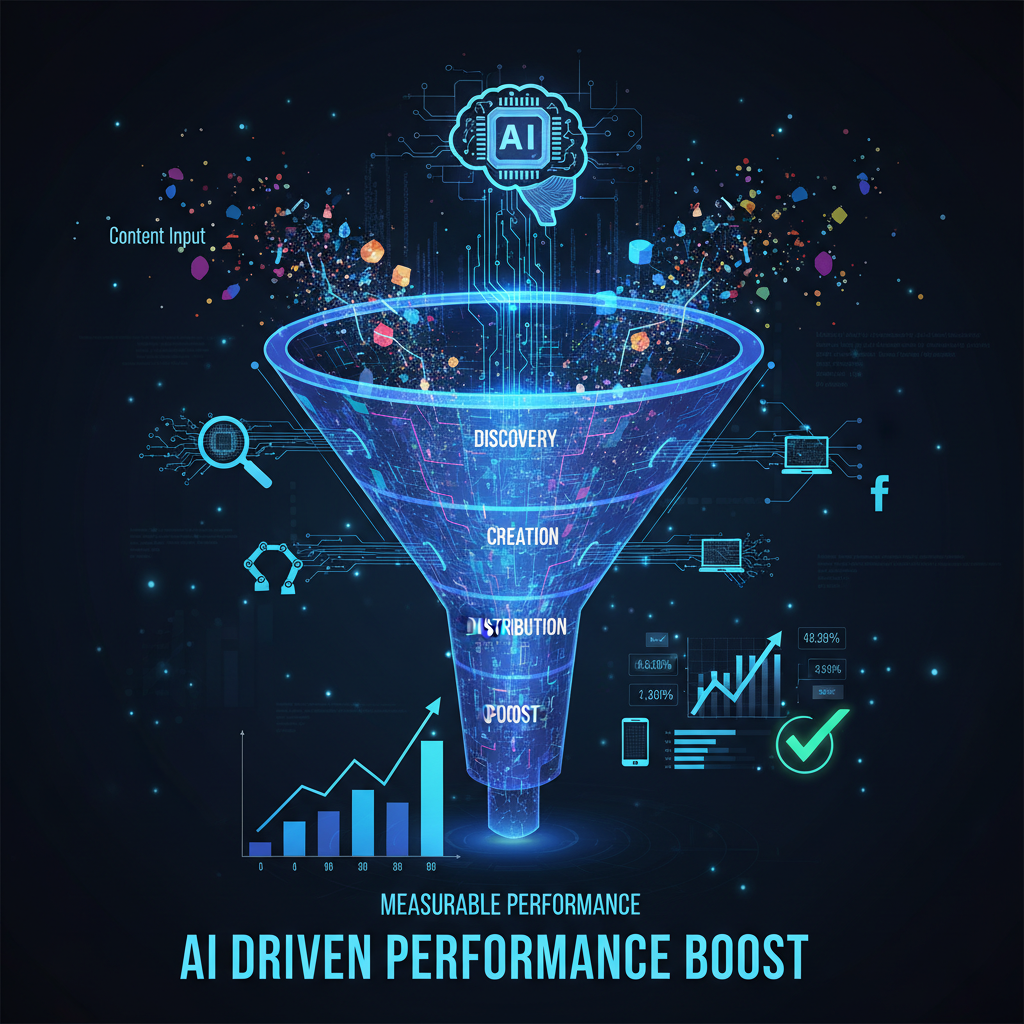

Content Arbitrage: The Performance Marketing Imperative

Content as a Performance Lever

Traditional content often fails to deliver direct, measurable returns. It operates as a cost center, not a profit driver. This is a fundamental miscalculation. Content must function as a performance marketing channel. It is a lever for market share, not a brand exercise.

The Arbitrage Opportunity in Search

Market inefficiencies exist in search. Undervalued keywords and topics represent an arbitrage opportunity. Identify these gaps. Dominate them with superior content. Convert traffic at scale. This is content as a media buy, offering compounding returns. It demands a performance-first mindset.

From Content Funnel to Revenue Engine

A strengthened content funnel directly drives revenue. Each piece of content serves a purpose in the buyer journey. It is not about volume. It is about strategic placement and conversion efficacy.

  • Awareness Content: Captures initial interest. Solves immediate problems. Establishes authority.
  • Consideration Content: Educates prospects. Compares solutions. Builds trust.
  • Decision Content: Converts intent. Addresses objections. Drives direct action.

Each stage requires precise content. Each stage demands measurable performance. The goal is predictable, scalable customer acquisition.

Metrics That Matter: Performance Content vs. Traditional Content

Most content metrics are vanity. Performance content focuses on tangible outcomes. This requires a shift in reporting. Focus on efficiency, not just reach.

Metric Category Traditional Content Focus Performance Content Focus
Traffic & Engagement Page Views, Time on Page, Bounce Rate Organic Sessions by Keyword/Topic, % New Users, Pages/Session, Lead Volume from Organic
Conversion Comments, Social Shares Lead Conversion Rate (LCR), Marketing Qualified Leads (MQLs), Sales Qualified Leads (SQLs)
Revenue Brand Mentions, Backlinks Customer Acquisition Cost (CAC) via Organic, Lifetime Value (LTV) of Organic Customers, ROI
Efficiency Content Production Cost Cost Per Lead (CPL) via Organic, Time to First Conversion, Content-Driven Revenue Share

Report on what directly impacts the bottom line. Eliminate noise. Focus on leverage.

Leading the Performance Content Shift: A CMO’s Mandate

CMOs must lead this strategic pivot. Integrate content deeply within the performance marketing architecture. This is not a siloed initiative. It is core to scaling customer acquisition efficiently.

  1. Audit Existing Content: Identify underperforming assets. Pinpoint arbitrage opportunities.
  2. Map Content to Funnel Stages: Align content pieces with specific buyer journey points and conversion goals.
  3. Implement Performance Tracking: Establish robust analytics. Connect content directly to leads and revenue.
  4. Optimize for Conversion: Treat content like landing pages. Relentlessly test calls to action, user experience, and funnel progression.
  5. Scale Successful Arbitrage: Double down on topics and content types that deliver superior ROI. Expand into new, adjacent arbitrage opportunities.

This is about leadership. It is about understanding the math of content. It is about driving predictable growth.

Bottom line

Content is a performance channel. Treat it as such. Seek arbitrage opportunities in search. Build a funnel that converts. Measure what matters: ROI. Lead with precision, not platitudes. Your balance sheet demands it.

Frequently Asked Questions

Q:What is performance content?

A:Performance content functions as a direct marketing channel, driving measurable returns rather than operating as a cost center. It aims to act as a lever for market share and a profit driver, focusing on tangible outcomes.

Q:How does performance content leverage search arbitrage opportunities?

A:Performance content identifies market inefficiencies by targeting undervalued keywords and topics in search. The strategy is to dominate these gaps with superior content to convert traffic at scale, treating content like a media buy.

Q:What role does content play in different stages of the buyer journey?

A:Content is strategically designed for each buyer journey stage: awareness content captures initial interest, consideration content educates prospects and builds trust, and decision content converts intent into direct action. This ensures each piece serves a specific purpose for predictable customer acquisition.

Q:What are the key metrics for measuring performance content effectiveness?

A:Key performance content metrics include organic sessions by keyword/topic, lead conversion rate (LCR), marketing/sales qualified leads (MQLs/SQLs), customer acquisition cost (CAC) via organic, and cost per lead (CPL) via organic. These metrics focus on efficiency and direct impact on the bottom line.

Q:How can CMOs implement a performance content strategy?

A:CMOs should audit existing content, map content to funnel stages, implement robust performance tracking, optimize for conversion, and scale successful arbitrage opportunities. This integrates content deeply within the performance marketing architecture to drive efficient customer acquisition.

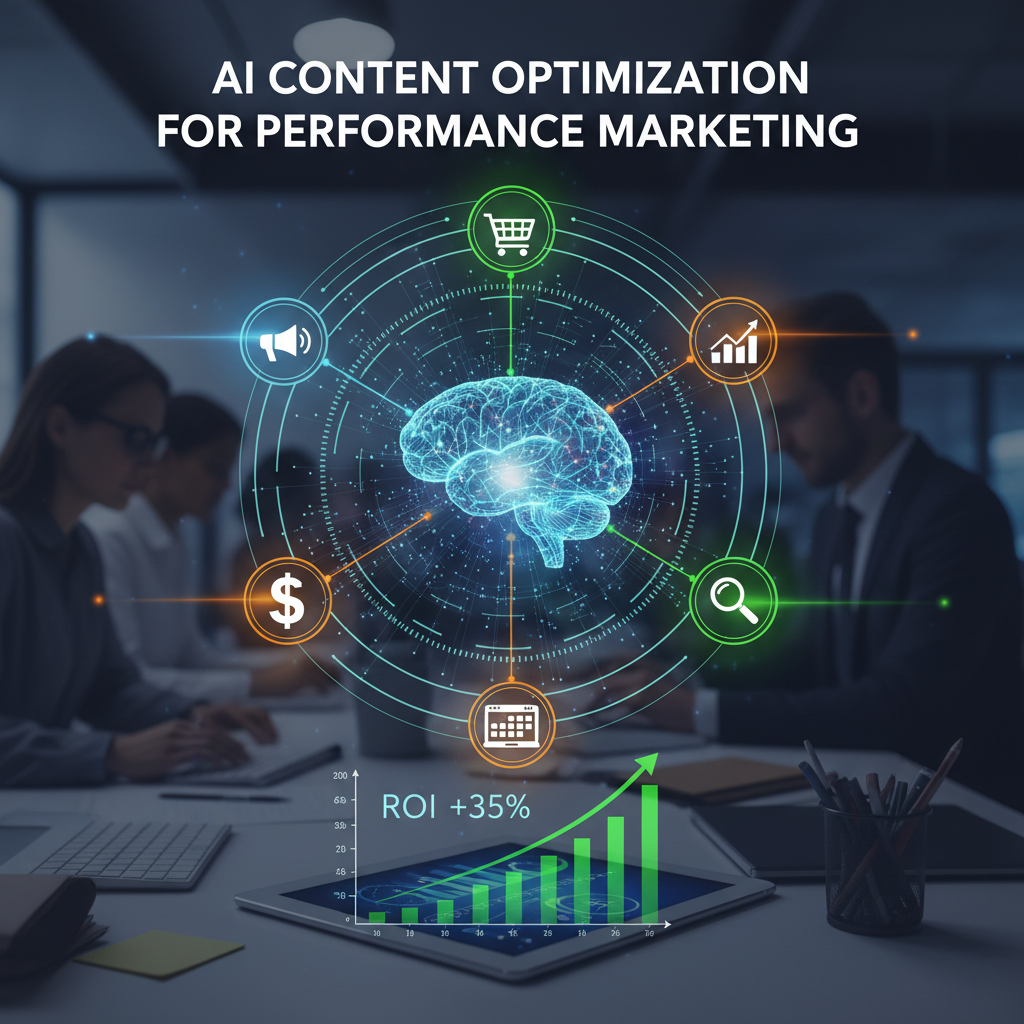
Generative Engine Optimization: The New ROI Frontier for Leadership

Traditional SEO is dead. Not truly, but its dominance is waning. Generative Engine Optimization, GEO, redefines how brands secure visibility in AI-driven search. This is not about keywords alone. This is about commanding presence in a new digital ecosystem. Leadership must adapt. Rapidly.


GEO: Beyond Keywords. Beyond Links.

Generative AI has fundamentally shifted search. Users no longer type queries and scan ten blue links. They ask questions. They receive curated answers. These answers originate from large language models, LLMs, synthesizing information across the web. Your brand’s content must be among that synthesized information. Without direct optimization for these AI models, your visibility, your authority, dissolves.

The Fundamental Shift: SEO vs. GEO

Understanding the difference is critical. It impacts budget allocation. It redefines content strategy. It necessitates new measurement frameworks. This is not an incremental change, it is a paradigm shift.

Aspect Traditional SEO Generative Engine Optimization (GEO)
Primary Goal Rank for keywords in SERPs. Drive organic traffic. Achieve brand mention, authority, and inclusion in AI-generated answers. Influence AI recommendations.
Core Focus Keywords, backlinks, technical SEO, user experience. Factual accuracy, structured data, topical authority, clear semantic relationships, brand prominence.
Content Strategy Keyword-rich articles, blog posts, landing pages. High-quality, authoritative, contextually rich, demonstrably accurate content. Answers specific questions directly. Supports AI training.
Measurement Organic rankings, traffic, conversions, CTR. AI mentions, sentiment, contextual relevance, brand prominence in AI summaries, direct AI-driven leads.
Success Metric Increased organic search traffic. Increased brand authority and visibility within AI responses. Direct influence on user decisions driven by AI.

Actioning GEO: Practical Strategies for Brand Visibility

Transitioning to a GEO-focused strategy demands specific actions. This is not theoretical. It is about tangible output. It drives measurable results.

1. Content Optimization for AI Recommendations

Your content must be designed for machine consumption, not just human readability. LLMs analyze patterns, facts, and relationships. Give them what they need.

  • Factual Accuracy is Paramount: AI prioritizes verifiable information. Inaccuracies erode trust.
  • Structured Data Implementation: Use schema markup. Explicitly define entities, relationships, and attributes. This guides AI to your core information.
  • Topical Authority Builds Trust: Consistently produce in-depth content on specific subjects. Become the definitive source.
  • Clarity and Brevity: AI models prefer direct, unambiguous statements. Avoid jargon where simpler language suffices.

2. Enhancing Brand Prominence in AI-Driven Search

This is about more than just being found. It is about being recommended. It is about influencing the AI’s perspective on your brand.

  • Direct Answer Formats: Structure content to directly answer common questions. Make it easy for AI to extract and present your information.
  • Expert Citations: Position your internal experts as thought leaders. Get them cited by reputable sources. AI values expert consensus.
  • Brand Mentions and Entity Recognition: Actively monitor and encourage mentions of your brand across high-authority platforms. Ensure consistent brand messaging.
  • Building Semantic Relationships: Connect your brand, products, and services to relevant concepts and entities. This creates a richer knowledge graph for AI.

Measuring and Reporting GEO Impact: Board-Ready Metrics

CEOs and CMOs demand ROI. GEO efforts are no exception. You must translate AI mentions into revenue impact. This requires new metrics. It requires precise reporting.

1. From AI Mentions to Revenue Impact

Quantifying the direct financial return of GEO is crucial. This is not a soft metric game.

  • Brand Mention Volume & Sentiment: Track how often your brand appears in AI-generated content. Analyze the sentiment associated with those mentions. Positive sentiment drives perception.
  • AI-Driven Traffic & Conversions: Develop methods to attribute traffic and conversions originating from AI search experiences. This is complex, but essential.
  • Share of Voice in AI: Measure your brand’s prominence relative to competitors within AI-generated responses. This directly reflects market influence.
  • Lead Quality from AI Engagements: Evaluate the quality of leads generated through AI interactions or recommendations. High quality leads mean efficient spend.

2. Performing an Effective GEO Test

A GEO test isolates the impact of your optimization efforts. This provides concrete data for leadership decisions.

  1. Define Clear Objectives: What specific AI visibility outcome are you targeting? E.g., increased mentions in a specific AI assistant, improved sentiment.
  2. Baseline Measurement: Document your current brand presence and sentiment in relevant AI search environments.
  3. Implement Targeted GEO Changes: Optimize specific content pieces or schema. Focus on a defined set of questions or topics.
  4. Monitor & Analyze: Track changes in AI mentions, sentiment, and attributed traffic. Compare against your baseline.
  5. Report Quantifiable Results: Present findings in a clear, concise format. Show direct correlation to business objectives.

3. Crafting Board-Ready Reporting

Your C-suite expects clarity, brevity, and financial impact. Frame GEO as a strategic imperative, not a technical exercise. A fractional CMO excels here, translating technical wins into business growth narratives.

  • Focus on Business Outcomes: Link GEO efforts directly to brand equity, lead generation, sales pipeline, and competitive advantage.
  • Quantify ROI: Show how investment in GEO translates to measurable returns. Present cost-per-AI-mention or AI-driven lead acquisition costs.
  • Highlight Strategic Advantage: Emphasize how GEO secures future market position and reduces reliance on traditional, increasingly costly, channels.
  • Outline Next Steps & Investment: Clearly define future GEO initiatives and the required resources. Tie these to anticipated growth.

Bottom Line

Generative Engine Optimization is not a future concept. It is current reality. Brands ignoring this shift will lose ground. They will lose visibility. They will lose revenue. Leaders must integrate GEO into their core marketing strategy now. This means investing in structured content, understanding AI’s consumption patterns, and rigorously measuring impact. The ROI for early adopters will be substantial. For the laggards, the cost of inaction will be catastrophic.

Frequently Asked Questions

What is Generative Engine Optimization (GEO)?

Generative Engine Optimization (GEO) is a strategy for securing brand visibility in AI-driven search environments. It focuses on optimizing content to be synthesized by large language models (LLMs) and influence AI recommendations, moving beyond traditional keyword ranking.

How does Generative Engine Optimization (GEO) differ from traditional SEO?

Traditional SEO targets keyword rankings and organic traffic in SERPs. GEO aims to achieve brand mentions and authority within AI-generated answers and influence AI recommendations. Its core focus is on factual accuracy, structured data, topical authority, and clear semantic relationships, rather than just keywords and backlinks.

What are practical strategies for optimizing content for GEO?

Practical strategies include prioritizing factual accuracy, implementing structured data (schema markup), building topical authority through in-depth content, and ensuring clarity and brevity. Content should be designed for machine consumption and directly answer common questions.

How is the impact of Generative Engine Optimization (GEO) measured?

GEO impact is measured through metrics such as brand mention volume and sentiment in AI-generated content, AI-driven traffic and conversions, share of voice in AI responses compared to competitors, and the quality of leads generated from AI engagements.

Why is it crucial for brands to adopt GEO now?

Adopting GEO is crucial now because it represents a current paradigm shift in search, with AI-driven results replacing traditional links. Brands that integrate GEO can secure future market position and avoid losing visibility and revenue in this evolving digital landscape.

AI-Driven Content Strategy: Unlocking Performance Marketing Leverage

Performance marketing demands precision. Every dollar, every click, every conversion requires measurable impact. The content landscape shifts. AI is not a future possibility. It is a present imperative. Ignoring it concedes market share, efficiency, and scale to competitors. This is not about automation for automation’s sake. It is about strategic leverage for demonstrable ROI.

The AI Content Imperative

Content fuels the performance funnel. Its volume, relevance, and velocity directly impact acquisition and retention. Traditional content creation models struggle with scale and cost efficiency. They often fail to deliver the granular optimization performance marketers require. AI fundamentally alters this equation. It provides the mathematical edge.

This is not a debate on human versus machine. This is a directive on human *with* machine. CMOs and CEOs must integrate AI, or accept sub-optimal performance. The choice is clear: lead with intelligent systems or follow with obsolete processes.

Strengthening the Content Funnel with AI

AI extends across the entire content lifecycle. It injects efficiency and insight at every stage, directly strengthening the content funnel. This process moves beyond simple content generation. It encompasses strategic planning, execution, and continuous optimization.

Content Planning and Research

  • Market Intelligence: AI analyzes vast datasets. It identifies underserved keywords, emerging trends, and competitor content gaps. This moves planning from guesswork to data-driven certainty.
  • Audience Segmentation: Precision targeting improves content relevance. AI models identify audience intent with greater accuracy. This ensures content directly addresses specific executive needs.
  • Strategic Blueprinting: AI-powered tools assist in mapping content to funnel stages. They suggest optimal formats and topics for maximum conversion potential.

AI-Assisted Content Creation and Optimization

The AI-assisted content creation process streamlines output. It maintains quality while achieving scale. This allows for rapid iteration and deployment, critical in fast-moving markets.

  1. Initial Draft Generation: AI provides foundational content drafts. This accelerates the creative process. It reduces the initial time investment significantly.
  2. SEO Enhancement: AI optimizes content for search engines. It ensures keyword density, semantic relevance, and structural integrity. This aligns directly with a robust Search Engine Optimization service proposal.
  3. Tone and Style Refinement: AI models adapt content voice. They ensure brand consistency and audience resonance. This adheres to advanced content guidelines for optimization.
  4. Performance Prediction: AI can forecast content efficacy. It predicts engagement rates and conversion potential before publication.

This is where frameworks become operational. They enable efficient, targeted content generation. The focus remains on ROI, not just word count.

Content Distribution and Performance

  • Channel Optimization: AI identifies optimal distribution channels. It matches content to platforms where it will achieve maximum reach and engagement.
  • Personalized Delivery: AI dynamically adjusts content delivery. It tailors experiences to individual user preferences. This maximizes conversion probability.
  • Performance Analytics: AI provides deep insights into content performance. It flags underperforming assets and recommends actionable optimizations. This is continuous feedback for compounding growth.

Strategic Deployment: Beyond Basic Automation

AI is a tool, not a strategy. Effective deployment requires leadership. It demands strategic integration, not merely adoption.

AI as a Force Multiplier

AI multiplies human capabilities. It frees high-value talent from repetitive tasks. This allows focus on strategic thinking, creative oversight, and complex problem-solving. This is about leverage, not replacement. It increases overall content velocity and impact.

The Human-AI Partnership

The most effective content strategies combine human expertise with AI efficiency. Humans provide the strategic direction, the brand voice, the nuanced understanding. AI provides the scale, the data processing power, the relentless optimization. This partnership drives compounding growth.

Measuring AI’s Impact: ROI, Not Hype

The integration of AI into content marketing must yield measurable results. This is a performance marketing imperative. Focus on tangible metrics.

  • Cost Reduction: Reduced content production costs. Optimized resource allocation.
  • Efficiency Gains: Faster time to market. Increased content volume with fewer resources.
  • Performance Uplift: Higher organic rankings, improved conversion rates, increased customer lifetime value.

Consider the stark contrast between traditional and AI-augmented approaches:

Metric Traditional Content Strategy AI-Augmented Content Strategy
Content Volume Limited by human capacity. Scalable, high volume output.
Cost Per Piece High, labor-intensive. Significantly reduced overhead.
Optimization Agility Manual, slow, reactive. Automated, real-time, proactive.
Targeting Precision Broad segments, often generalized. Hyper-personalized, data-driven.
ROI Velocity Slow burn, long cycles. Accelerated, compounding returns.

Bottom line

AI in content is a strategic asset. It demands executive attention. Implement it to achieve unparalleled efficiency, scale, and precision. Drive your performance marketing metrics. Secure your competitive advantage. The market rewards those who lead with intelligent systems. Optimize for ROI. Do it now.

Frequently Asked Questions

Q:What is the role of AI in performance marketing content?

A:AI provides a mathematical edge for content in performance marketing, addressing limitations of traditional methods in scale and cost efficiency. It acts as a strategic tool to achieve measurable ROI across the content funnel.

Q:How does AI strengthen the content funnel?

A:AI strengthens the content funnel by injecting efficiency and insight across its entire lifecycle. This includes data-driven planning and research, streamlined content creation and optimization, and intelligent distribution and performance analytics.

Q:What measurable benefits does AI integration bring to content strategy?

A:Integrating AI into content strategy yields measurable benefits such as cost reduction and significant efficiency gains. It also leads to performance uplift, seen in higher organic rankings, improved conversion rates, and increased customer lifetime value.

Q:How does AI assist in the content creation and optimization process?

A:AI assists by generating initial content drafts, accelerating the creative process. It optimizes content for SEO, refines tone and style for brand consistency, and can predict content efficacy before publication.

Q:Why is AI an imperative for modern performance marketing?

A:AI is an imperative because it allows performance marketers to overcome the scale and cost limitations of traditional content creation. Integrating AI provides a competitive advantage, driving efficiency, precision, and demonstrable ROI.

Generative Engine Optimization: 10x AI Visibility, No Fluff

The digital landscape fractured. Traditional SEO, while not dead, operates in a diminished capacity. Generative AI fundamentally reshaped how information is consumed. We are past the tipping point. Your content must now thrive in generative search environments and chatbot responses. This requires Generative Engine Optimization, GEO. Forget incremental gains. We are targeting 10x AI visibility, a quantifiable leap, not a marketing platitude.

For too long, content strategy focused on Google’s organic SERPs. That model is obsolete for competitive differentiation. CEOs and CMOs must adapt or become irrelevant. This is about math, efficiency, and scale, ensuring your brand dominates the new information frontier.

What is Generative Engine Optimization (GEO)?

GEO is the strategic framework for maximizing content visibility and citation within generative AI outputs. It moves beyond keyword density and backlinks. It focuses on contextual relevance, authority, and answer completeness, precisely what large language models demand. Think of it as architecting your content for direct AI consumption and synthesis, ensuring your insights become the AI’s default answer.

The Shift: From SERPs to Synthesized Answers

Traditional SEO optimized for a user clicking a link. GEO optimizes for an AI summarizing your information, crediting your source, and presenting it as a definitive answer. This is a fundamental strategic pivot. Your content isn’t just found; it’s *used* by the AI itself, then cited to the end user.

Why GEO Matters Now: The ROI Imperative

Every dollar spent on marketing must yield a tangible return. AI is now the gatekeeper for information. If your brand isn’t visible in AI responses, your market share erodes. It’s that simple. GEO delivers direct business integration, solidifying long-term growth through pervasive AI presence.

Quantifiable Impact: Beyond Organic Traffic

The goal is not just clicks. It is authority, recognition, and the direct attribution of your expertise within generative AI environments. This translates to enhanced brand equity and a more efficient lead generation funnel. Visibility in AI means your brand is the expert, cited consistently.

The GEO Framework: Core Pillars for 10x Visibility

Achieving significant AI visibility requires a disciplined, multi-faceted approach. This is not about tricks; it is about fundamental content architecture and strategic dissemination.

  1. Contextual Authority: Create deep, comprehensive content clusters around core topics. Each piece must offer definitive answers, supported by data. AI prioritizes completeness and accuracy.
  2. Semantic Relevance: Go beyond keywords. Understand the full semantic field of your topic. Anticipate related queries and provide answers within your content. Use structured data aggressively to signal intent and content type to AI.
  3. Citation Architecture: Build an internal and external linking strategy that positions your content as the authoritative source. Encourage citations from other reputable sources. This signals to AI that your content is widely accepted and trusted.
  4. AI-Friendly Formatting: Structure content for machine readability. Use clear headings, bullet points, numbered lists, and concise paragraphs. Avoid jargon where simpler, direct language suffices. AI processes clarity efficiently.
  5. Feedback Loop & Iteration: Monitor AI citation patterns. Analyze where your content appears and where it does not. Adapt your strategy based on these insights. This is an ongoing process of refinement.

Measuring 10x AI Visibility: New Metrics for a New Era

The metrics for success have evolved. We need to measure AI visibility directly, not just proxy indicators.

Metric Category Traditional SEO Metrics Generative Engine Optimization (GEO) Metrics
Visibility Score Organic Search Rankings, SERP Impressions Direct AI Citation Count, Chatbot Response Inclusion Rate, AI Summary Penetration
Authority & Trust Domain Authority, Backlink Profile Strength AI-Attributed Expertise Score, Source Prominence in AI Summaries, Generative AI Linkbacks
Engagement & Impact Click-Through Rate (CTR), Time on Page Prompt-to-Citation Ratio, Generative AI User Engagement (post-citation), Brand Recall in AI Users
Content Performance Keyword Ranking, Content Audits Semantic Gap Analysis, AI-Identified Missing Context, Generative Model Preference Scoring

Implementing tracking for these new metrics is paramount. We develop proprietary tools and methodologies for our clients to pinpoint and amplify their AI presence.

Navigating the Transition: Challenges and Pitfalls

The shift to GEO is not without its hurdles. Many organizations cling to outdated SEO practices, believing existing strategies will suffice. This is a critical error.

Common Pitfalls to Avoid:

  • Underestimating AI’s Nuance: AI doesn’t just scan keywords, it understands context, sentiment, and intent. Generic, keyword-stuffed content will fail.
  • Ignoring Structured Data: Semantic markup is not optional, it is fundamental. Without it, AI struggles to accurately categorize and utilize your content.
  • Lack of Continuous Adaptation: Generative AI models evolve constantly. A “set it and forget it” approach guarantees obsolescence. Consistent monitoring and strategy adjustments are non-negotiable.
  • Resource Misallocation: Diverting resources to outdated SEO tactics instead of investing in GEO research and implementation is a severe misstep. Prioritize AI readiness.

Real-World Application: Building AI Dominance

Consider a B2B SaaS company specializing in marketing analytics. Instead of merely ranking for “marketing analytics software,” their GEO strategy focuses on being the cited authority for specific analytical problems. They publish comprehensive guides on “ROI attribution for complex funnels,” “predictive analytics in customer churn,” and “cross-channel budget optimization.”

Each guide is meticulously structured, data-rich, and semantically optimized. The goal: when a CMO asks ChatGPT, Gemini, or other generative AI, “How do I optimize my marketing budget across channels?”, the AI cites and synthesizes insights directly from this company’s content, positioning them as the undisputed expert. This isn’t a hypothetical, it’s an actionable blueprint for AI dominance.


Bottom Line

Generative Engine Optimization is not a future trend. It is the present. Ignoring it guarantees diminishing returns and lost market share. Businesses must strategically adapt their content, measure new metrics, and aggressively pursue AI visibility. Those who act decisively will capture the next wave of digital authority. Those who hesitate will watch their competitors become the AI’s trusted source. The choice is yours, and the clock is ticking.

Frequently Asked Questions

What is Generative Engine Optimization (GEO)?

GEO is a strategic framework designed to maximize content visibility and citation within generative AI outputs. It focuses on contextual relevance, authority, and answer completeness, moving beyond keyword density and backlinks.

How does Generative Engine Optimization (GEO) differ from traditional SEO?

Traditional SEO optimizes for a user clicking a link on SERPs. GEO optimizes for an AI summarizing your information, crediting your source, and presenting it as a definitive answer, meaning your content is used by the AI itself.

Why is Generative Engine Optimization (GEO) important for businesses today?

Generative AI is now the gatekeeper for information. If a brand’s content isn’t visible in AI responses, its market share can erode. GEO ensures direct business integration and long-term growth through pervasive AI presence.

What are the core pillars of the GEO framework for achieving AI visibility?

The GEO framework includes Contextual Authority, Semantic Relevance, Citation Architecture, AI-Friendly Formatting, and a Feedback Loop & Iteration to achieve significant AI visibility.

How is AI visibility measured in Generative Engine Optimization (GEO)?

GEO measures success with new metrics such as Direct AI Citation Count, Chatbot Response Inclusion Rate, AI Summary Penetration, AI-Attributed Expertise Score, and Generative AI Linkbacks, replacing traditional SEO metrics.

What common pitfalls should be avoided when implementing GEO?

Common pitfalls include underestimating AI’s nuance, ignoring structured data, failing to continuously adapt to evolving AI models, and misallocating resources to outdated SEO tactics.

Engineering and Optimizing for AI Search Performance: A Deep Dive into Perplexity AI Ranking and Metrics

The search landscape changed. It is not just about keywords anymore. AI search redefines how users find information, how content ranks, and how businesses capture attention. Traditional SEO is insufficient. We must engineer for AI.

This is a practical guide for developers and content strategists. We will examine system design, evaluation, and content strategy for modern AI search platforms. Perplexity AI serves as a prime example of this paradigm shift.

Deconstructing AI Search Architecture: The Perplexity Paradigm

AI search operates fundamentally different from its predecessor. It moves beyond simple keyword matching. It understands intent, context, and nuance.

Beyond Keywords: Understanding AI’s Ranking Signals

AI search engines, like Perplexity, prioritize informational authority, factual accuracy, and comprehensive understanding. Structured data is critical, but it is not the only signal. The depth and interconnectedness of your content matter. AI evaluates expertise and unique insights. It favors content that answers complex questions thoroughly, without fluff.

Consider the “messy” metrics here. User engagement time on specific answer sections, follow-up questions generated by AI after presenting your content, or even the AI’s confidence score in extracting facts from your page. These are emerging indicators of ranking efficacy.

Engineering for AI: APIs and Infrastructure

Successful AI search performance requires robust engineering. Your content infrastructure must be accessible, crawlable, and understandable by AI agents. This means clean APIs, semantic markup, and predictable data structures. Building for AI means building for machine comprehension, not just human readability. Think modular content components, clear data hierarchies. This facilitates efficient data ingestion and retrieval by AI models.

Measuring What Matters: Performance Metrics in AI Search

ROI dictates our focus. Vanity metrics are dead. We need precise, actionable data to optimize AI search performance.

The Challenge of “Messy” Metrics

Traditional metrics like organic traffic and keyword rankings remain relevant. However, AI introduces new complexities. We must track how often our content serves as a direct answer. How frequently it is cited by AI-generated responses. This moves beyond simple clicks. It focuses on direct utility for the AI model itself. It is about being the authoritative source, not just a listed result.

  • Direct Answer Rate: How often your content directly fulfills an AI query without further browsing.
  • AI Citation Volume: Frequency your content is referenced in AI-generated summaries or answers.
  • Semantic Relevance Score: An internal metric indicating how well your content aligns with complex, nuanced AI queries.

Defining ROI: What Constitutes Success?

Success in AI search is not just about volume. It is about conversion. It is about being the primary informational source that drives a user deeper into your funnel. For an agency, this translates to improved lead quality, lower cost-per-acquisition, and ultimately, enhanced client profitability. Fractional CMOs understand this: AI search positions you as the definitive expert, building long-term trust and strategic advantage.

Optimizing for the AI Engine: Practical Strategies

Adapt or be left behind. Here are actionable steps for AI search optimization.

Content Strategy: Feeding the AI

  1. Semantic Depth: Go deep on topics. Cover all angles, sub-topics, and related questions.
  2. Factual Authority: Back claims with data, studies, and expert insights. Cite credible sources.
  3. Structured Answers: Design content to provide clear, concise answers to specific questions within broader articles. Use Q&A formats where appropriate.
  4. Entity Optimization: Clearly define and link to key entities, people, places, and concepts.

Strong content provides immediate value. It does not force the AI to synthesize multiple sources for a single answer.

Advanced AEO: Beyond Traditional SEO

AI Engine Optimization (AEO) transcends traditional keyword stuffing. It involves:

  • Contextual Relevance: Ensuring your content is relevant across a spectrum of related queries, not just a single phrase.
  • Answer Specificity: Crafting content that directly and unambiguously answers complex user questions.
  • Data-Driven Narratives: Using internal data and research to create unique, authoritative insights.

Resource Allocation and Testing: A Pragmatic Approach

Optimization is an iterative process. It requires investment and careful allocation.

Budgeting for AI Search Experimentation

Allocate resources for continuous testing. This includes A/B testing content formats, experimenting with new structured data implementations, and monitoring AI model responses. A typical budget might allocate 15-20% of the content marketing spend specifically for AI search experimentation and infrastructure improvements. This is not optional. It is an investment in future relevance.

Iterative Development: The Path to Scale

Develop content and infrastructure incrementally. Test. Measure. Refine. Scale what works. This agile approach minimizes risk and maximizes learning. Focus on engineering results, not just content output. This means integrating feedback from AI performance metrics directly into your content creation and technical development cycles.

AI Search vs. Traditional Search: A Fundamental Shift

The differences are stark. Understand them to formulate an effective strategy.

Feature Traditional Search (e.g., Google Pre-AI) AI Search (e.g., Perplexity AI)
Primary Goal Provide a list of relevant web pages. Provide a direct, synthesized answer.
Ranking Factors Keywords, backlinks, domain authority, page speed. Contextual understanding, factual accuracy, direct answer quality, entity recognition, source authority.
Content Optimization Keyword density, meta descriptions, link building. Semantic depth, structured data, answer specificity, unique insights.
User Interaction Clicking through multiple links. Consuming summarized answers, asking follow-up questions.

Ethical Considerations and Future Outlook

AI search is not without its challenges. Bias, transparency, and data provenance are critical. Marketers and engineers must consider the ethical implications of AI-driven ranking algorithms. Ensure your data sources are diverse and your content does not perpetuate harmful biases. The future demands responsible AI development and deployment.

The landscape will continue to evolve. Other AI search tools will emerge. The core principles remain: provide value, ensure accuracy, and engineer for machine comprehension. Adaptability is key.

Bottom Line

AI search is here. It demands a new approach to content and engineering. Focus on factual authority, semantic depth, and direct answer utility. Measure performance based on direct impact, not just traffic volume. Invest in iterative testing and development. Those who engineer for AI will dominate the next generation of search. The rest will become irrelevant. This is not a trend. This is the new standard for performance. Stop chasing keywords. Start building answers.

Frequently Asked Questions

How does AI search fundamentally differ from traditional search engines?

AI search aims to provide a direct, synthesized answer to a query, unlike traditional search which lists relevant web pages. It prioritizes contextual understanding, factual accuracy, and direct answer quality over keywords and backlinks.

What are the key ranking factors for AI search engines like Perplexity AI?

AI search engines prioritize informational authority, factual accuracy, comprehensive understanding, direct answer quality, entity recognition, and source authority. Structured data is also critical for machine comprehension.

What new performance metrics are important for optimizing AI search?

Key metrics include Direct Answer Rate (how often content directly fulfills an AI query), AI Citation Volume (frequency content is referenced in AI-generated responses), and Semantic Relevance Score (content alignment with nuanced AI queries).

What content strategies are effective for optimizing for AI search?

Effective strategies include building semantic depth on topics, ensuring factual authority with data and cited sources, designing content for structured and direct answers, and optimizing for key entities.

Why is traditional SEO insufficient for the current AI search landscape?

Traditional SEO focuses on keywords and links to rank web pages, while AI search requires content engineered for machine comprehension, understanding intent and context, and directly answering complex questions with factual accuracy.

AI Leverage: Scaling Performance Content for Executive Impact

Content is an investment. It either drives measurable performance or it represents sunk cost. The digital landscape demands efficiency. It requires leverage. CEOs and CMOs must align content strategy with revenue objectives.

Traditional content models struggle with scale and precision. AI integration provides a critical advantage. This is not about automation for its own sake. It is about strategic efficiency, optimized output, and accelerated ROI.

The Content Funnel Imperative

A robust content funnel is not optional. It is foundational. It fuels SEO, captures demand, and nurtures leads. Weak content translates to leaky funnels, diminished organic visibility, and wasted marketing spend.

Strengthening this funnel requires data-driven strategy. It demands content that solves audience problems, answers questions, and guides decision-making. Every piece must serve a purpose within the conversion path.

Strategic AI Integration: Beyond Automation

AI’s value in content production extends beyond simple generation. It is a strategic accelerant. It enhances research, optimizes outlines, and refines messaging. This leads to higher quality, more relevant content, produced at scale.

The goal is not to replace human insight. It is to amplify it. AI handles repetitive tasks, identifies patterns, and provides data-backed suggestions. This frees expert marketers to focus on strategy, nuance, and competitive differentiation.

AIO Content Guidelines: Precision and Performance

Our AIO guidelines dictate content designed for both human engagement and algorithmic comprehension. It integrates AI at critical junctures. This ensures maximum search visibility and user value.

  • Targeted Intent: Every content piece addresses a specific search intent. AI assists in identifying these high-value opportunities.
  • Data-Driven Structure: Outlines are built on keyword research, competitor analysis, and audience insights. AI tools accelerate this analysis.
  • Semantic Depth: Content covers topics comprehensively. It satisfies the user’s information needs completely.
  • Clarity and Conciseness: Direct language drives readability. It improves message retention.
  • Call to Action: Clear, performance-oriented CTAs are integrated seamlessly.

The AI-Assisted Content Creation Process

Implementing an AI-assisted content process requires discipline. It demands a structured approach. This ensures consistency, quality, and measurable outcomes.

  1. Topic and Keyword Research: Identify high-impact topics and keywords. Leverage AI for trend analysis and semantic clustering. This informs the content strategy.
  2. Outline Generation: Develop detailed content outlines. AI tools assist in structuring headings, subheadings, and key points based on search intent and competitive analysis.
  3. Drafting and Enhancement: Initial drafts are accelerated by AI. Human experts then refine, fact-check, and inject unique insights. This ensures authority and accuracy.
  4. SEO Optimization: Apply on-page SEO best practices. AI tools identify optimization gaps. They suggest improvements for meta descriptions, titles, and internal linking.
  5. Performance Measurement: Track content performance metrics. Monitor organic rankings, traffic, engagement, and conversions. Use data to iterate and improve.

Measuring Content ROI: From Output to Outcome

Content investment must yield tangible returns. Focus on outcomes, not just output volume. Strategic measurement informs continuous improvement. It proves value.

Metric Category Key Performance Indicators (KPIs) Impact on ROI
Visibility & Reach Organic Search Rankings, Impressions, Click-Through Rate (CTR) Increased brand awareness, higher top-of-funnel entry points.
Engagement Time on Page, Bounce Rate, Pages per Session, Social Shares Indicates content relevance, improved user experience, brand affinity.
Conversions Lead Form Submissions, Downloads, Sales, MQLs, SQLs Direct revenue contribution, pipeline acceleration.
Efficiency Content Production Cost per Unit, Time to Publish Optimized resource allocation, reduced operational overhead.

These metrics quantify content’s contribution. They guide resource allocation. They justify the investment.

Bottom line

The imperative is clear. Performance marketing demands optimized content funnels. Strategic AI integration is not a future trend; it is present-day leverage. It enhances efficiency, scales output, and directly impacts ROI. CEOs and CMOs must lead this integration. It secures competitive advantage. It drives measurable growth.

Frequently Asked Questions

Q:What is the primary role of AI in content creation?

A:AI serves as a strategic accelerant in content creation, enhancing research, optimizing outlines, and refining messaging. It handles repetitive tasks and identifies patterns, allowing human experts to focus on strategy. This integration leads to higher quality, more relevant content produced efficiently and at scale.

Q:Why is a robust content funnel critical for marketing success?

A:A robust content funnel is foundational because it fuels SEO, effectively captures demand, and nurtures leads. Without it, businesses risk diminished organic visibility and wasted marketing spend due to leaky funnels. Every piece of content within the funnel must serve a clear purpose in guiding the user towards conversion.

Q:How does strategic AI integration differ from basic automation in content production?

A:Strategic AI integration moves beyond simple automation by amplifying human insight, not replacing it. It enhances critical stages like research and outlining, providing data-backed suggestions and refining content messaging. This allows expert marketers to focus on competitive differentiation and nuanced strategy, while AI handles repetitive and analytical tasks.

Q:What are the key steps in an AI-assisted content creation process?

A:The AI-assisted content creation process begins with topic and keyword research and outline generation, often accelerated by AI tools. Initial drafts are then enhanced by AI, followed by refinement and fact-checking by human experts. The process concludes with SEO optimization and continuous performance measurement to ensure ongoing improvement.

Q:How do companies measure the return on investment for content?

A:Companies measure content ROI by tracking key performance indicators across several categories, focusing on outcomes rather than just output. These include visibility and reach metrics like organic rankings, engagement metrics such as time on page, and conversion metrics like lead submissions or sales. Efficiency metrics like content production cost also contribute to the overall ROI assessment.

AI-Powered Content: The New Performance Mandate

The content landscape changed. AI is not a future trend. It is a present imperative. CEOs and CMOs must integrate AI strategically. This is not about automation for its own sake. It is about accelerating the content funnel, enhancing SEO performance, and driving measurable ROI.

The AI Content Imperative: Beyond Automation

Content velocity dictates market presence. Traditional content models struggle with scale and efficiency. AI transforms this equation. It provides leverage previously unattainable. This is a strategic shift, not a tactical tweak.

Redefining Content Velocity: How AI Scales Output

AI accelerates every stage of content production. From ideation to drafting, AI reduces cycle times significantly. This means a richer, deeper content funnel, filled with relevant, search-optimized assets. Scale becomes a function of strategic AI deployment.

Precision and Personalization at Scale: AI’s Edge

Generic content fails. AI enables hyper-targeted messaging at scale. It can analyze vast datasets, identify specific search intent, and tailor content for precise audience segments. This improves organic visibility and conversion potential. It is about delivering the right message, to the right audience, at the exact right moment.

Integrating AI into the Performance Content Funnel

AI is a critical component for strengthening the content funnel. It is not an add-on. It is an integrated layer across the entire content lifecycle. Its proper deployment dictates performance outcomes.

AI for Content Strategy and Keyword Research

Effective content begins with robust strategy and precise keyword targeting. AI identifies high-value topics and underserved search queries. It uncovers semantic relationships and predicts content performance. This shifts strategy from guesswork to data-driven certainty.

The AI-Assisted Creation Process: Efficiency in Execution

Implementing an AI-assisted content creation process requires discipline. The steps are clear. It begins with defining content objectives and target keywords. Next, AI generates initial drafts or outlines based on these parameters. Human experts then refine, fact-check, and inject unique insights. This collaborative workflow ensures both speed and quality. The result is consistently optimized content, delivered at speed.

Optimizing for LLM Comprehension: The New SEO Frontier

Search engines evolve. Large Language Models (LLMs) now influence content ranking and visibility. Content must be structured not only for human readers but also for optimal LLM comprehension. This means clear headings, concise paragraphs, and semantic coherence. Following AIO content guidelines ensures machine readability. It is a non-negotiable for future SEO performance.

Measuring AI’s Impact: ROI in Action

Investment in AI content must yield measurable returns. Performance marketers demand data. Tracking AI’s impact means focusing on key metrics. These metrics demonstrate efficiency gains and revenue growth.

Quantifying AI-Driven Performance

We measure success by content funnel fill rates, organic traffic growth, keyword ranking improvements, and ultimately, conversion rates. AI integration should directly correlate with these positive shifts. If it does not, the strategy requires recalibration. Performance is the only metric that matters.

Metric Category Traditional Content Model AI-Assisted Content Model
Content Velocity Slow, resource-intensive, limited output Rapid, efficient, scalable output
Keyword Coverage Manual, often incomplete, reactive Comprehensive, data-driven, proactive
Cost Per Piece High labor costs, longer lead times Reduced operational costs, faster delivery
Organic Performance Potential Variable, reliant on manual optimization Enhanced by LLM optimization, consistent SEO gains
Strategic Agility Slow to adapt to market shifts Responsive, quick adaptation to trends

Leadership Imperatives: Navigating the AI Content Shift

CMOs and CEOs must lead this transition. It requires a clear vision and disciplined execution. This is not merely a team-level task. It is a strategic mandate.

Architecting the AI-Powered Content Strategy

Leadership defines the AI content strategy. Establish clear guidelines for AI tool usage. Ensure quality control mechanisms are robust. Train teams on the new collaborative workflow. The goal is to maximize AI’s leverage while maintaining brand voice and authority. It is a controlled, strategic expansion.

Mitigating Risk, Maximizing Leverage

AI content carries risks. These include potential for inaccuracy or brand dilution if not managed properly. Leadership must implement strict oversight and review processes. Simultaneously, focus on maximizing AI’s leverage for competitive advantage. This balance ensures compounding growth and protects brand equity.

Bottom line

AI is now indispensable for performance content and SEO. Integrate it strategically, measure its impact ruthlessly, and lead the transformation. Your content funnel’s efficiency and your organic market share depend on it.

Frequently Asked Questions

Q:What is the primary role of AI in content creation today?

A:AI’s primary role is to accelerate the content funnel, enhance SEO performance, and drive measurable ROI, rather than just automation. It is a present imperative for CEOs and CMOs to integrate strategically for market presence.

Q:How does AI improve content velocity?

A:AI improves content velocity by accelerating every stage of content production, from ideation to drafting. This significantly reduces cycle times, leading to a richer and deeper content funnel with search-optimized assets.

Q:How does AI enable personalized content at scale?

A:AI enables personalized content at scale by analyzing vast datasets to identify specific search intent. It then tailors content for precise audience segments, which improves organic visibility and conversion potential.

Q:What is the AI-assisted content creation process?

A:The AI-assisted content creation process starts by defining content objectives and target keywords. AI then generates initial drafts or outlines, which human experts refine, fact-check, and enrich with unique insights. This ensures both speed and quality.

Q:Why is optimizing content for LLM comprehension important for SEO?

A:Optimizing for LLM comprehension is crucial because Large Language Models now influence content ranking and visibility. Content needs clear headings, concise paragraphs, and semantic coherence for optimal machine readability. This is a non-negotiable for future SEO performance.

Q:How can businesses measure the ROI of AI in content?

A:Businesses measure the ROI of AI in content by tracking metrics such as content funnel fill rates, organic traffic growth, keyword ranking improvements, and conversion rates. AI integration should directly correlate with positive shifts in these performance indicators.

AI for Performance Content: Scaling SEO with Precision

The Content Chasm: AI as an Efficiency Multiplier

Content generation at scale presents a direct challenge to profitability. Traditional approaches demand significant resource allocation with often unpredictable returns. This is not sustainable performance marketing. AI shifts the equation. It is not a replacement for strategic insight. It is an efficiency multiplier, a tool for radical leverage within your content funnel. Executives must understand this distinction. AI optimizes output. It enables scale without proportional cost increases. This is how market leadership is built.

AI-Assisted Content: Beyond Automation

Do not confuse AI-assisted content with mere automated text generation. The goal is not volume for volume’s sake. The goal is precision, relevance, and conversion. AI augments human expertise. It accelerates research, drafts structures, and identifies optimization opportunities. This process strengthens the content funnel from top to bottom. It ensures every piece of content serves a defined purpose, moving prospects closer to a measurable action.

Strategic Integration for SEO Funnel Strength

Integrating AI into your SEO strategy demands a clear framework. It starts with identifying specific points in the content funnel where AI delivers maximum impact. Keyword research, topic clustering, competitive analysis, and content brief generation become faster, more data-driven. The output is not raw, unedited copy. It is a highly optimized draft, ready for strategic refinement. This approach ensures content resonates with both search engines and high-value human audiences. It improves ranking potential. It drives organic traffic. It elevates conversion rates.

The AIO Content Mandate

AIO content, or AI-Optimized content, is the new standard. This means content designed for maximum comprehension by both human readers and large language models. Clarity, conciseness, and structured data are paramount. AI tools assist in structuring content for featured snippets, understanding entity relationships, and ensuring semantic relevance. This is not about keyword stuffing. It is about deep topical authority, efficiently expressed. The result is content that performs across all search metrics. It achieves higher visibility. It captures more qualified leads.

The Process: From Concept to Conversion

Implementing an AI-assisted content creation process requires discipline and a clear workflow. Follow these steps for scalable, ROI-driven content development:

  1. Define Strategic Intent: Identify target audience, search intent, and desired business outcome for each content piece.
  2. AI-Powered Research: Utilize AI tools for exhaustive keyword analysis, competitor content audit, and topic cluster identification.
  3. Outline Generation: AI drafts detailed content outlines, including H-tag structure, key discussion points, and suggested internal links.
  4. First Draft Creation: AI generates an initial draft based on the approved outline and research data. This is a foundational output.
  5. Human Strategic Refinement: Senior strategists and subject matter experts review, fact-check, inject unique insights, and refine for brand voice and authority. This is the critical value-add step.
  6. SEO Optimization & AIO Checks: AI tools assist in optimizing for on-page SEO, readability, and ensuring the content aligns with AIO guidelines for LLM comprehension.
  7. Performance Measurement: Track key metrics, including organic traffic, rankings, engagement, and conversion rates. Use data to refine future AI inputs and human oversight.

Measuring Impact: The ROI Imperative

The transition to AI-assisted content is not an experiment. It is a strategic investment. Its value is measured in quantifiable returns. Consider the efficiency gains and performance uplift:

Metric Category Traditional Content Strategy AI-Assisted Content Strategy
Content Volume Capacity Linear growth, limited by human hours. Exponential growth, scaled through AI.
Research & Outline Time Hours to days. Manual process. Minutes to hours. Data-driven and automated.
First Draft Time Days to weeks. Human writer dependent. Minutes to hours. AI generates foundational text.
Cost Per Piece High, direct labor costs. Significantly lower, reduced labor, increased efficiency.
SEO Performance Potential Variable, dependent on human expertise. Higher consistency, data-backed optimization.
Strategic Focus Often bogged down in execution. Freed for higher-level strategy and refinement.
Time to Market Slow. Bottlenecked by human capacity. Accelerated. Rapid response to market needs.

The data is clear. AI integration reduces operational overhead. It accelerates content production cycles. It elevates overall SEO performance. This directly translates to improved marketing ROI. It is not about saving costs on writers. It is about generating more high-performing content with fewer resources, faster.

Bottom line

AI for content is not optional. It is a mandate for competitive advantage. Implement it strategically. Demand measurable results. Leverage AI to scale your content funnel, not just fill it. This is how performance marketing executives win.

Frequently Asked Questions

Q:What is the primary benefit of using AI in content generation?

A:AI primarily serves as an efficiency multiplier in content generation, enabling scale without proportional cost increases. It optimizes output and provides radical leverage within the content funnel, supporting market leadership.

Q:How does AI-assisted content differ from basic automated text generation?

A:AI-assisted content augments human expertise for precision, relevance, and conversion, rather than just generating volume. It accelerates research, drafts structures, and identifies optimization opportunities to strengthen the content funnel.

Q:What does AIO content mean?

A:AIO content, or AI-Optimized content, is designed for maximum comprehension by both human readers and large language models. It prioritizes clarity, conciseness, and structured data to achieve deep topical authority and perform well across search metrics.

Q:What is the typical workflow for AI-assisted content creation?

A:The process involves defining strategic intent, AI-powered research and outline generation, followed by an AI-generated first draft. Human strategists then refine, fact-check, and inject unique insights before final SEO and AIO checks.

Q:How does AI-assisted content impact marketing ROI?

A:AI-assisted content significantly improves marketing ROI by reducing operational overhead and accelerating content production cycles. It enables exponential content volume growth, lowers cost per piece, and elevates SEO performance through data-backed optimization.

AI Visibility Scorecard: Quantifying Brand Presence in Generative AI

The marketing landscape shifted. Traditional SEO metrics no longer tell the full story. Brands now live, breathe, and compete within generative AI responses and search results. Ignoring this new reality is financial negligence.

As executives, your focus remains on measurable ROI. This demands a new framework: the AI Visibility Scorecard. It quantifies your brand’s presence and sentiment across diverse AI systems. It provides the data necessary to drive business outcomes. Integrate these insights into your broader organizational strategy or risk becoming irrelevant.

Why AI Visibility Matters Now

Generative AI is not a future trend. It is the present. AI models synthesize information, answer queries, and shape perceptions. Your brand’s representation within these models dictates its authority and reach. This goes beyond keyword rankings. It is about contextual relevance, sentiment, and consistent accuracy.

Traditional SEO optimized for direct search queries. AI visibility optimizes for synthesized answers. If AI cannot accurately represent your brand, your market share erodes. It is that simple. This requires a strategic shift, not just a tactical adjustment.

Understanding the AI Visibility Scorecard

An AI Visibility Scorecard is a data-driven framework. It systematically tracks and measures how often, and how effectively, your brand appears in AI-generated content. It provides a quantifiable view of your digital footprint across Large Language Models, AI chatbots, and other generative systems.

This scorecard moves beyond anecdotal observations. It delivers hard data. This data enables informed decisions. It allows for strategic adjustments to content, brand messaging, and even product development. It is the new currency of digital brand health.

Core Components of an AI Visibility Scorecard

  • Brand Mentions: Frequency of your brand name appearing.
  • Contextual Relevance: How accurately AI understands and presents your brand in relevant contexts.
  • Sentiment Analysis: The emotional tone associated with your brand in AI outputs, positive, negative, or neutral.
  • Source Attribution: How often AI accurately attributes information back to your brand’s authoritative sources.
  • Accuracy & Consistency: Verifying facts presented by AI about your brand against your official data.
  • Share of AI Voice: Your brand’s prominence compared to competitors within AI-generated responses for key topics.

Key Performance Indicators (KPIs) for AI Visibility

Measuring AI visibility demands precise KPIs. These metrics translate qualitative observations into actionable data points. They enable executives to gauge performance and allocate resources effectively.

KPI Category Specific KPI Description Strategic Impact
Presence AI Mention Volume Total number of times your brand is mentioned by AI across monitored platforms. Measures brand reach and general awareness in AI.
Relevance Contextual Accuracy Score Percentage of mentions where AI accurately uses your brand in relevant, appropriate contexts. Ensures brand messaging integrity and reduces misrepresentation.
Perception AI Sentiment Index Weighted score reflecting the overall positive, negative, or neutral sentiment in AI mentions. Tracks brand reputation and influences crisis management.
Authority Attribution Rate Frequency with which AI attributes information directly to your brand’s official sources. Boosts brand authority and drives direct traffic, referrals.
Competitive Share of AI Voice (SoAV) Your brand’s proportion of mentions relative to competitors for specific queries. Identifies market dominance and competitive gaps in AI environments.

Building Your AI Visibility Scorecard: A Step-by-Step Guide

Implementing an effective AI Visibility Scorecard requires a systematic approach. Follow these steps to establish a robust framework for your organization.

  1. Define Core Brand Entities: Identify your key products, services, executives, and unique selling propositions. These are the elements you will monitor.
  2. Establish Key Queries & Contexts: Determine the critical questions and topics where your brand should appear in AI responses. Think like your target customer, not just a marketer.
  3. Select Monitoring Tools: Invest in AI monitoring platforms. These tools track mentions, sentiment, and attribution across various LLMs and generative AI interfaces.
  4. Set Baseline Metrics: Before optimization, measure your current AI visibility. This provides a benchmark for future performance improvements.
  5. Develop Scoring Methodology: Assign weights to different KPIs based on their strategic importance to your brand and business objectives. A strong sentiment score might be more critical than raw mention volume for some brands.
  6. Implement Reporting & Review Cadence: Establish regular reporting schedules. Review the scorecard with your leadership team. Discuss findings, identify trends, and adjust strategies.

Optimizing for AI Environments

The scorecard provides the ‘what.’ Optimization delivers the ‘how.’ Improving AI visibility requires a multi-faceted approach, grounded in data and strategic intent.

  • Content Authority: Publish authoritative, factual, and easily verifiable content across your owned properties. AI prioritizes reliable sources.
  • Structured Data Implementation: Utilize schema markup. This helps AI understand your content’s context and entities. It improves accuracy and attribution.
  • Brand Lexicon Control: Develop a definitive, public-facing glossary or knowledge base for your brand’s terms, products, and services. Feed AI systems the correct language.
  • Proactive AI Model Training: Explore partnerships or methods to submit accurate brand information directly to AI model developers. Guide the AI’s understanding.
  • Reputation Management: Actively monitor and address negative sentiment or misinformation in AI outputs. Counter inaccuracies with authoritative content.
  • Competitive Analysis: Use your Share of AI Voice data. Identify where competitors dominate AI mentions. Formulate strategies to capture that mindshare.

Integrating AI Visibility into Your Business Strategy

An AI Visibility Scorecard is not just a marketing tool. It is a strategic asset. Integrate its insights into broader business decisions for sustained growth and fractional leadership impact.

  • Product Development: AI insights reveal how users perceive your products. This directly informs future feature sets and enhancements.
  • Customer Service: Understand common AI-generated answers about your brand. Pre-empt customer queries, improve FAQ resources.
  • Investor Relations: Demonstrate proactive brand management in emerging digital channels. This showcases foresight and adaptability.
  • Risk Management: Early detection of negative sentiment or misinformation in AI outputs allows for rapid response. Mitigate potential crises.
  • Fractional CMO Value: For fractional CMOs, this scorecard offers a clear, quantifiable demonstration of strategic impact. It shows how brand presence in AI directly influences market perception and, ultimately, revenue.

Bottom Line

Your brand’s future depends on its presence within generative AI. The AI Visibility Scorecard is not optional. It is essential. Implement it. Measure it. Optimize it. Drive tangible ROI through this new frontier of digital influence. Failure to adapt means surrendering market position. Your competitors are already reading this. Act now.

Frequently Asked Questions

What is AI Visibility?

AI Visibility refers to a brand’s presence, sentiment, and accuracy of representation within generative AI responses and models, influencing its authority and reach.

Why is AI Visibility important for businesses now?

Generative AI models now synthesize information and answer user queries, directly shaping brand perception and market share. Accurate AI representation is critical for digital authority and avoiding market share erosion.

What is an AI Visibility Scorecard?

An AI Visibility Scorecard is a data-driven framework that systematically tracks and measures how often and effectively a brand appears in AI-generated content across various generative AI systems.

What are the core components measured in an AI Visibility Scorecard?

Key components include Brand Mentions, Contextual Relevance, Sentiment Analysis, Source Attribution, Accuracy & Consistency, and Share of AI Voice (SoAV).

How can a brand optimize for better AI Visibility?

Brands can improve AI visibility by publishing authoritative content, utilizing structured data (schema markup), controlling their brand lexicon, proactively addressing misinformation, and analyzing competitive AI presence.

AI and the Performance Content Funnel: Strategic Leverage for CMOs

The content funnel defines measurable growth. Traditional content cycles impede it. Artificial intelligence presents a clear, non-negotiable path to superior performance marketing outcomes. This is not about generating more content. It is about generating better, more efficient, and more impactful content. It is about leverage.

The Imperative: AI-Driven Content Efficiency

Content is a core asset. Its production often drains resources without commensurate return. AI transforms this equation. It provides a direct, quantifiable path to content efficiency and funnel optimization.

From Volume to Velocity: Accelerating the Content Funnel

Legacy content operations prioritize output. Performance demands velocity and precision. AI accelerates every stage of the content funnel, from ideation to optimization. It reduces time to market. It elevates content relevance.

  • Research: AI identifies market gaps and intent clusters faster than human teams.
  • Ideation: AI generates topic variations aligned with specific search intent.
  • Drafting: AI acts as a co-pilot, enhancing initial content creation speed and consistency.
  • Optimization: AI refines content for on-page SEO, readability, and conversion pathways.

Strategic Integration: AI as a Force Multiplier

AI is a strategic tool. It amplifies existing content strategy. It is not a replacement for human insight. It is an operational advantage for leaders focused on tangible ROI.

The AI-Assisted Content Creation Process, Deconstructed

Integrating AI into content creation requires a structured approach. This process ensures repeatable, scalable results for the content funnel.

  1. Target Audience and Intent Mapping: AI analyzes vast datasets to pinpoint precise audience needs and search intent. This informs topic selection.
  2. Data-Driven Topic Ideation: AI identifies high-potential content opportunities, uncovering underserved niches and keyword clusters. This ensures market relevance.
  3. Structured Content Outlining: AI generates comprehensive content outlines. These include optimal structure, H-tag hierarchy, and key discussion points. This enhances SEO integrity.
  4. Drafting and Iteration: AI assists in generating initial content drafts. Human strategists then refine and inject proprietary insights. This ensures brand voice and strategic alignment.
  5. Performance Optimization: AI tools provide real-time feedback on SEO, readability, and content engagement metrics. This drives continuous improvement and funnel conversion.

Optimizing the Content Funnel: AI Guidelines in Practice

The impact of AI on the content funnel is multifaceted. It affects every stage, driving superior outcomes when applied strategically. Adherence to clear AI-assisted content guidelines ensures maximum leverage.

Funnel Stage Traditional Approach AI-Augmented Approach Performance Impact
Awareness Broad topic targeting, manual keyword analysis. AI-driven semantic analysis, precise topic cluster identification. Increased relevant traffic, lower bounce rates.
Consideration Generic comparisons, subjective value propositions. AI-powered competitive analysis, data-backed value proposition crafting. Higher engagement metrics, improved lead quality.
Conversion Static calls-to-action, limited content personalization. AI-optimized CTAs, dynamic content adaptation based on user behavior. Direct improvement in conversion rates, accelerated ROI.
Retention/Advocacy Reactive customer service, manual content updates. AI-driven sentiment monitoring, proactive content delivery for customer success. Enhanced customer lifetime value, increased organic referrals.

The ROI of AI in Content Marketing

The investment in AI for content marketing yields measurable returns. This is not a speculative endeavor. It is a strategic mandate for competitive advantage. The focus remains on mathematical efficiency and scalable growth.

  • Reduced Time to Market: Deploy campaigns faster. Capture emerging search intent. Accelerate revenue generation.
  • Enhanced Content Quality and Consistency: Maintain brand voice and factual accuracy at scale. Reduce human error.
  • Precision Targeting: Deliver highly relevant content to specific audience segments. Optimize ad spend and organic reach.
  • Scalable Performance: Multiply content output and impact without linear cost increases. Achieve true leverage.

Bottom line

AI is an operational advantage. It is a strategic tool for serious performance marketers. Ignore it at your peril. Invest for leverage and scale. The content funnel demands this efficiency. Your balance sheet will reflect it.

Frequently Asked Questions

Q:What is the role of AI in content marketing?

A:AI offers a quantifiable path to content efficiency and funnel optimization, leading to superior performance marketing outcomes. It focuses on generating better, more impactful content rather than simply increasing volume, providing strategic leverage.

Q:How does AI accelerate the content funnel?

A:AI accelerates every stage of the content funnel, from ideation to optimization, by reducing time to market and elevating content relevance. It assists with faster research, generates topic variations, enhances drafting speed, and refines content for SEO and conversion.

Q:What is the process for integrating AI into content creation?

A:The process involves AI analyzing data to map target audience intent and ideate high-potential topics. AI then generates structured content outlines and assists in drafting initial content. Finally, AI tools provide real-time feedback for continuous performance optimization.

Q:How does AI impact different stages of the content funnel?

A:AI increases relevant traffic in the awareness stage through precise topic cluster identification. For consideration, it improves engagement with data-backed value propositions. In conversion, AI optimizes calls-to-action and adapts content for higher rates, and for retention, it enables proactive content delivery.

Q:What are the measurable returns of AI in content marketing?

A:AI in content marketing yields reduced time to market, allowing for faster campaign deployment and revenue generation. It enhances content quality and consistency, ensures precision targeting, and enables scalable performance without linear cost increases.