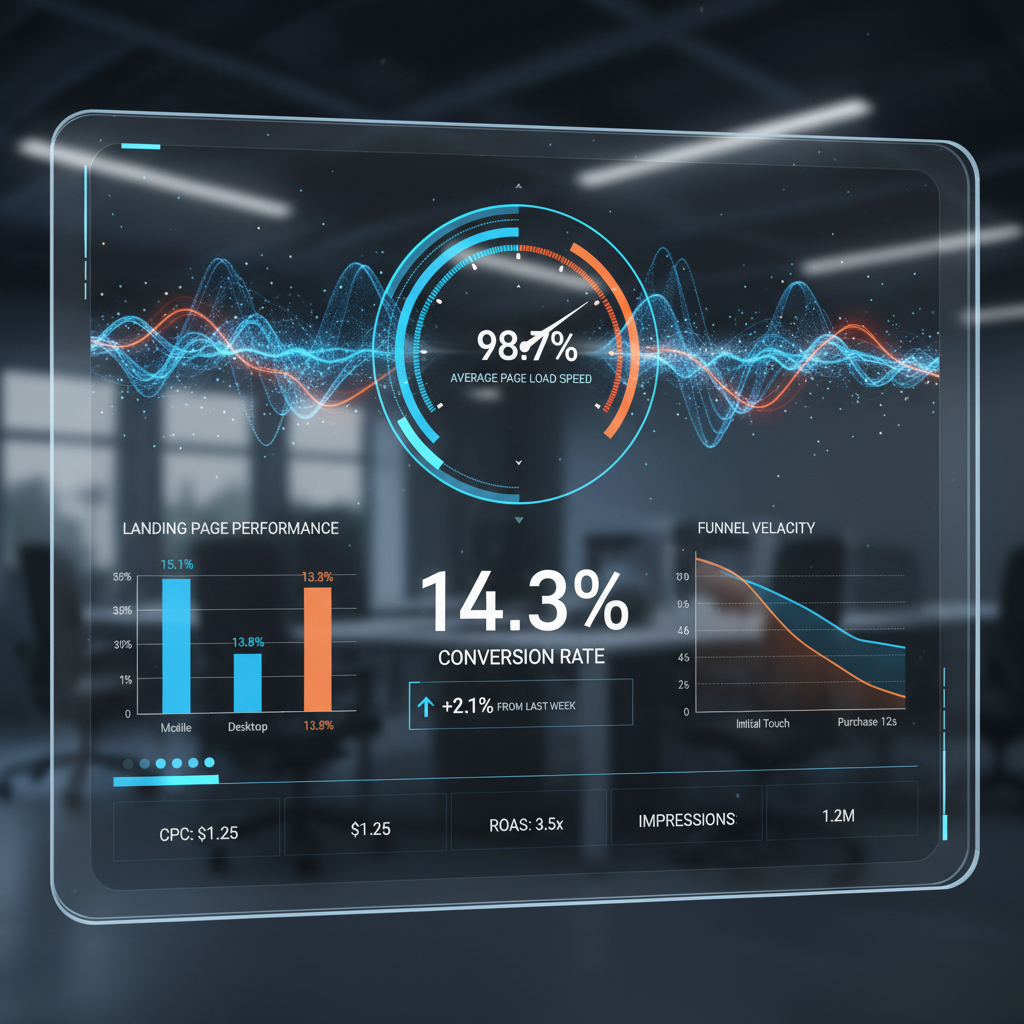
Clicks cost money. Every dollar spent on an ad buys a potential customer, a fleeting moment of attention. What happens next? That defines your return. Most focus on the ad, the targeting. That is half the battle. The landing page, the post-click experience, often bleeds budgets dry. It is where campaigns die, or thrive. This is not about aesthetics. It is about cold, hard numbers. It is about efficiency. It is about scale.
The Cost of Sluggishness: Page Speed and Your Ad Spend
Slow landing pages are budget incinerators. Period. They actively penalize your advertising campaigns. This is not conjecture. This is math. Every extra second of load time increases bounce rates. It frustrates users. It tells ad platforms your experience is substandard. Your costs rise. Your conversions fall.
Core Web Vitals: Beyond a Ranking Factor
Google introduced Core Web Vitals, CWV, for a reason. They quantify user experience. They measure visual stability, interactivity, and loading speed. LCP, FID, CLS, these are not just SEO metrics. They are direct indicators of your landing page’s ability to convert paid traffic. Improve them, improve your ROI.
Real-World Impact: Quality Score, CPC, CPA
Ad platforms, especially Google Ads, prioritize user experience. A poor landing page experience directly impacts your Quality Score. A low Quality Score means you pay more for every click, higher CPCs. It means your ads show less frequently, despite your bid. The end result is inflated CPAs. You are paying a premium for incompetence. This is a direct tax on your inefficiency.
Optimizing landing page speed is not optional. It is fundamental to profitable advertising. Here is where to focus:
- Minimize Server Response Time: Use a fast host. Implement a Content Delivery Network, CDN.
- Optimize Images: Compress, lazy load, use modern formats like WebP. Large images are notorious killers.
- Leverage Browser Caching: Allow returning visitors to load pages faster.
- Reduce Render-Blocking Resources: Defer non-critical CSS and JavaScript. Speed up that first paint.
- Minify Code: Remove unnecessary characters from HTML, CSS, JavaScript. Smaller files, faster loads.
Architecting for AI: Content Structure for the Modern Web
The web is changing. AI, Large Language Models, LLMs, are not just consuming content. They are interpreting it. They are answering queries directly. Your landing page must not only speak to humans. It must speak to algorithms. This requires clarity, authority, and structure. Ignore this, and you vanish from AI-driven discovery.
E-E-A-T: More Than a Buzzword
Experience, Expertise, Authoritativeness, Trustworthiness. E-E-A-T is Google’s mandate for quality. It is how they assess the credibility of your content and your brand. For performance marketers, this means showcasing clear value. Demonstrate your solutions. Provide verifiable information. Link to reputable sources. Your landing page must instill confidence, both in users and in algorithms. This builds long-term brand equity, crucial for strategic partnerships.
Structured Data: Speak the AI’s Language
Schema Markup is not an advanced SEO tactic. It is a necessity. It is how you explicitly tell search engines what your content means. Identify your product, your service, your company. Use JSON-LD to mark up reviews, FAQs, local business information. This allows AI to parse your content accurately. It improves your chances for rich results and direct answers in SERPs. It enhances visibility. It cuts through noise.
User Experience: The AI and Human Connection
A well-structured page benefits everyone. Clear headings, concise paragraphs, logical flow. This is good UX. It is also good for AI. Algorithms reward content that is easy to understand. They reward content that answers user intent definitively. Avoid keyword stuffing. Focus on value. Deliver immediate answers. This improves human engagement metrics. These metrics feed back into AI understanding. It is a virtuous cycle.
Consider these content structuring principles:
- Clear Value Proposition: State what you offer immediately. No ambiguity.
- Problem-Solution Framework: Address the user’s pain point. Present your solution concisely.
- Frictionless Conversion Path: Guide the user to the next step. Make it obvious.
- Scannable Content: Use short paragraphs. Employ bullet points and numbered lists. Break up text.
- Credibility Elements: Include testimonials, case studies, trust badges. Build confidence.
- Answer Questions Directly: Anticipate user queries. Provide direct, authoritative answers within your content.
Measuring What Matters: Auditing and A/B Testing
Optimization is not a one-time event. It is a continuous process. You must measure. You must test. You must adapt. Assumptions are liabilities. Data is currency.
Technical Audits: Finding the Leaks
Regular technical audits are non-negotiable. Tools like Google PageSpeed Insights, Lighthouse, GTmetrix, and Screaming Frog provide actionable data. They identify bottlenecks. They pinpoint areas for improvement, from image compression to JavaScript execution. Do not guess. Use the data. For user behavior insights, Microsoft Clarity offers heatmaps and session recordings. See exactly where users get stuck. Understand their journey. This informs real-world improvements, not just theoretical ones.
Continuous Optimization: The A/B Imperative
Every element of your landing page is a variable. Headline, call to action, image, form fields. Each can impact conversion. A/B testing is the only way to isolate these impacts. Test one element at a time. Measure the uplift. Tools like Google Optimize, Optimizely, and VWO facilitate this. Develop a testing hypothesis. Run the test. Analyze the results. Implement the winner. Repeat. This is how you achieve incremental, compounding gains. This is how you scale efficiently.
Here is a comparison of key metrics and their relevance:
| Metric | Description | Impact on Ad Performance |
|---|---|---|
| Quality Score | Google’s rating of ad relevance and user experience. | Lower CPCs, better ad positioning, higher impression share. |
| LCP (Largest Contentful Paint) | Measures perceived load speed, time to render the largest element. | Directly impacts bounce rate, user satisfaction, Quality Score. |
| CPA (Cost Per Acquisition) | Total cost of acquiring one customer. | Direct indicator of campaign profitability. Optimized by reducing CPC and increasing conversion rate. |
| Conversion Rate | Percentage of visitors who complete a desired action. | Maximizing this reduces CPA, improves overall ROI. |
| Bounce Rate | Percentage of single-page sessions. | High bounce rate indicates poor user experience, irrelevant traffic, or slow loading. |
Zero-Click and Beyond: Adapting to AI Discovery
The goal is always conversion. But the path to conversion is evolving. Users increasingly get answers directly from search results, or from AI assistants. They do not click through. This is “zero-click” search. Your content must adapt. It must be prepared to deliver value even when a direct click is not the first interaction.
Providing Definitive Answers
Your content must be structured to answer user queries definitively. Think like an FAQ page for your entire site. Clearly state the problem. Provide the concise solution. This positions your content for featured snippets, ‘People Also Ask’ sections, and direct answers by AI. Even if they do not click, your brand gains visibility and authority. This establishes trust. This builds a funnel for future engagement.
Featured Snippets and Rich Results
Optimizing for featured snippets, knowledge panels, and other rich results is critical. This involves precise content structuring, definitive answers, and appropriate Schema Markup. These prominent SERP features are prime real estate. They put your brand front and center. They reinforce E-E-A-T. They drive qualified traffic, even in a zero-click environment. This is strategic brand positioning in the AI era.
Bottom Line
Your landing page is not a brochure. It is a critical performance asset. Treat it as such. Optimize its speed. Structure its content for both human and AI consumption. Measure ruthlessly. Test continuously. This is how you reduce ad spend. This is how you increase conversions. This is how you drive ROI. This is how you win in performance marketing. Anything less is a donation to your competitors.
Frequently Asked Questions
Why is landing page speed crucial for advertising campaigns?
Slow landing pages increase bounce rates, reduce user satisfaction, and negatively impact ad platform quality scores. This leads to higher CPCs (cost per click), inflated CPAs (cost per acquisition), and lower conversion rates, making ad campaigns less profitable.
How do Core Web Vitals relate to landing page performance and ad ROI?
Core Web Vitals (LCP, FID, CLS) quantify user experience metrics like loading speed, interactivity, and visual stability. Improving them directly enhances user satisfaction and signals a good experience to ad platforms, leading to better Quality Scores and improved advertising ROI.
What are key strategies to optimize landing page speed?
Key strategies include minimizing server response time, optimizing images (compress, lazy load, modern formats), leveraging browser caching, reducing render-blocking resources, and minifying code (HTML, CSS, JavaScript).
How does content structure affect a landing page’s performance in the age of AI?
A well-structured landing page with clear headings, concise content, adherence to E-E-A-T principles, and Schema Markup helps both humans and AI understand the content. This enhances visibility in AI-driven discovery, improves chances for rich results, and builds brand authority.
Why is continuous testing and auditing important for landing pages?
Regular technical audits identify performance bottlenecks, while A/B testing helps isolate and measure the impact of specific page elements on conversion. This continuous process allows for incremental, compounding gains, leading to more efficient and profitable advertising at scale.
What is ‘zero-click’ search and how should landing pages adapt?
‘Zero-click’ search is when users find answers directly in search results or via AI assistants without clicking a link. Landing pages adapt by structuring content to provide definitive answers, optimizing for featured snippets, and using Schema Markup to maintain brand visibility and authority.