Businesses hit walls. Growth stagnates. Marketing spend delivers diminishing returns. In today’s AI-driven landscape, these aren’t just minor setbacks. They are flashing red indicators your organization needs a strategic reset, often requiring external expertise.
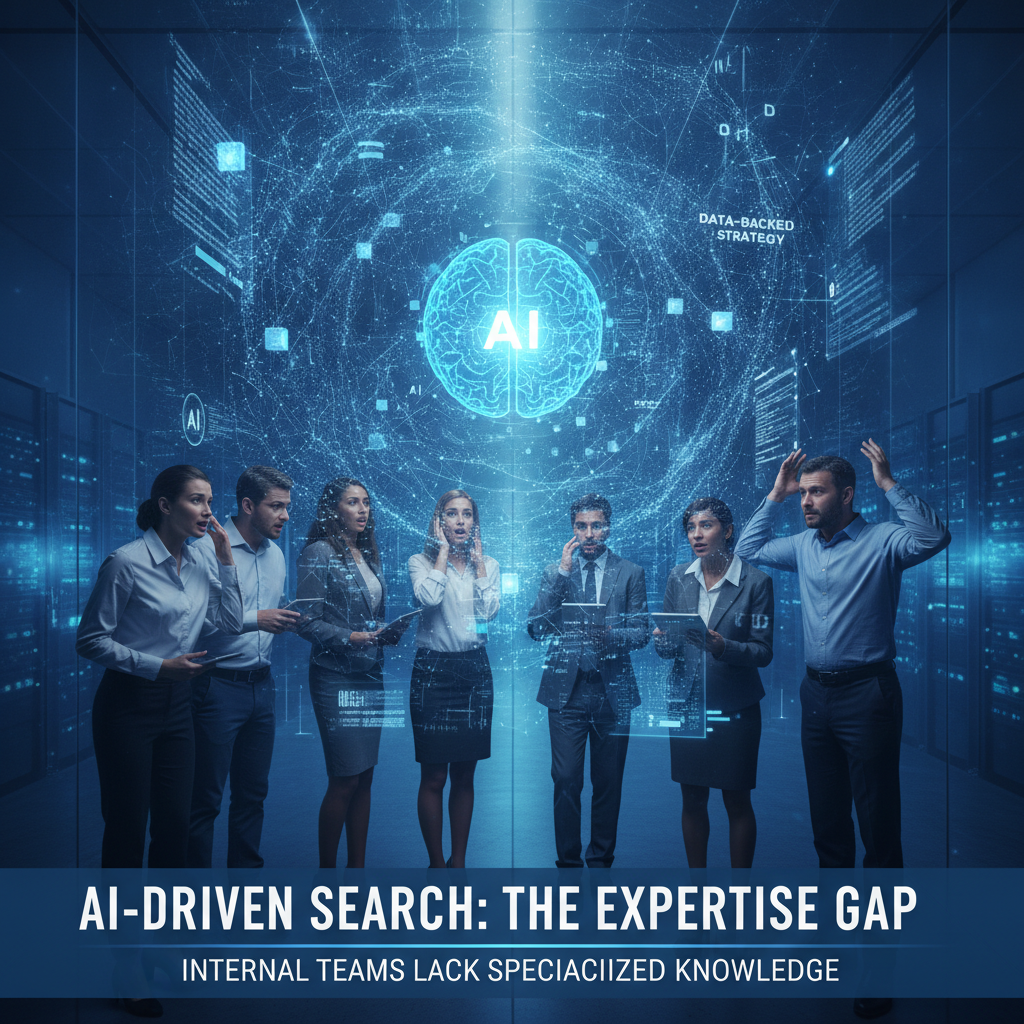
The game changed. Traditional SEO is dead. AI powers search now. It demands a different approach. Your internal team may be good. Are they experts in AI search optimization? Most are not. This isn’t a criticism. It’s a fact.
Recognizing the Stalling Points
Stalled Growth, Decaying Performance
Revenue plateaus. Market share erodes. Your business is not just slowing, it’s actively losing ground. This isn’t a phase. It’s a symptom of outdated strategies, insufficient data analysis, or both. Inaction costs more than any strategic investment.
Wasted Spend, Zero ROI
You pour money into marketing. The numbers look good on paper, impressions, clicks. But where is the profit? Where are the quality leads? If your marketing budget isn’t directly traceable to verifiable business outcomes, it’s waste. Pure and simple.
Competitive Pressure, Lost Ground
Competitors are pulling ahead. They innovate faster. They capture more of the market. This isn’t about “keeping up.” It’s about survival. The market moved. Did your strategy move with it? Or are you still fighting yesterday’s battles?
The New Frontier: AI Search Optimization
Beyond Traditional SEO
Keyword stuffing is dead. Link building, as you knew it, is largely irrelevant. AI doesn’t just read text. It understands intent. It processes context. It engages in conversational search. Your old SEO tactics are now liabilities.
What is AI Search Optimization?
It’s about semantic relevance, not just keywords. It’s about answering complex queries, not just matching phrases. Your content must be authoritative, comprehensive, and structured for AI comprehension. Think knowledge graphs, not just web pages.
AI rewards depth. It rewards accuracy. It rewards direct answers. If your content doesn’t deliver these, it won’t rank. It won’t be seen.
The Internal Capability Gap
Most in-house teams lack the specialized skill set for AI search optimization. They are busy with day-to-day operations. They cannot dedicate the resources to master this evolving discipline. This is where the gap forms. This is where performance suffers.
Assessing Your Readiness: Internal vs. External
Before engaging external experts, conduct a brutal self-assessment. What are your true capabilities? What are your limitations?
Internal Assessment Checklist
- Dedicated Expertise: Do you have certified AI search specialists on staff? Not just general SEOs, but AI-focused experts?
- Advanced Analytics: Can you track complex user journeys, conversational query performance, and semantic relevance? Do you have the tools, and the people, to interpret this data?
- Content Adaptability: Can your content team rapidly pivot from keyword-centric writing to intent-based, comprehensive content creation?
- Consistent ROI: Is your current performance marketing consistently delivering measurable, high-value ROI year-over-year?
- Resource Allocation: Do you have the internal budget and personnel to invest in continuous AI algorithm monitoring and strategy adjustments?
If you answered no to more than two of these, your internal capabilities are likely insufficient.
When to Call in the Experts
- Your growth is stagnant, or declining, despite increased marketing effort.
- You lack verifiable ROI from significant marketing spend.
- Your competitors are outperforming you in organic visibility and lead generation.
- Your internal team is stretched thin, lacking specialized AI search expertise.
- You need rapid scale and efficiency. You need strategic, unbiased guidance.
Vetting Your External Partner
Choosing the right partner is critical. Do not settle for generalists. Demand specialists.
Key Selection Criteria
- Proven AI Search Track Record: Demand case studies. Ask for data. How have they specifically driven ROI through AI search optimization, not just generic SEO?
- Data-Driven Approach: They must speak your language, the language of metrics, efficiency, and scale. Vague promises are worthless.
- Strategic Partnership: Seek a Fractional CMO mentality. Someone who integrates with your business, understands your P&L, and contributes to long-term growth. This is not a vendor relationship. It is a strategic alliance.
- Transparent Reporting: Expect clear, actionable reports linking activities directly to business outcomes. No fluff, no vanity metrics.
- ROI Focus: Their compensation should ideally be tied, at least in part, to your success. They should have skin in the game.
Quantifying ROI in the AI Search Era
Measuring true impact in AI search goes beyond simplistic metrics. You need depth. You need accuracy.
Measuring True Impact
Focus on revenue, lead quality, conversion rates. Not just traffic. AI search optimizes for user intent and satisfaction. Your metrics must reflect this deeper engagement.
| Metric Type | Traditional Focus | AI Search Optimization Focus |
|---|---|---|
| Visibility | Keyword rankings, organic traffic volume | Semantic relevance, intent matching, knowledge graph presence, direct answer fulfillment |
| Engagement | Bounce rate, time on page | User journey completion, query refinement, direct answer satisfaction, conversational flow |
| Conversion | Clicks, basic lead forms | Quality lead generation, pipeline velocity, revenue attribution, MQL to SQL conversion rates |
| Efficiency | Ad spend, cost per click | Predictive analytics, audience segmentation accuracy, content effectiveness in fulfilling complex intents, reduced CPA from organic lift |
The goal is to move the needle on your bottom line. Everything else is noise.
Bottom Line
The AI revolution in search is not coming. It is here. Businesses that adapt thrive. Those that don’t, fail. Your internal team has limitations. Acknowledging this is strength, not weakness.
Engaging external performance marketing experts, especially those specialized in AI search, is not a cost. It is a strategic investment in efficiency, scale, and long-term profitability. It is a necessity for competitive advantage. Do not wait for further decline. Act now. Secure your future growth.
Frequently Asked Questions
What is AI Search Optimization?
AI Search Optimization focuses on semantic relevance, answering complex queries, and structuring content for AI comprehension, using knowledge graphs rather than just keywords. It rewards depth, accuracy, and direct answers.
Why is traditional SEO considered ineffective in the AI search era?
Traditional SEO tactics like keyword stuffing and basic link building are largely irrelevant because AI understands intent and context, not just keywords. AI search demands authoritative, comprehensive content designed for complex queries.
How can a business identify if it needs AI Search Optimization?
Signs include stagnant or declining growth, marketing spend with zero verifiable ROI, competitors outperforming in organic visibility, and an internal team lacking specialized AI search expertise or resources.
Can internal marketing teams effectively handle AI Search Optimization?
Most in-house teams lack the specialized skill set, advanced analytics capabilities, and resources required for continuous AI algorithm monitoring and intent-based content creation, leading to an internal capability gap.
What key criteria should a business use when selecting an AI search optimization partner?
Key criteria include a proven AI search track record with case studies, a data-driven approach, a strategic partnership mentality, transparent reporting linked to business outcomes, and a focus on measurable ROI.