
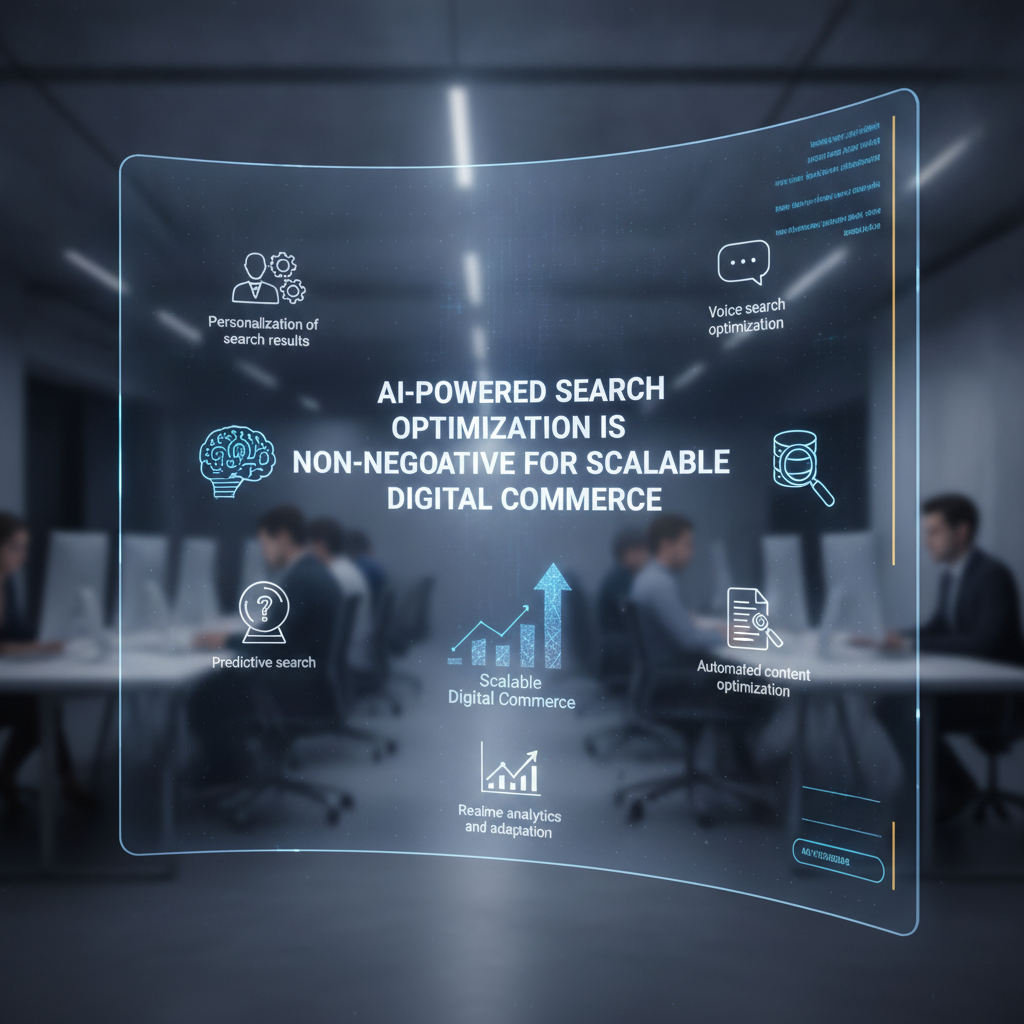
Selecting a digital commerce platform today means more than just processing transactions. It means building for future scale. It means optimizing for a new reality: AI-driven search. Ignore this at your peril. Your growth trajectory depends on making the right choice, now.
The New Imperative: AI-Driven Commerce
Digital commerce moved past basic keyword matching years ago. AI now dominates search. Consumers expect instant, relevant results, even with vague queries. Google and other platforms leverage advanced AI to understand intent, context, and semantic relationships. Your commerce platform must keep pace. It is not an option, it is a business requirement.
- Semantic Search: Understanding user intent, not just keywords.
- Personalized Recommendations: Tailoring results based on past behavior.
- Natural Language Processing (NLP): Interpreting conversational queries.
- Predictive Search: Anticipating user needs before they fully articulate them.
This is where revenue lives. Platforms lacking robust AI search capabilities hobble your growth before you even launch. This affects organic visibility, conversion rates, and ultimately, your bottom line.
Platform Selection: Beyond the Hype
Platform vendors promise the moon. Most deliver mediocrity. A strategic choice demands rigor, focusing on ROI and long-term viability. Evaluate platforms through a performance lens. This is not about features, it is about business outcomes.
Scalability and Growth Potential
Can the platform handle a 10x surge in traffic? What about a 100x increase in product SKUs? Look beyond current needs. Consider peak seasons, viral events, and aggressive market expansion. Re-platforming is expensive, disruptive, and often avoidable with foresight.
- Transaction Volume: Support for high throughput.
- Product Catalog Size: Efficient management of millions of products.
- Global Reach: Multi-currency, multi-language, international shipping.
- Infrastructure Elasticity: Ability to scale resources on demand.
AI Search and Relevance Optimization
This is non-negotiable for modern commerce. Your platform needs native or easily integrated AI search tools. These tools drive conversions by delivering hyper-relevant results. Generic search solutions are a competitive disadvantage.
Relevance Optimization Techniques for AI Search:
- Dynamic Faceting: Automatically adjusting filter options based on search results.
- Synonym Management: Ensuring varied search terms yield relevant products.
- Personalized Ranking Algorithms: Displaying products most likely to convert for individual users.
- A/B Testing Search Algorithms: Continuously optimizing search logic based on user behavior data.
- Voice Search Optimization: Adapting to natural language queries from voice assistants.
- Image Recognition Integration: Enabling visual search capabilities.
Strong AI search is an SEO play. It improves user experience, reduces bounce rates, and signals relevancy to search engines. This boosts organic rankings, directly impacting acquisition costs.
Customization and Integration
Every business has unique workflows. Your platform must integrate seamlessly with existing CRM, ERP, and marketing automation systems. Closed ecosystems limit innovation. Open APIs and a strong developer community indicate flexibility. This is where strategic fractional leadership comes into play. You need someone who understands the full business integration picture, not just the tech.
Technical Requirements and Support
What is your internal technical skill level? Are you a small team with limited IT resources, or do you have a robust in-house development department? This dictates platform suitability. Understand the platform’s architecture. Evaluate vendor support, documentation, and the robustness of their partner ecosystem. Poor support costs time and money. It halts growth.
Total Cost of Ownership (TCO)
License fees are just the beginning. Factor in implementation, customization, maintenance, hosting, security, and ongoing optimization. Open-source platforms might seem cheaper upfront. They often incur higher development and maintenance costs. SaaS platforms offer predictability, but at a premium. Understand the true investment before committing.
- License/Subscription Fees: Recurring software costs.
- Implementation Costs: Initial setup and configuration.
- Customization & Development: Tailoring to unique business needs.
- Integration Costs: Connecting with third-party systems.
- Hosting & Infrastructure: Server, CDN, and bandwidth expenses.
- Maintenance & Support: Ongoing updates, bug fixes, and technical assistance.
- Training Costs: Onboarding your team.
- Marketing & SEO Tools: Additional software for promotion and optimization.
Platform Comparison: A Strategic View
Here is a strategic overview of common platform types. Choose based on your long-term vision, not just your current pain points.
| Platform Type | Key Characteristics | Scalability & AI Search | Customization & Integration | Typical TCO (Mid-Market) | Ideal Use Case |
|---|---|---|---|---|---|
| SaaS (e.g., Shopify Plus, BigCommerce) | Cloud-based, subscription model, managed by vendor. | Good out-of-the-box. AI search often requires apps or higher plans. Scalability is vendor-managed. | Moderate. Relies on apps/APIs. Less control over core code. | Moderate to High. Predictable monthly fees. | Growth-focused businesses prioritizing speed, ease of use, and lower IT overhead. |
| Open Source (e.g., Magento Open Source, WooCommerce) | Self-hosted, highly customizable, community-driven. | High. Full control over infrastructure. AI search requires custom development or extensions. | Unlimited. Full access to code. Requires significant developer resources. | Variable. Can be low upfront, but high for development, hosting, and security. | Businesses with complex needs, strong in-house dev teams, or specific security/compliance demands. |
| Headless (e.g., Commercetools, Spryker) | Decoupled frontend/backend. API-first approach. | Very High. Best-in-class for performance and AI search flexibility. Integrates with specialized AI tools. | Unlimited. Complete freedom over frontend experience. Requires advanced dev skills. | High. Requires significant investment in frontend development and integration. | Large enterprises, brands seeking unique, omnichannel experiences, or highly specialized integrations. |
Assessing Your Business Needs
Before any demo, assess internally. This isn’t just a tech project. It is a business transformation. What are your specific revenue goals?
- Evaluate Technical Skill Level: Do you have a dedicated in-house development team? Or do you rely entirely on agencies? Your answer informs platform complexity.
- Determine Monthly Sales Volume/Budget: Higher sales often justify higher platform investments. A clear budget prevents scope creep and ensures ROI.
- Define Long-Term Growth Strategy: Where do you want to be in 3-5 years? International expansion, new product lines, omnichannel presence? Your platform must support this vision.
- Identify Key Integrations: List every critical system your commerce platform must communicate with. CRM, ERP, PIM, marketing automation, shipping, payment gateways. Integration complexity drives cost and timeline.
The Partner Equation
Your platform choice is only as good as its implementation. A seasoned technical partner, or a fractional CMO, guides this process. They translate business strategy into technical reality. They ensure ROI. Look for partners with proven experience in your chosen platform, a track record of scalable projects, and a focus on measurable outcomes. They are not just coders; they are growth architects.
Bottom Line
Choosing a digital commerce platform is a mission-critical decision. It dictates your ability to scale, optimize for AI-driven search, and integrate with your broader business ecosystem. Do not chase shiny objects. Focus on ROI, technical agility, and long-term strategic fit. Invest wisely. Your future revenue depends on it.
Frequently Asked Questions
Why is AI-driven search crucial for modern digital commerce platforms?
AI-driven search is crucial because it understands user intent, provides personalized results, and handles natural language queries, directly impacting conversion rates, organic visibility, and revenue.
What key factors should businesses consider when selecting a digital commerce platform?
Key factors include scalability and growth potential, robust AI search and relevance optimization, customization and integration capabilities, technical requirements and support, and the total cost of ownership (TCO).
What are the main types of digital commerce platforms available?
The main types are SaaS (Software-as-a-Service) for ease of use and managed scalability, Open Source for high customization and control, and Headless for decoupled flexibility and advanced omnichannel experiences.
What is Total Cost of Ownership (TCO) for a digital commerce platform?
TCO encompasses all costs beyond initial license fees, including implementation, customization, integration, hosting, maintenance, support, training, and ongoing optimization efforts.
How does a digital commerce platform’s scalability affect long-term growth?
A scalable platform can efficiently manage high transaction volumes, large product catalogs, and international expansion, preventing costly re-platforming and supporting sustained growth through peak seasons and market expansion.