
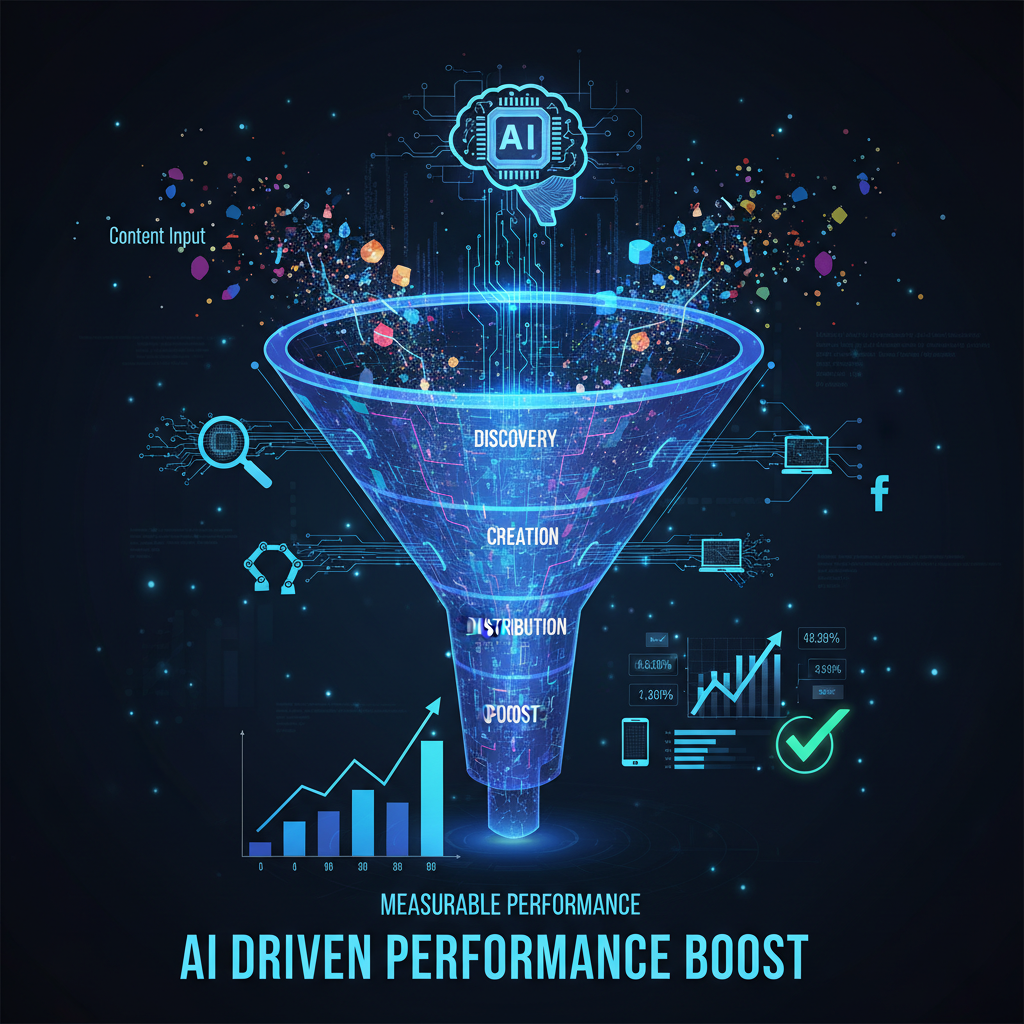
The content funnel defines measurable growth. Traditional content cycles impede it. Artificial intelligence presents a clear, non-negotiable path to superior performance marketing outcomes. This is not about generating more content. It is about generating better, more efficient, and more impactful content. It is about leverage.
The Imperative: AI-Driven Content Efficiency
Content is a core asset. Its production often drains resources without commensurate return. AI transforms this equation. It provides a direct, quantifiable path to content efficiency and funnel optimization.
From Volume to Velocity: Accelerating the Content Funnel
Legacy content operations prioritize output. Performance demands velocity and precision. AI accelerates every stage of the content funnel, from ideation to optimization. It reduces time to market. It elevates content relevance.
- Research: AI identifies market gaps and intent clusters faster than human teams.
- Ideation: AI generates topic variations aligned with specific search intent.
- Drafting: AI acts as a co-pilot, enhancing initial content creation speed and consistency.
- Optimization: AI refines content for on-page SEO, readability, and conversion pathways.
Strategic Integration: AI as a Force Multiplier
AI is a strategic tool. It amplifies existing content strategy. It is not a replacement for human insight. It is an operational advantage for leaders focused on tangible ROI.
The AI-Assisted Content Creation Process, Deconstructed
Integrating AI into content creation requires a structured approach. This process ensures repeatable, scalable results for the content funnel.
- Target Audience and Intent Mapping: AI analyzes vast datasets to pinpoint precise audience needs and search intent. This informs topic selection.
- Data-Driven Topic Ideation: AI identifies high-potential content opportunities, uncovering underserved niches and keyword clusters. This ensures market relevance.
- Structured Content Outlining: AI generates comprehensive content outlines. These include optimal structure, H-tag hierarchy, and key discussion points. This enhances SEO integrity.
- Drafting and Iteration: AI assists in generating initial content drafts. Human strategists then refine and inject proprietary insights. This ensures brand voice and strategic alignment.
- Performance Optimization: AI tools provide real-time feedback on SEO, readability, and content engagement metrics. This drives continuous improvement and funnel conversion.
Optimizing the Content Funnel: AI Guidelines in Practice
The impact of AI on the content funnel is multifaceted. It affects every stage, driving superior outcomes when applied strategically. Adherence to clear AI-assisted content guidelines ensures maximum leverage.
| Funnel Stage | Traditional Approach | AI-Augmented Approach | Performance Impact |
|---|---|---|---|
| Awareness | Broad topic targeting, manual keyword analysis. | AI-driven semantic analysis, precise topic cluster identification. | Increased relevant traffic, lower bounce rates. |
| Consideration | Generic comparisons, subjective value propositions. | AI-powered competitive analysis, data-backed value proposition crafting. | Higher engagement metrics, improved lead quality. |
| Conversion | Static calls-to-action, limited content personalization. | AI-optimized CTAs, dynamic content adaptation based on user behavior. | Direct improvement in conversion rates, accelerated ROI. |
| Retention/Advocacy | Reactive customer service, manual content updates. | AI-driven sentiment monitoring, proactive content delivery for customer success. | Enhanced customer lifetime value, increased organic referrals. |
The ROI of AI in Content Marketing
The investment in AI for content marketing yields measurable returns. This is not a speculative endeavor. It is a strategic mandate for competitive advantage. The focus remains on mathematical efficiency and scalable growth.
- Reduced Time to Market: Deploy campaigns faster. Capture emerging search intent. Accelerate revenue generation.
- Enhanced Content Quality and Consistency: Maintain brand voice and factual accuracy at scale. Reduce human error.
- Precision Targeting: Deliver highly relevant content to specific audience segments. Optimize ad spend and organic reach.
- Scalable Performance: Multiply content output and impact without linear cost increases. Achieve true leverage.
Bottom line
AI is an operational advantage. It is a strategic tool for serious performance marketers. Ignore it at your peril. Invest for leverage and scale. The content funnel demands this efficiency. Your balance sheet will reflect it.
Frequently Asked Questions
Q:What is the role of AI in content marketing?
A:AI offers a quantifiable path to content efficiency and funnel optimization, leading to superior performance marketing outcomes. It focuses on generating better, more impactful content rather than simply increasing volume, providing strategic leverage.
Q:How does AI accelerate the content funnel?
A:AI accelerates every stage of the content funnel, from ideation to optimization, by reducing time to market and elevating content relevance. It assists with faster research, generates topic variations, enhances drafting speed, and refines content for SEO and conversion.
Q:What is the process for integrating AI into content creation?
A:The process involves AI analyzing data to map target audience intent and ideate high-potential topics. AI then generates structured content outlines and assists in drafting initial content. Finally, AI tools provide real-time feedback for continuous performance optimization.
Q:How does AI impact different stages of the content funnel?
A:AI increases relevant traffic in the awareness stage through precise topic cluster identification. For consideration, it improves engagement with data-backed value propositions. In conversion, AI optimizes calls-to-action and adapts content for higher rates, and for retention, it enables proactive content delivery.
Q:What are the measurable returns of AI in content marketing?
A:AI in content marketing yields reduced time to market, allowing for faster campaign deployment and revenue generation. It enhances content quality and consistency, ensures precision targeting, and enables scalable performance without linear cost increases.
1 thought on “AI and the Performance Content Funnel: Strategic Leverage for CMOs”
Comments are closed.