
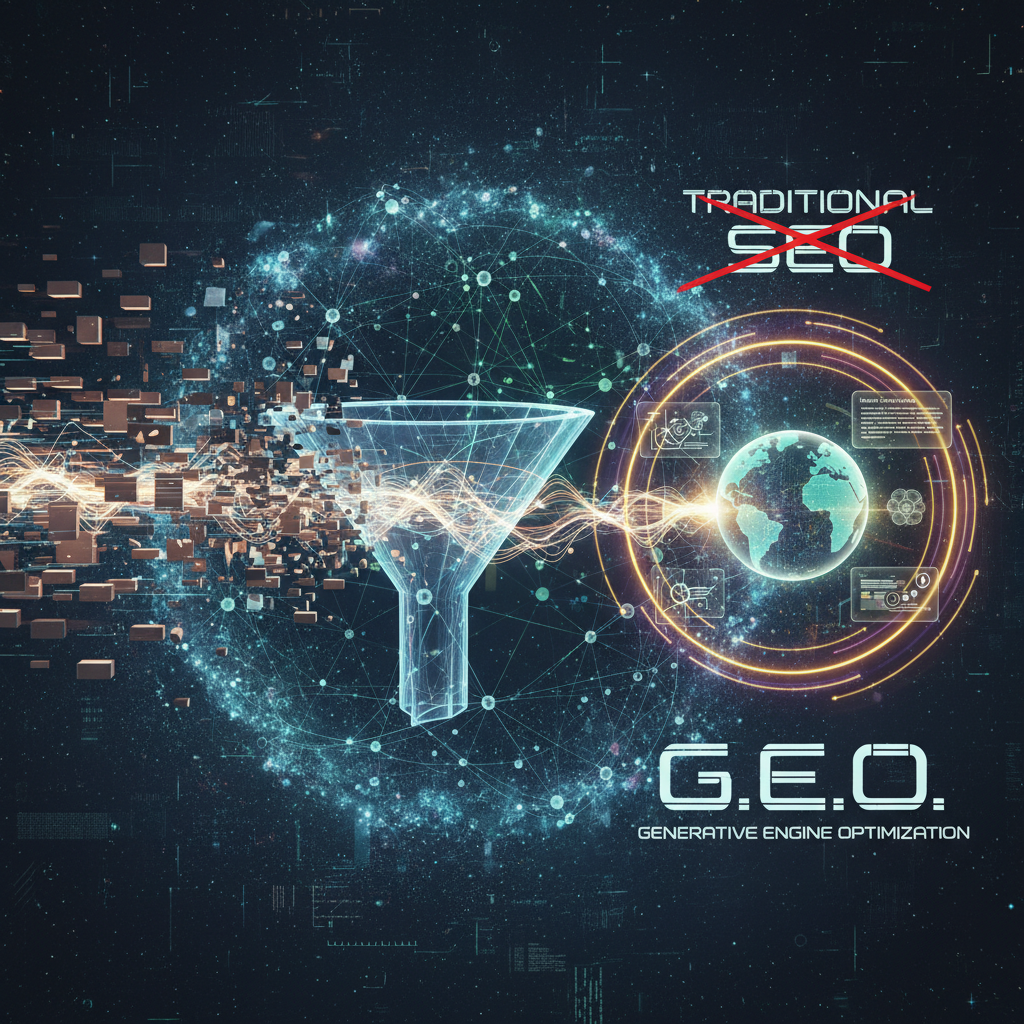
The internet’s front door is changing. Generative AI is reshaping search, demanding a new approach to digital visibility. Traditional SEO, while still relevant, no longer captures the full scope of optimization required. Enter Generative Engine Optimization, GEO. This isn’t just a buzzword. It is the math behind securing your brand’s presence in an AI-first world.
For performance marketing agencies and Fractional CMOs, understanding GEO is not optional. It is fundamental to sustained client success and your agency’s profitability. This guide dissects GEO, its operational distinctions, financial implications, and actionable strategies for enhancing client visibility in AI search environments.
What is Generative Engine Optimization (GEO)?
Generative Engine Optimization is the practice of optimizing digital content and presence for visibility within generative AI search environments. It ensures AI models correctly interpret, synthesize, and present your information. It’s about influencing the AI’s answer, not just ranking a link. This demands a shift in focus from keywords to concepts, from links to authority, from clicks to accurate attribution.
The goal remains performance. The methodology evolves. We optimize for AI comprehension, trust, and relevance. This directly impacts how a brand appears when users query an AI chatbot or a generative search interface.
GEO Versus SEO: A Fundamental Shift
Traditional SEO targets algorithms to rank web pages in a list of links. GEO targets large language models (LLMs) to ensure information is accurately represented in generated summaries and answers. The objectives are distinct. The tactics diverge.
Here is a breakdown of the core differences:
| Attribute | Traditional SEO | Generative Engine Optimization (GEO) |
|---|---|---|
| Primary Objective | Achieve top organic search rankings for specific keywords. | Ensure accurate, authoritative, and preferred representation in AI-generated answers. |
| Target Audience | Search engine crawlers and human users clicking links. | Large Language Models (LLMs) and AI search interfaces, ultimately serving human users. |
| Core Tactics | Keyword optimization, link building, technical SEO, content marketing, on-page optimization. | Topical authority development, semantic clarity, structured data for LLMs, entity optimization, prompt engineering principles, factual accuracy. |
| Performance Metrics | Organic traffic, keyword rankings, click-through rates (CTR), conversion rates. | Attribution in AI answers, sentiment analysis of AI summaries, brand mention frequency, factual representation accuracy, influence on generated content. |
| Content Focus | Optimized for search engines, designed for clicks to a specific page. | Optimized for LLM comprehension, designed for factual extraction and synthesis, building comprehensive topical authority. |
SEO still matters. Your website needs to be crawlable. But GEO dictates how that content is understood and presented by AI. It’s about being the source, not just ranking the source.
Building and Scaling Your GEO Practice
For agencies, integrating GEO isn’t a pivot. It’s an expansion. It demands new skill sets, refined processes, and a strategic view of client digital presence.
1. Talent Acquisition and Training
- Data Scientists: Understanding how LLMs process information is critical.
- Content Architects: Beyond writers, these professionals structure content for AI comprehension.
- Semantic Strategists: Experts in entity relationships and topical authority.
- Training: Upskill existing SEO teams on AI ethics, prompt engineering, and LLM behavior.
2. Tools and Technology Investment
Traditional SEO tools fall short. Invest in:
- AI Content Analysis Platforms: To audit how LLMs perceive existing content.
- Knowledge Graph Tools: For entity and relationship mapping.
- Performance Monitoring: New tools are emerging to track brand attribution within AI-generated responses.
3. Process Redefinition
Your content creation and optimization workflows must adapt:
- AI-First Content Audits: Evaluate content for factual accuracy, semantic clarity, and LLM digestibility.
- Topical Authority Roadmaps: Build out comprehensive content clusters designed to establish deep expertise on specific subjects.
- Structured Data Implementation: Beyond basic schema, focus on advanced structured data to explicitly define entities and relationships.
- Continuous Monitoring: Track AI-generated responses for accuracy, sentiment, and brand mentions. Adjust strategies based on AI outputs.
Measuring Performance and ROI in AI Search
Traditional metrics like keyword rankings become less relevant. We must define new indicators of success.
- Attribution Accuracy: Is the AI correctly attributing information to your brand?
- Share of Voice in AI Answers: How often is your brand or content featured in generative summaries?
- Factual Representation: Is the AI accurately summarizing your services, products, and value propositions?
- Influenced User Journeys: Tracking subsequent user actions after AI interaction, leading back to your assets.
The ROI calculation shifts. It is less about direct clicks. It is more about brand authority, informed decision-making by consumers, and pre-qualified leads influenced by AI interactions. This requires robust analytics and a deeper understanding of the customer journey through AI touchpoints.
Financial Implications for Agencies: Profitability in the AI Era
Implementing GEO is an investment. It is also a significant revenue opportunity. Agencies can position themselves as indispensable partners in the AI economy.
- Premium Service Offering: GEO is a high-value, specialized service. Price it accordingly.
- Retainer-Based Models: GEO requires ongoing strategy, content refinement, and monitoring. Structure engagements for recurring revenue.
- Increased Client Value: Clients who navigate the AI shift successfully will see enhanced brand perception and market position. This justifies higher fees.
- Competitive Differentiation: Agencies mastering GEO will stand out. They will attract forward-thinking clients. They will secure a larger market share.
The P&L impact is clear. Investing in GEO expertise allows for higher margins. It builds client loyalty. It ensures long-term agency relevance. Ignoring it guarantees obsolescence.
Bottom Line
Generative Engine Optimization is not a future trend. It is the present reality of digital performance. Agencies must embrace this shift. Build the expertise. Redefine your services. Measure what truly matters in an AI-first world.
The alternative is irrelevance. Your clients demand visibility. AI now dictates much of that visibility. Your agency’s growth, and your clients’ success, hinges on mastering GEO. Adapt. Or be left behind.
Frequently Asked Questions
What is Generative Engine Optimization (GEO)?
Generative Engine Optimization (GEO) is the practice of optimizing digital content and presence for visibility within generative AI search environments. It ensures AI models correctly interpret, synthesize, and present a brand’s information, influencing AI-generated answers rather than just ranking links.
How does Generative Engine Optimization (GEO) differ from traditional SEO?
Traditional SEO targets algorithms to rank web pages for clicks, focusing on keywords and links. GEO targets Large Language Models (LLMs) to ensure accurate, authoritative representation in AI-generated summaries and answers, focusing on concepts, topical authority, and factual attribution.
Why is Generative Engine Optimization (GEO) important for agencies and Fractional CMOs?
GEO is crucial for sustained client success and agency profitability in an AI-first world. It enables brands to maintain digital visibility, ensure accurate representation in AI search, and positions agencies as indispensable partners by mastering this new domain.
What are the primary tactics used in Generative Engine Optimization (GEO)?
Key GEO tactics include developing topical authority, ensuring semantic clarity, implementing advanced structured data for LLM comprehension, optimizing entities, applying prompt engineering principles, and maintaining rigorous factual accuracy across content.
How is performance and ROI measured in Generative Engine Optimization (GEO)?
GEO performance is measured by attribution accuracy, share of voice in AI answers, factual representation of brand information, and the influence on user journeys post-AI interaction. This shifts focus from direct clicks to brand authority and informed decision-making.