
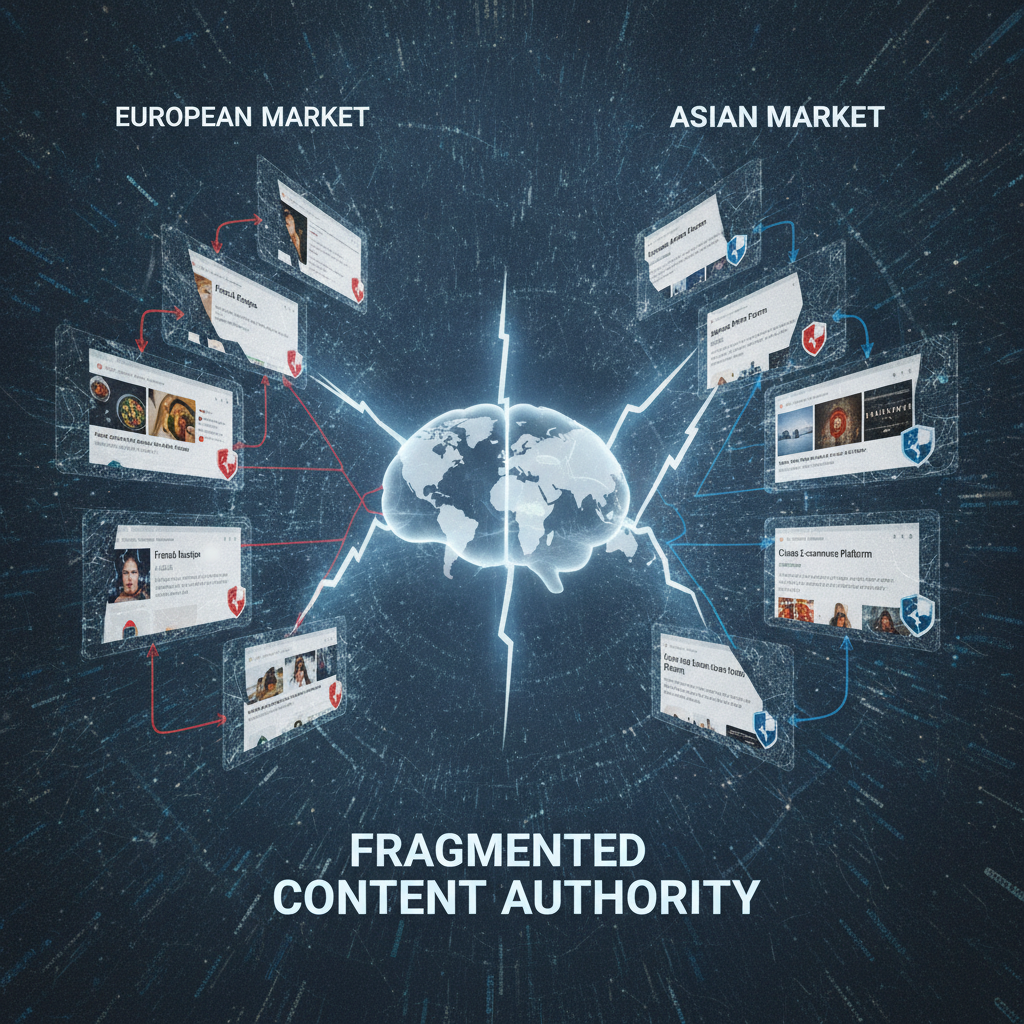
Hreflang tags, designed to unify content authority across global markets, often do the opposite. Misconfigurations fragment your authority. This problem is exacerbated by AI-driven search engines. They demand precision. Your localized content, intended to dominate specific markets, can instead dilute your global presence. This is not a theoretical concern, it is a measurable drain on ROI.
Hreflang: A Silent Authority Killer
Many implement hreflang expecting a simple solution for international reach. They get signal splitting. Incorrect hreflang tags tell search engines different regional versions of your content are unrelated. Or worse, they signal weak relevance. This prevents content from accumulating authority efficiently. It leads to cross-market cannibalization, where your own content competes against itself in different locales. The result is diluted visibility. It is a fundamental error. It costs conversions.
The AI Engine’s New Lens: Beyond Traditional SEO
AI search and answer engines operate differently. They prioritize contextual relevance, originality, and consolidated authority. Traditional SEO focused on keywords. AI focuses on answers. If your hreflang setup suggests your German page is a poor translation of your US page, AI sees it. It downranks it. It cites a competitor. This shifts the game from Search Engine Optimization (SEO) to Answer Engine Optimization (AEO). AI seeks definitive answers. Fragmented authority delivers none.
Consider the claimed 14.2% conversion rate for AI search traffic. This data suggests AI users are high-intent. They expect direct, authoritative answers. If your content appears diluted or non-authoritative due to hreflang errors, you miss this critical traffic. You leave money on the table.
Reclaiming Authority: Strategies for Consolidation
Fixing hreflang is not just a technical task. It is a strategic imperative. It means consolidating your content’s power. Here are the steps:
- Bi-directional Hreflang Meshing: Ensure every hreflang declaration points accurately to all its language/regional counterparts. This means ‘page A points to page B, and page B points back to page A.’ A missing return link breaks the chain. It fragments the signal.
- Canonical Tag Alignment: Canonical tags must align with your hreflang strategy. Each localized page should self-reference its canonical. Do not canonicalize to a different language version. This confuses both traditional and AI engines. It destroys authority.
- Local Entity Signals: Beyond hreflang, bolster local relevance. Implement local schema markup. Ensure consistent Name, Address, Phone (NAP) data. Integrate local cultural nuances. AI engines use these signals to confirm market relevance.
- Originality for AI Citation: AI surfaces cite original, valuable content. Avoid mere fallback translations. Invest in fully localized content. This means adapting for cultural context, local idioms, and regional search intent. Translated content signals low effort. Localized content signals authority.
Localized vs. Translated Content: The AI Distinction
| Feature | Translated Content | Localized Content |
|---|---|---|
| Authority Signal | Weak, often seen as duplicate | Strong, unique per market |
| AI Evaluation | Low originality score, poor citation potential | High originality score, strong citation potential |
| Market Relevance | Surface-level, generic | Deep, culturally resonant |
| Conversion Impact | Limited, high bounce rates | High, improved engagement |
Proactive Monitoring and Auditing
Hreflang implementation is not a ‘set it and forget it’ task. It requires continuous auditing. Tools exist to monitor your tags, identify signal splitting, and detect cross-market cannibalization. Proactive identification prevents revenue loss. This is an operational necessity. It ensures your international content strategy delivers predictable ROI.
Warning: Ignoring these issues guarantees your content will underperform in AI-driven search. It will consistently lose to competitors who understand consolidated authority.
Bottom Line
Incorrect hreflang configuration actively undermines your content authority. In the age of AI-driven search, this is fatal. Fragmented signals lead to lost visibility, reduced conversions, and a direct hit to your bottom line. Prioritize accurate bi-directional meshing, canonical alignment, and true localization. Audit relentlessly. Your ROI depends on it. Stop bleeding authority. Start consolidating power.
Frequently Asked Questions
What are the negative impacts of incorrect hreflang tags?
Incorrect hreflang tags fragment content authority, lead to signal splitting, cross-market cannibalization, and reduce visibility and conversions, especially with AI-driven search engines.
How do hreflang errors affect content ranking in AI search engines?
AI search engines prioritize consolidated authority, contextual relevance, and originality. Hreflang errors can signal diluted or weak relevance, causing content to be downranked or overlooked for high-intent queries.
What is bi-directional hreflang meshing?
Bi-directional hreflang meshing is the practice of ensuring every hreflang declaration accurately points to its corresponding language/regional versions, and those versions accurately point back, to prevent signal fragmentation.
What is the difference between translated and localized content for AI search?
Translated content is a direct language conversion, often perceived as less original by AI. Localized content is adapted for cultural context, local idioms, and regional intent, signaling stronger authority and originality for AI citation.
What technical steps can consolidate international content authority?
Consolidate authority by implementing bi-directional hreflang meshing, aligning canonical tags to self-reference localized pages, and bolstering local entity signals with relevant schema and NAP data.